Iowa Fashion Jobs
Fashion careers in Iowa — Des Moines retail, agricultural workwear and university-town apparel
Iowa fashion jobs are honest clothing jobs for a state that dresses for work and weather. Des Moines, the capital and an insurance and finance center, holds the state's largest retail market and its mall and specialty-store management careers. Beyond it, Iowa's apparel economy runs through regional centers — Cedar Rapids, Davenport and the Quad Cities, Waterloo, Sioux City — through university towns with real collegiate-apparel businesses, and through the farm-and-main-street clothing stores that have dressed rural Iowa for generations.
This guide covers Iowa's market as it is: mainstream retail ladders in its cities, the workwear and agricultural clothing specialty that distinguishes the state, college-town apparel, and modest distribution work along its interstates. The Iowa resources carried here link to the role descriptions for the jobs Iowa employers actually post.
Find Current Fashion Job Listings in Iowa
Apparel Search researches careers rather than posting openings, so the live listings sit with the job boards. These searches track current fashion job listings in Iowa:
Des Moines and the Regional Centers
Des Moines retail centers on Jordan Creek and the metro's malls and lifestyle centers in West Des Moines, Altoona and Ankeny, plus downtown and East Village boutiques — employing sales, department, store and district staff for the chains, and a small independent scene. As an insurance capital, the city also generates steady professional-clothing retail and corporate uniform demand. Cedar Rapids, the Quad Cities, Waterloo–Cedar Falls and Sioux City each support a regional version of the same ladder, scaled to their trade areas, with outlet and off-price retail adding entry points along the interstates.
Store leadership is the growth story in markets like Iowa's: chains staff their Iowa stores from regional pools, and assistant managers willing to relocate within the Midwest advance faster than those waiting for a single city's openings. Iowa retail careers are frequently regional careers, and candidates should plan for that geography from the start.
Workwear, Main Street and the College Towns
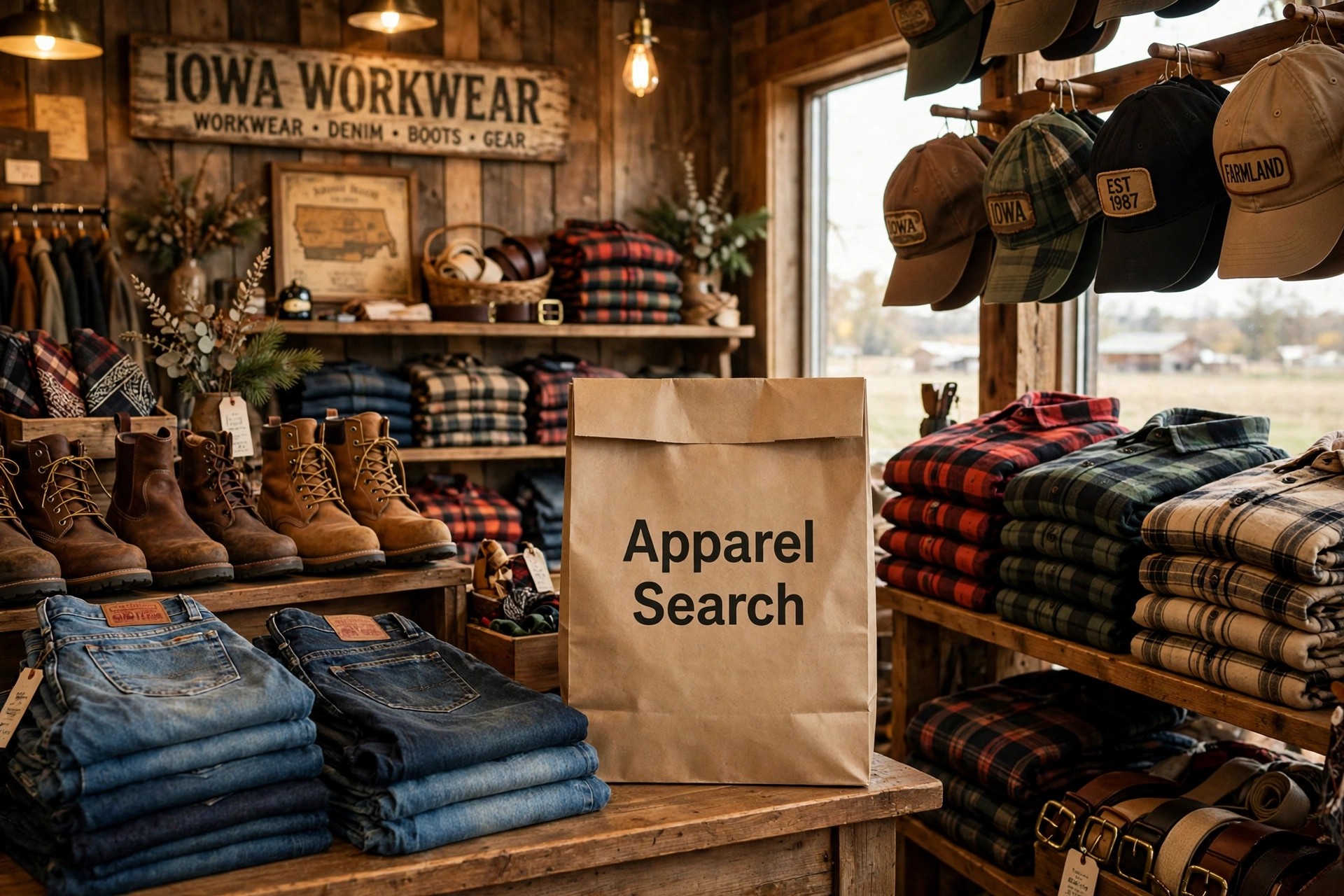
Iowa's distinctive apparel sector is work clothing: farm stores, co-ops, workwear shops and boot stores across the state sell denim, insulated outerwear, footwear and gloves as tools of trade, employing salespeople whose customers are farmers, tradespeople and plant workers. This retail prizes durability knowledge — boot fitting, cold-weather systems, flame-resistant and high-visibility clothing rules for industrial customers — and it employs steadily in towns too small for malls. Main-street clothing stores, the independents that remain in county seats, offer the classic all-in-one retail apprenticeship: selling, buying trips, display and bookkeeping in a single job.
The college towns add a different specialty: Iowa City, Ames and Cedar Falls run campus apparel economies around the University of Iowa, Iowa State and Northern Iowa — bookstore and fan-shop buying, graphic and licensed apparel work, and student-heavy retail staffing on academic calendars. Licensed collegiate product is a real supply chain, and Iowa's passionate fan culture makes its campus stores serious businesses.
How to Search the Iowa Market
Search by city and sector: 'retail manager West Des Moines', 'workwear sales Cedar Rapids', 'campus store Iowa City', 'clothing store Sioux City'. Chains post corporately; farm, workwear and main-street stores hire locally and by direct approach — in Iowa's smaller communities, walking in with a resume and a reputation is still a working method. Distribution and fulfillment openings appear along I-80 and I-35 through logistics channels.
Use the role descriptions in this section to name your skills in employers' language, and quantify where you can — sales, shrink, team, stock accuracy. Iowa employers hire for steadiness; candidates who present a record of showing up, learning product and serving repeat customers match exactly what this market buys.
County Fairs and Harvest: Iowa's Retail Rhythm
Iowa clothing retail keeps an agricultural calendar. County fair season and the State Fair in Des Moines each August drive occasion and western buying; harvest reshapes store traffic and hours in farm towns (customers shop when the work allows, and stores that know it staff accordingly); winter storms make outerwear and boot depth a yearly test. Staff who have traded these rhythms — planning stock and rotas around fairs, harvest and weather rather than only around fashion seasons — hold the local knowledge Iowa employers mean when they ask for experience. Name the rhythms you have worked; they are this market's seasons.
Common Questions
Where are Iowa's fashion jobs?
Des Moines holds the largest retail market and management ladder; Cedar Rapids, the Quad Cities, Waterloo and Sioux City hold regional retail; workwear and main-street stores spread clothing jobs across smaller Iowa towns.
What clothing specialty is Iowa known for?
Agricultural and industrial workwear — denim, boots, insulated and safety clothing sold as working equipment — plus collegiate licensed apparel in Iowa City, Ames and Cedar Falls.
How do smaller Iowa clothing stores hire?
Often locally and by direct approach rather than national boards. Farm stores, boot shops and main-street independents value reputation and reliability, and in-person applications still work in Iowa communities.