Kansas Fashion Jobs
Fashion careers in Kansas — Kansas City's cross-state market, Wichita workwear and plains distribution
Kansas fashion jobs divide between a metropolis the state shares and a plains economy it owns. The Kansas side of Kansas City — Overland Park, Leawood, Olathe, Lenexa and Kansas City, Kansas — holds affluent suburban retail, regional shopping centers and a fast-growing distribution corridor. Wichita, the state's largest city, adds aviation-industry workwear, health-care uniforms and its own retail ladder. Between and beyond them, Kansas clothing work is farm, ranch and main-street retail, college-town apparel in Lawrence and Manhattan, and central-continent logistics.
This guide explains how to search a state whose biggest market crosses a state line — and why Kansas candidates should search Kansas City as one market while applying on the Kansas side deliberately. The Kansas resources here connect to the role descriptions for retail, workwear, distribution and management careers in the state.
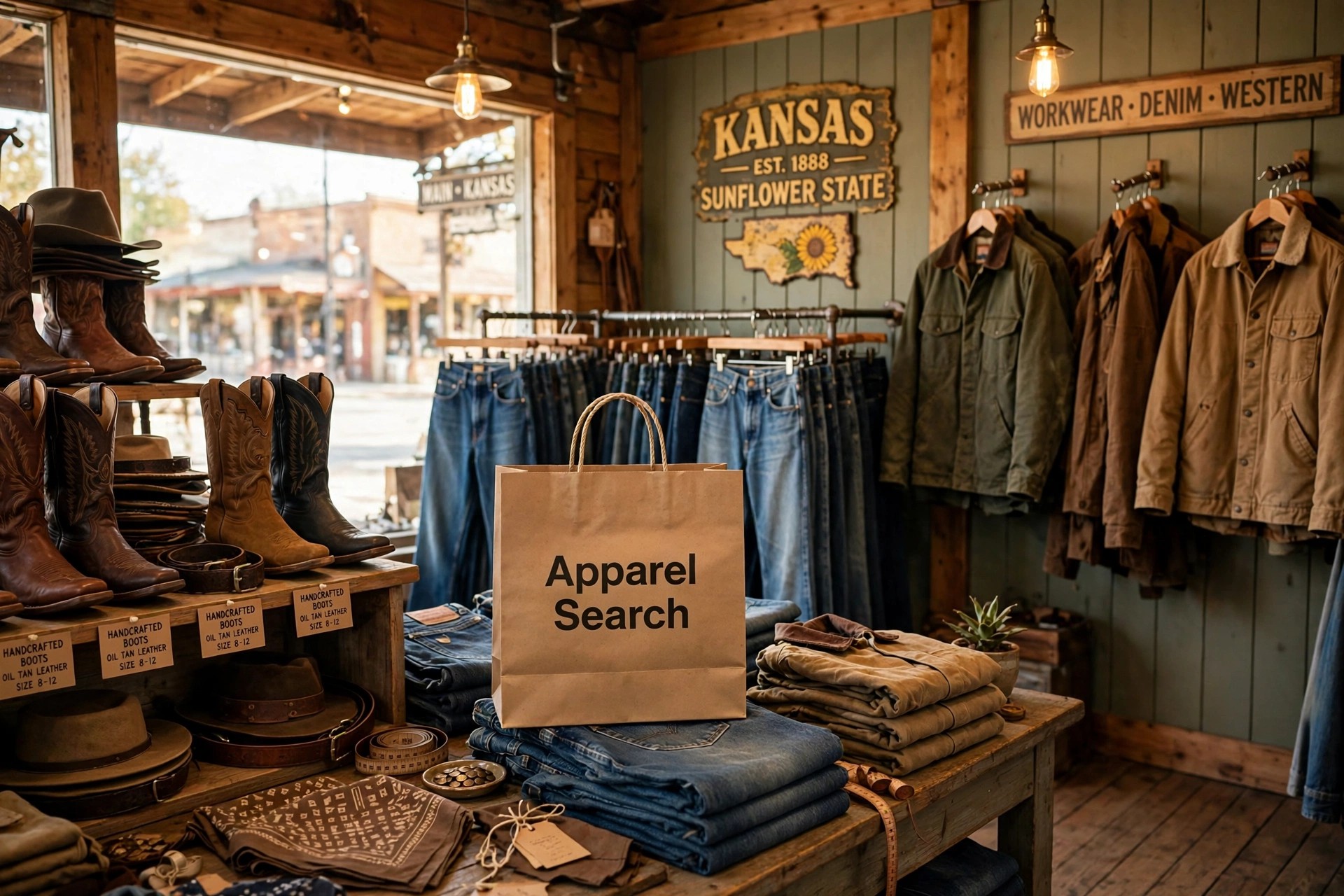
Find Current Fashion Job Listings in Kansas
Apparel Search researches careers rather than posting openings, so the live listings sit with the job boards. These searches track current fashion job listings in Kansas:
Kansas City, Kansas Side: Retail and Logistics Growth
Johnson County's suburbs are among the Midwest's strongest retail economies: Overland Park and Leawood carry premium and mainstream malls, lifestyle centers and boutique districts employing the full retail ladder, while the Legends area in Kansas City, Kansas adds outlet and entertainment retail near the speedway. Because the metropolitan market is one labor pool split by the Missouri line, Kansas-side candidates compete with — and can also apply to — the Missouri-side market covered on the Missouri page; employers hire across the line daily, and commute patterns ignore the border.
The Kansas side's second engine is logistics: distribution and fulfillment centers in Johnson and Wyandotte counties and along the Kansas interstates have grown rapidly, employing warehouse, inventory and supervisory staff moving apparel and general retail goods to the central states. Kansas's geography — near the population center of the country — is the sales pitch every one of those facilities was built on, and it keeps generating operations careers.
Wichita and the Plains Economy
Wichita's apparel work follows its industries: aviation manufacturing supports workwear and safety-clothing supply, its large health-care sector supports uniform retail and services, and its malls and Towne East and Bradley Fair centers support mainstream retail management. Western and farm supply retail — boots, denim, hats — serves Sedgwick County's working and ranch customers. As the trade center for a wide plains region, Wichita also holds district and regional field roles for chains whose territories sprawl across Kansas and into neighboring states.
Lawrence and Manhattan add the university pattern — Jayhawk and Wildcat licensed apparel, campus retail and student employment — and the smaller cities (Topeka, the capital, with government and retail work; Hutchinson, Salina, Dodge City and Garden City) run on main-street, farm-store and regional-chain retail. Dodge and Garden City's meatpacking economy adds a distinctive industrial workwear and safety-clothing demand, including multilingual retail service in Spanish.
How to Search the Kansas Market
Search Kansas City as a single market but filter by side when commute matters: 'retail Overland Park', 'distribution Lenexa', 'outlet Kansas City Kansas'. For Wichita and the plains cities, search city plus sector — workwear, uniforms, western, retail management. Chains and logistics firms post through corporate systems; western, farm and main-street stores hire locally; campus stores hire on university channels and academic calendars.
Prepare with the role descriptions in this section and present Kansas specifics: cross-state market awareness in Kansas City interviews, industry knowledge (aviation, agriculture, packing) in Wichita and plains interviews. Kansas employers serve working customers; candidates who respect work clothing as serious product interview as insiders here.
One Metro, Two Applications: The State-Line Strategy
Kansas City teaches a search skill the whole country can borrow: work a split market deliberately. Search the metro whole, track which side of the line each employer sits on, and apply with the commute, tax and store-network facts of that side in mind — Kansas-side suburban centers and logistics parks have their own growth stories, distinct from the Missouri side's Plaza and downtown. Candidates who arrive at interviews already fluent in the split (and unbothered by it) match how Kansas City managers themselves think. The same two-state fluency, applied to your own metro wherever you live, is a transferable job-search craft.
Common Questions
Is Kansas City's fashion market in Kansas or Missouri?
Both — it is one metropolitan labor market split by the state line. The Kansas side (Overland Park, Leawood, Lenexa, Kansas City, Kansas) holds major suburban retail and growing distribution; candidates commonly search and work across the line.
What fashion work does Wichita offer?
Mainstream retail management, aviation and industrial workwear and safety-clothing supply, health-care uniform retail and services, and western and farm clothing retail serving south-central Kansas.
Where are Kansas apparel warehouse jobs?
Chiefly in the Kansas City metro's Kansas-side logistics corridors in Johnson and Wyandotte counties, with additional facilities along the interstates serving the central states.