Massachusetts Fashion Jobs
Fashion careers in Massachusetts — Boston footwear and retail, and the Commonwealth's textile heritage
Massachusetts fashion jobs rest on a famous foundation: shoes. The Commonwealth that once shod America remains a footwear industry capital — New Balance is headquartered in Boston's Brighton neighborhood and still makes shoes in Massachusetts and Maine factories, and other footwear and apparel companies keep headquarters, design and product functions around Boston. Add Newbury Street's luxury retail, the design and fashion programs of Boston's schools, an outlet and suburban retail system, and the textile-mill heritage of Fall River, New Bedford and Lawrence, and Massachusetts offers a deep, educated fashion market.
This guide covers the state's layers: Boston's footwear and apparel corporate careers, its retail from Newbury Street to the suburban malls, the education-to-industry pipeline, Cape Cod and island seasonal retail, and the remaining making economy. The Massachusetts resources here link to the role descriptions for the jobs the Commonwealth hires.
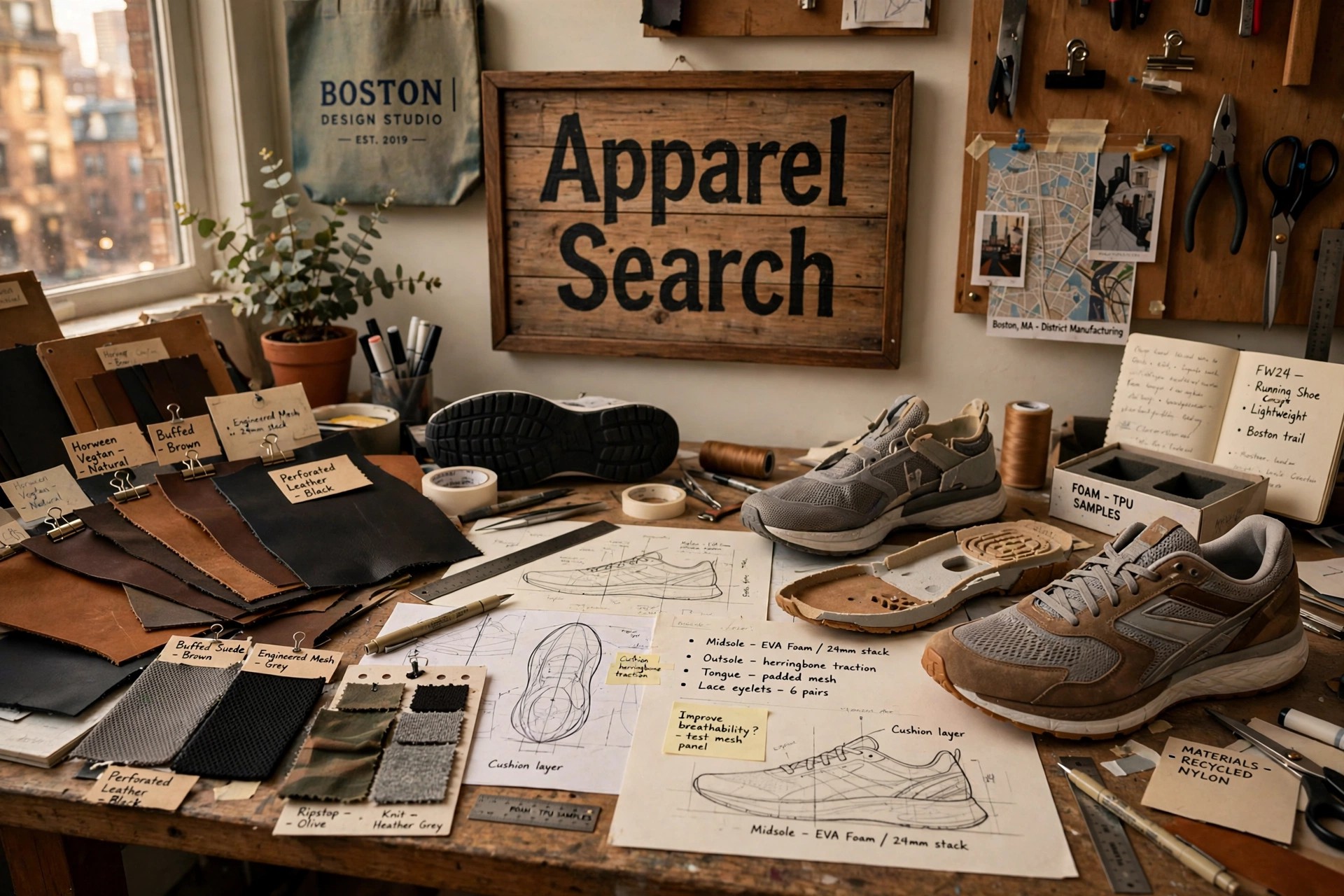
Find Current Fashion Job Listings in Massachusetts
Apparel Search researches careers rather than posting openings, so the live listings sit with the job boards. These searches track current fashion job listings in Massachusetts:
Boston Footwear and Corporate Apparel
New Balance anchors the corporate story: its Boston headquarters employs footwear and apparel designers, developers, product managers, materials and biomechanics specialists, marketers and retail staff, and its Massachusetts factories (including Lawrence and Methuen) employ skilled making roles — stitchers, cutters, assemblers — in domestic production the company maintains as a point of identity. Other footwear and apparel firms keep Boston-area design and headquarters functions, and the region's sporting and outdoor trade adds product and brand roles. Footwear careers here are technical: lasts, patterns, cushioning systems, fit and performance testing.
Boston's schools feed the market: Massachusetts College of Art and Design, Lasell, Framingham State and other programs graduate design, fashion merchandising and retail students into internships and assistant roles across the region, and Boston's fashion community — merchandisers, stylists, showroom and agency staff — is educated and networked in a way that rewards candidates who use those school and alumni channels deliberately.
Retail: Newbury Street, the Malls and the Cape
Boston retail runs from Newbury Street's brownstone boutiques and Boylston Street flagships through Copley Place luxury, Downtown Crossing and Faneuil Hall visitor retail, to the suburban system — Chestnut Hill, Burlington, Natick and the Wrentham outlets among the state's largest clothing employers. Store and district management, luxury clienteling, visual merchandising and outlet leadership form the ladder, with Boston's dense student population supplying entry-level staff and buying its own collegiate and city fashion.
Seasonal Massachusetts is its own market: Cape Cod, Martha's Vineyard and Nantucket run premium resort retail — preppy and nautical clothing at serious prices — hiring summer teams recruited in spring, while the Berkshires and North Shore add smaller visitor seasons. Resort retail experience in Massachusetts (a Nantucket summer is a recognized credential) transfers to premium markets everywhere.
How to Search the Massachusetts Market
Search by specialty: 'footwear design Boston', 'product development New Balance', 'luxury retail Newbury Street', 'seasonal retail Nantucket', 'apparel outlet Wrentham'. Footwear and corporate roles post on company systems and through industry channels — portfolios and technical evidence decide; retail follows chains and direct boutique approaches; domestic factory roles appear through the makers themselves and local postings.
Prepare with the role descriptions in this section, and let Massachusetts's specialties show in your materials: footwear construction for product roles, textile or mill heritage awareness for making roles, resort-season results for premium retail. This is a market that reads credentials closely — bring specific ones.
Made in Massachusetts: The Factory Floor as Fashion Career
Most fashion guides treat factories as history; in Massachusetts they are still a job category. New Balance's Lawrence and Methuen-area operations and the Commonwealth's surviving specialty makers employ stitchers, cutters and assemblers whose skills take years to build — and who are recruited, retained and paid as the scarce craftspeople they are. For candidates who want to make rather than sell, Massachusetts offers a path almost extinct elsewhere in American fashion: union-aware, skill-based making careers inside brands that market their domestic factories with pride. Ask makers directly about training intakes; these doors rarely appear on fashion job boards.
Common Questions
Why is Massachusetts a footwear industry center?
The state historically made America's shoes, and New Balance — headquartered in Boston, with Massachusetts factories — keeps footwear design, product and making careers there, alongside other footwear and apparel firms with Boston-area functions.
Where is Boston's fashion retail?
Newbury Street and Copley Place for luxury and boutiques, Downtown Crossing and Faneuil Hall for mainstream and visitor retail, and the suburban centers (Chestnut Hill, Burlington, Natick, Wrentham outlets) for volume employment.
Does Massachusetts still manufacture apparel?
At specialty scale: New Balance's Massachusetts footwear factories and a remnant of textile and garment makers in the old mill cities employ making skills, far below historic levels but real.