North Dakota Fashion Jobs
Fashion careers in North Dakota — workwear, western wear and winter clothing done seriously
North Dakota fashion jobs are clothing work at its most elemental. In a state of prairie winters, farm and ranch livelihoods and western energy fields, apparel means insulation that performs at forty below, boots that survive a calving season, and workwear bought by people who measure a garment in years. Fargo and Bismarck carry the conventional retail map — malls, chains and boutiques serving a growing east and the capital region — while the smaller cities and towns sustain the farm, western and workwear stores that are this market's true specialty.
Honesty helps here: North Dakota will not offer design studios or fashion weeks. What it offers is depth in the clothing categories the rest of the industry treats as basics — cold-weather, work and western apparel — inside small teams where a good salesperson or manager quickly becomes indispensable. This guide covers the Fargo and Bismarck markets, the energy west, and how careers are actually built in the country's least populous fashion markets. The state's job-search resources here link to the role descriptions for retail and workwear careers.
Find Current Fashion Job Listings in North Dakota
Apparel Search researches careers rather than posting openings, so the live listings sit with the job boards. These searches track current fashion job listings in North Dakota:
Fargo, Bismarck and the Retail Spine
Fargo, the state's largest city, is a regional shopping capital for a trade area reaching into Minnesota and South Dakota: its mall and retail districts employ clothing staff at every level, its downtown adds boutiques and vintage, and North Dakota State University supplies both customers and part-time retail talent. Bismarck, the capital, pairs government-city steadiness with its own mall and main-street trade, while Grand Forks (university), Minot and Dickinson anchor the northern and western tiers. Distances are part of the job — district managers cover territories measured in hundreds of miles, and store teams run lean.
Smallness cuts both ways. Ladders are short — a store may have one manager — but visibility is total: the associate who builds the boot department's reputation in Minot is known to every workwear employer in the state. Multi-role fluency is the local skill set; North Dakota clothing staff sell, receive, display, and often repair or special-order in the same shift, and that versatility is exactly what regional chains recruit when they need a manager who can run a store alone.
Workwear, Western and the Energy West
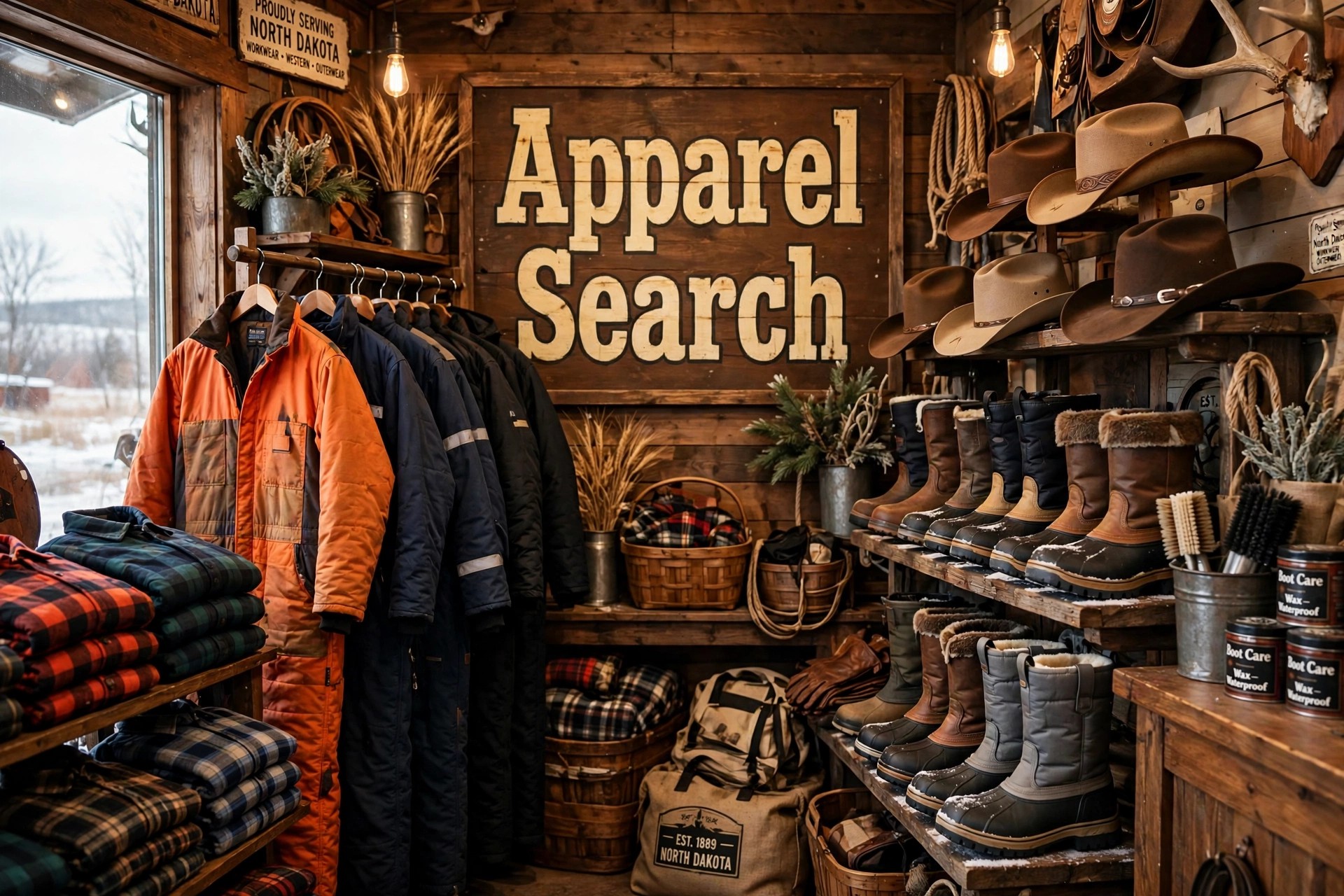
The Bakken oil country of the west — Williston, Dickinson and the surrounding fields — created a workwear market unlike any other in the state: flame-resistant clothing, insulated gear and safety boots sold to energy workers and the contractors who employ them, through specialist stores and industrial suppliers. Volumes follow energy cycles, rising and falling with drilling activity, and experienced FR and safety-clothing staff are recruited across the northern plains when the cycle turns up. Farm and ranch retail is steadier: co-ops, implement-adjacent stores and western shops from Valley City to Bowman fit boots, crease hats and sell the jeans-and-layers uniform of agricultural life.
Winter itself is a category manager here. Extreme-cold expertise — expedition-weight parkas, pac boots, balaclavas, heated work gloves — is assumed knowledge for North Dakota apparel staff in a way coastal markets find startling, and it is exportable: outdoor and workwear employers across the northern tier recognize a North Dakota winter on a resume as a credential. If your strength is clothing that keeps people alive and working, this state will take you seriously from day one.
Searching and Building a Career in a Small Market
Search by city and category — 'workwear Williston', 'western wear Bismarck', 'retail Fargo' — and expect hiring to run through local postings, store visits and reputation more than national boards. Independent and regional stores dominate the specialty trades, and a direct approach that names your knowledge (boot fitting, FR standards, winter systems) lands well. Energy-linked roles reward flexibility on location and schedule; town roles reward staying power.
Prepare with the role descriptions in this section, and think of a North Dakota fashion career as a craft apprenticeship: master a category completely, become the person a whole region calls for it, and let district and regional opportunities come to the expert. In the smallest markets, that is not a consolation path — it is how the respected careers have always been built.
Forty Below as a Dress Code: The Winter Competence Test
North Dakota retailers run an informal interview that no posting describes: the worst-week test. Describe, they will ask in substance, how you would dress a new oilfield hire, a schoolteacher and a rancher for the coldest week of January — what layers, what boots, what gets sold as safety rather than comfort. The answers reveal instantly whether a candidate understands clothing as survival equipment, which is the state's whole trade. Prepare for it anywhere in North Dakota by learning the systems properly — base, insulation, shell, extremities, and the maintenance that keeps them working — and you will pass the test this market actually sets.
Common Questions
Where are North Dakota's fashion jobs?
Fargo holds the largest retail market, Bismarck the capital's stores, and Grand Forks, Minot and Dickinson the regional trade. The specialty depth is in workwear and western stores statewide and energy-country safety clothing in the west.
What clothing knowledge matters most in North Dakota?
Extreme-cold and work knowledge: insulation systems, winter boots, flame-resistant and safety workwear, and western fitting skills — boots, hats and denim for farm and ranch customers.
Is North Dakota fashion work affected by the energy cycle?
In the western oil country, yes: workwear and safety-clothing volumes rise and fall with drilling activity. Fargo and Bismarck retail and agricultural workwear are steadier year to year.