Wisconsin Fashion Jobs
Fashion careers in Wisconsin — winter expertise, workwear heritage and lake-country retail
Wisconsin fashion jobs are built for winter and proud of it. Milwaukee anchors the state's retail with department stores, suburban centers and a boutique revival; Madison adds a capital-and-university market with an outdoorsy, design-aware streak; and the Fox Cities and Green Bay run the regional trade of the northeast — Green Bay adding a game-day apparel economy around the Packers that few small cities anywhere can match. Workwear and cold-weather clothing are not categories here; they are the state's native language.
Beyond the cities, Wisconsin spreads distribution along the I-94 corridor toward Chicago, visitor retail in Door County and the Northwoods lake country, and farm and manufacturing workwear in every county. This guide covers the Milwaukee and Madison markets, the northeast and game-day trade, and the corridors and seasons, then explains how Wisconsin careers are built. The state's job-search resources here connect to role descriptions for retail, workwear and logistics careers.
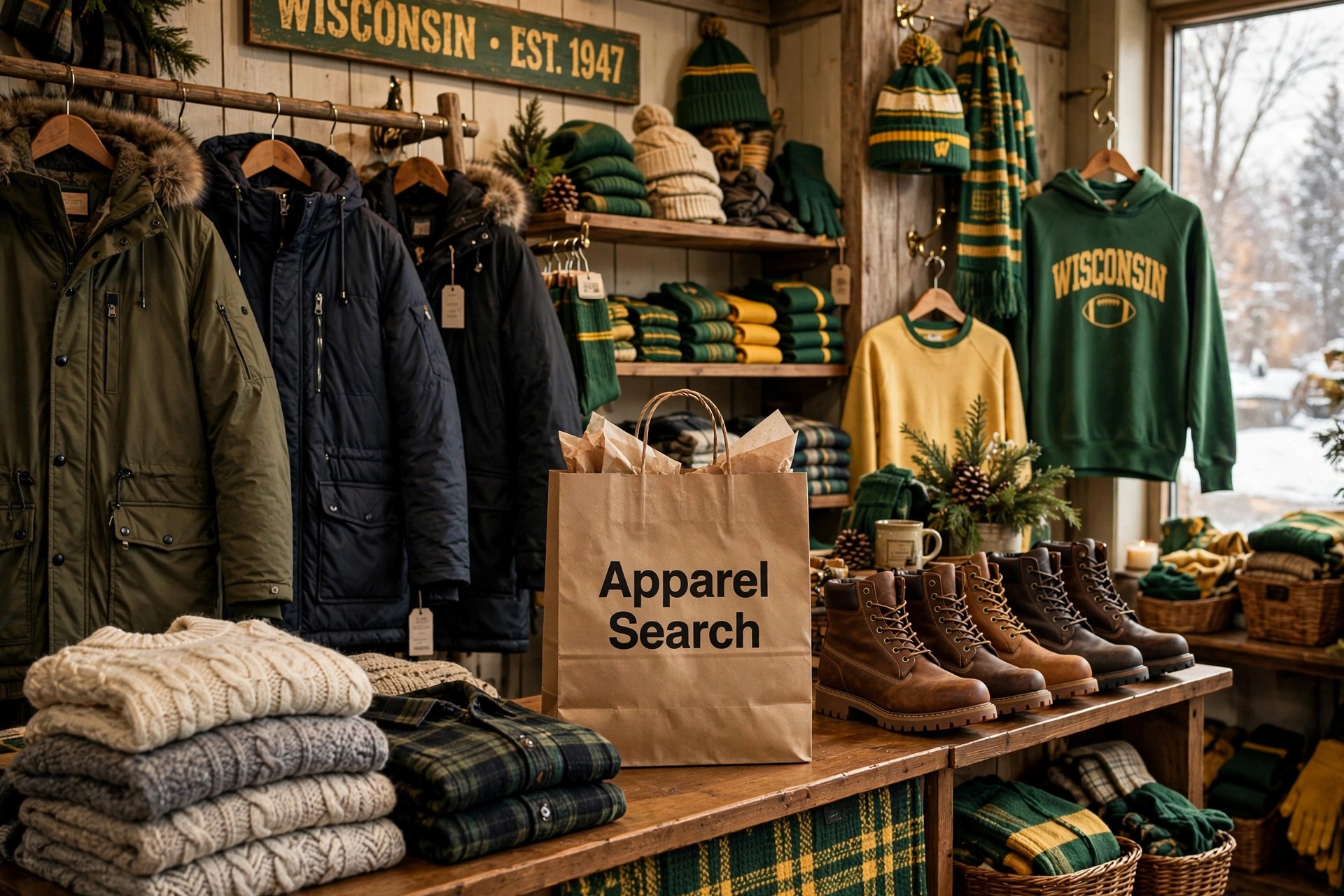
Find Current Fashion Job Listings in Wisconsin
Apparel Search researches careers rather than posting openings, so the live listings sit with the job boards. These searches track current fashion job listings in Wisconsin:
Milwaukee and Madison: The Two-Metro Base
Milwaukee's fashion employment layers a classic department-store and suburban-mall structure — Mayfair and the north-shore and western suburbs at the top of the market — over a city boutique and vintage culture in the Third Ward, Bay View and Brady Street that punches above the metro's size. Corporate and hospital employers steady the weekday trade, and the metro's retail management bench is deep enough that regional chains staff Wisconsin districts from it. Summer festival season, when the lakefront fills week after week, gives Milwaukee retail a visitor pulse most Midwestern cities lack.
Madison runs the second register: State Street's student-and-capital mix of boutiques, outdoor stores and bookish retail, affluent suburban centers on both sides, and a population that buys technical outdoor clothing and quality basics with conviction. The university is an apparel economy in itself — game-day and licensed clothing at Big Ten scale — and state government adds the professional wardrobe trade. Between the two metros, Wisconsin fashion staff can find volume, boutique or outdoor registers within ninety minutes of each other.
Green Bay, the Fox Cities and the Working North
Green Bay's Packers change its clothing mathematics: licensed apparel, cold-weather game gear and visitor buying around Lambeau give this small metro a sports-fashion economy out of all proportion, peaking in season and spiking for home weekends and playoff runs. Appleton and the Fox Cities answer with some of the Midwest's strongest suburban retail per capita — a mall and corridor trade serving the whole valley — while Oshkosh and Fond du Lac carry manufacturing and outlet echoes of the region's garment past.
The north and west run on work and weather: farm, dairy, paper and manufacturing workwear from Eau Claire to Wausau to La Crosse; hunting and ice-season clothing as serious retail categories; Door County's summer visitor boutiques and the Northwoods' resort and outfitter trade hiring each spring. And along I-94 in Kenosha County, the Chicago-facing corridor fills distribution centers with apparel for the southern market — warehouse and supervisory careers that have become one of Wisconsin's steadiest fashion-adjacent employers.
How to Search Wisconsin's Market
Search by metro and by winter: 'retail Milwaukee Mayfair', 'outdoor Madison', 'apparel Green Bay', 'distribution Kenosha', 'seasonal Door County'. Chains post through their systems; boutiques and outfitters hire locally and seasonally; distribution ramps in autumn. Wisconsin employers test cold competence informally in every interview — insulation, layering, boot technology, care of wool and leather in a salt-and-slush winter — so treat that knowledge as your headline qualification if you have it.
Use the role descriptions in this section to frame your level honestly, and consider the state's braided career pattern: a Milwaukee ladder, a Green Bay sports season, a Kenosha operations chapter. Wisconsin rewards people who stay through whole winters and whole seasons; reliability in February is the reference every Wisconsin manager asks about first.
Playoff Weather: Green Bay's January Economy
Green Bay's apparel economy has a bonus season no planner can schedule: the home playoff game. A January Lambeau crowd buys cold-weather gear at emergency intensity — every layer, glove and insulated boot within reach of the stadium is suddenly necessary — and the retailers who serve it keep contingency stock and on-call staffing for a possibility that depends on the standings. Staff who have traded a playoff weekend hold a story Wisconsin managers rank beside Black Friday: maximum volume, maximum weather, a city holding its breath. It captures the state's whole trade in one weekend — sports devotion, winter competence and retail as civic participation.
Common Questions
Where are Wisconsin's fashion jobs concentrated?
Milwaukee leads for retail scale and management depth, Madison for capital, university and outdoor retail, and Green Bay and the Fox Cities for regional trade — with Kenosha corridor distribution growing fast.
What makes Green Bay a fashion market?
The Packers. Licensed apparel, cold-weather game gear and visitor shopping around Lambeau Field give the small metro an outsized sports-clothing economy, peaking through the football season.
What expertise do Wisconsin employers value?
Cold-weather and work clothing knowledge — insulation systems, winter boots, durable layers — plus seasonal reliability. It is the state's baseline literacy for apparel staff.