Madras Fabric
Madras is the quintessential summer plaid: a lightweight, yarn-dyed cotton woven in bright, uneven checks that soften with every wash. This guide explains what real madras is, how it is made, and how to choose it.
Shop Madras Fabric Now
Shop Madras Fabric on Amazon Shop Madras Fabric on eBayThese links open the Apparel Search shopping guides for Amazon and eBay, where the product links are kept in one place.
What Madras Fabric Is
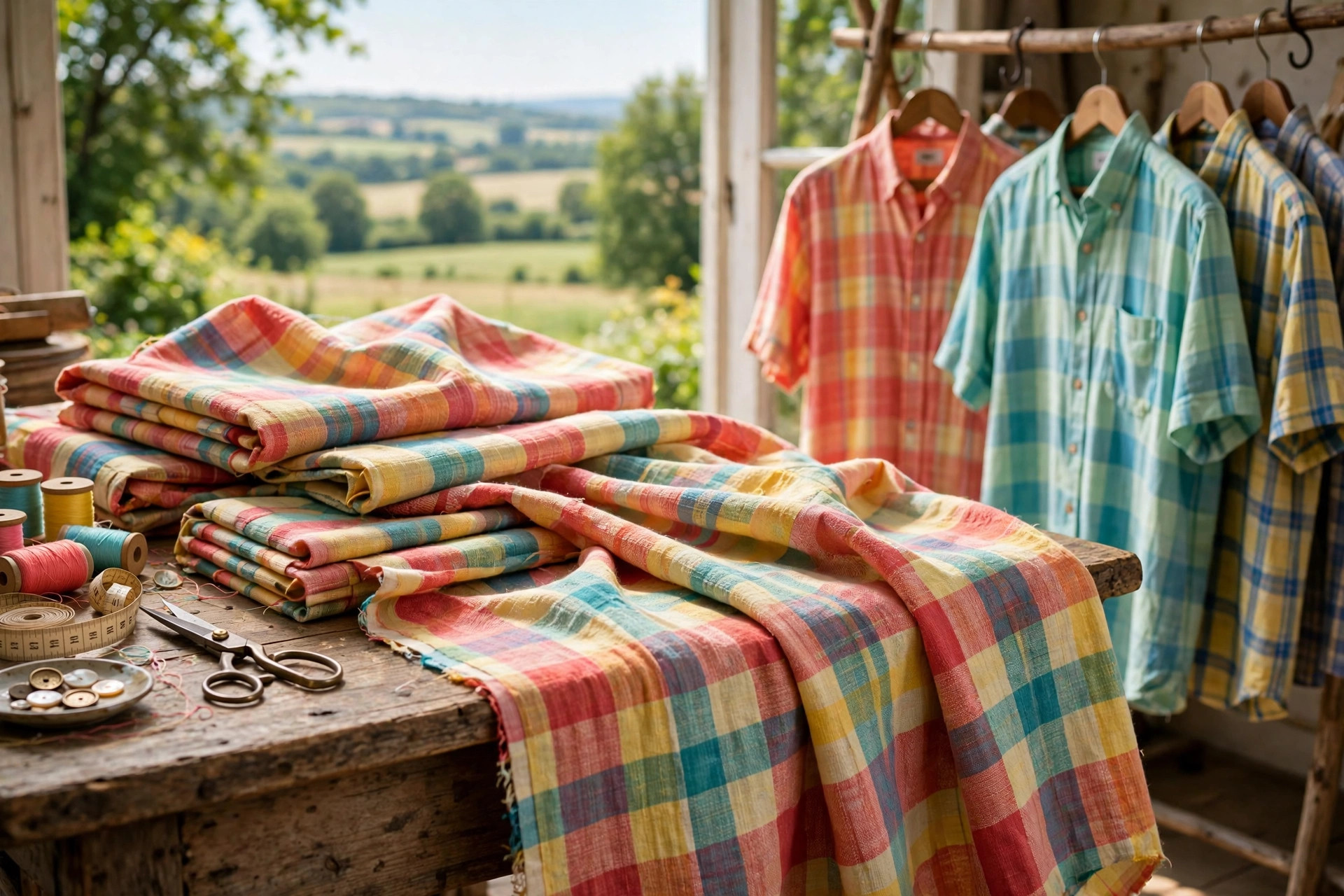
Madras is a lightweight cotton fabric with a typically patterned texture and plaid design, used primarily for summer clothing such as pants, shirts, shorts and dresses. The fabric takes its name from the former English name of the city of Chennai, India, and the cloth was also identified by the colloquial name Madrasi checks. Unlike a printed plaid, a true madras pattern is woven in: warp and weft yarns are dyed before weaving, so the check shows on both faces of the cloth and the colors cross and blend where the stripes intersect.
The classic madras look depends on that yarn dyeing. Because each yarn is dyed separately, the stripes are rarely perfectly even, and small variations in tension on simple looms give the cloth its slightly irregular, handcrafted character. Most madras is a plain weave in fine cotton, light enough to breathe in hot, humid weather yet sturdy enough for everyday sportswear. You can read the formal madras fabric definition on Apparel Search, and compare it with the broader fabric definitions in our textile glossary.
Handloom Heritage and Bleeding Madras
Original madras was woven by hand in villages around Madras, India, from yarns dyed with vegetable dyes. Those early dyes were not fully colorfast, so when the cloth was washed the colors ran slightly into each other — a quality the trade came to call bleeding madras. Far from being a defect, the gentle bleeding became the mark of authenticity, and in the 1960s garments made from genuine handloom madras were prized precisely because each shirt faded and softened into something unique.
Modern production madras is usually woven on power looms with more stable dyes, so it keeps its bright checks wash after wash. Both versions have their place. Bleeding, handloom-style madras offers the soft, lived-in character collectors seek, while colorfast mill madras gives retailers consistent shades across a full production run. When you buy, ask which type you are getting, check whether the yarns are dyed before weaving, and wash a swatch first if color movement matters for your garment.
What Madras Is Made Into
Madras belongs to warm weather. Its most familiar uses are short-sleeve sport shirts, tailored shorts, lightweight trousers, summer dresses and skirts, and relaxed sleepwear and loungewear. Apparel Search carries dedicated guides to women's madras shirts, women's madras pants and women's madras skirts, along with madras lounge pants and cotton madras pajamas, which shows how broadly the plaid crosses categories.
A close relative is patchwork madras, in which squares of different madras plaids are sewn together into a larger, deliberately mismatched cloth for jackets, shorts and accessories. Designers also use madras for linings, pocketing, ties, headbands and home accents such as cushion covers, where a small area of bright plaid does the decorative work. Because the pattern is woven rather than printed, madras trims keep their color on both sides, which makes them especially useful for reversible garments and rolled cuffs.
Choosing and Caring for Madras
When choosing madras, look first at the weave: hold the cloth to the light and confirm the plaid is visible, in the same colors, on the reverse. Check the hand — good madras feels dry, light and slightly crisp when new, then softens quickly. Note the repeat size, because large checks need careful matching at seams and pockets, and ask about shrinkage, since loosely woven cotton plaids can relax noticeably in the first wash.
Care is simple. Wash madras in cool water on a gentle cycle, separately at first in case any dye moves, and dry on low heat or on a line to protect the cotton and the colors. Iron on a medium setting while the fabric is slightly damp if you want a pressed finish, or embrace the soft rumple that is part of its character. Stored folded and out of strong sunlight, a madras garment will hold its plaid for many summers.
Common Questions
What is madras fabric made from?
Traditional madras is 100 percent cotton, woven in a plain weave from yarns that are dyed before weaving. Some modern versions blend cotton with small amounts of other fibers, but the classic summer madras is all cotton.
What does bleeding madras mean?
Bleeding madras is made with dyes that are not fully colorfast, so the plaid colors run slightly into each other when washed. That gentle bleeding was the mark of the original handloom cloth from India and is still prized for its soft, faded character.
Is madras printed or woven?
Authentic madras is woven, not printed. The check is formed where dyed warp and weft yarns cross, so the pattern appears on both sides of the fabric, unlike a print that sits on one face only.
More to Explore
- about madras fabric
- About Us
- Contact Us
- fabric definitions
- Fabric Search
- Madras Fabric
- Madras Fabric Mills
- Madras Fabric Stores
- Madras Fabric Wholesalers
- textile industry news
- Women's Cotton Madras Pajamas
- Women's Madras Lounge Pants
- Women's Madras Pants
- Women's Madras Shirts
- Women's Madras Skirts
- woven fabric
References & Further Reading
Looking for Fabric Mills and Suppliers?
Explore more woven cloth in the Apparel Search fabric directory and start wider searches from the Fabric Search hub.