Madras Fabric Mills
Madras mills turn dyed cotton yarn into the world's most recognizable summer plaid. This page explains how those mills work, what separates handloom from power-loom madras, and how buyers should evaluate a producer.
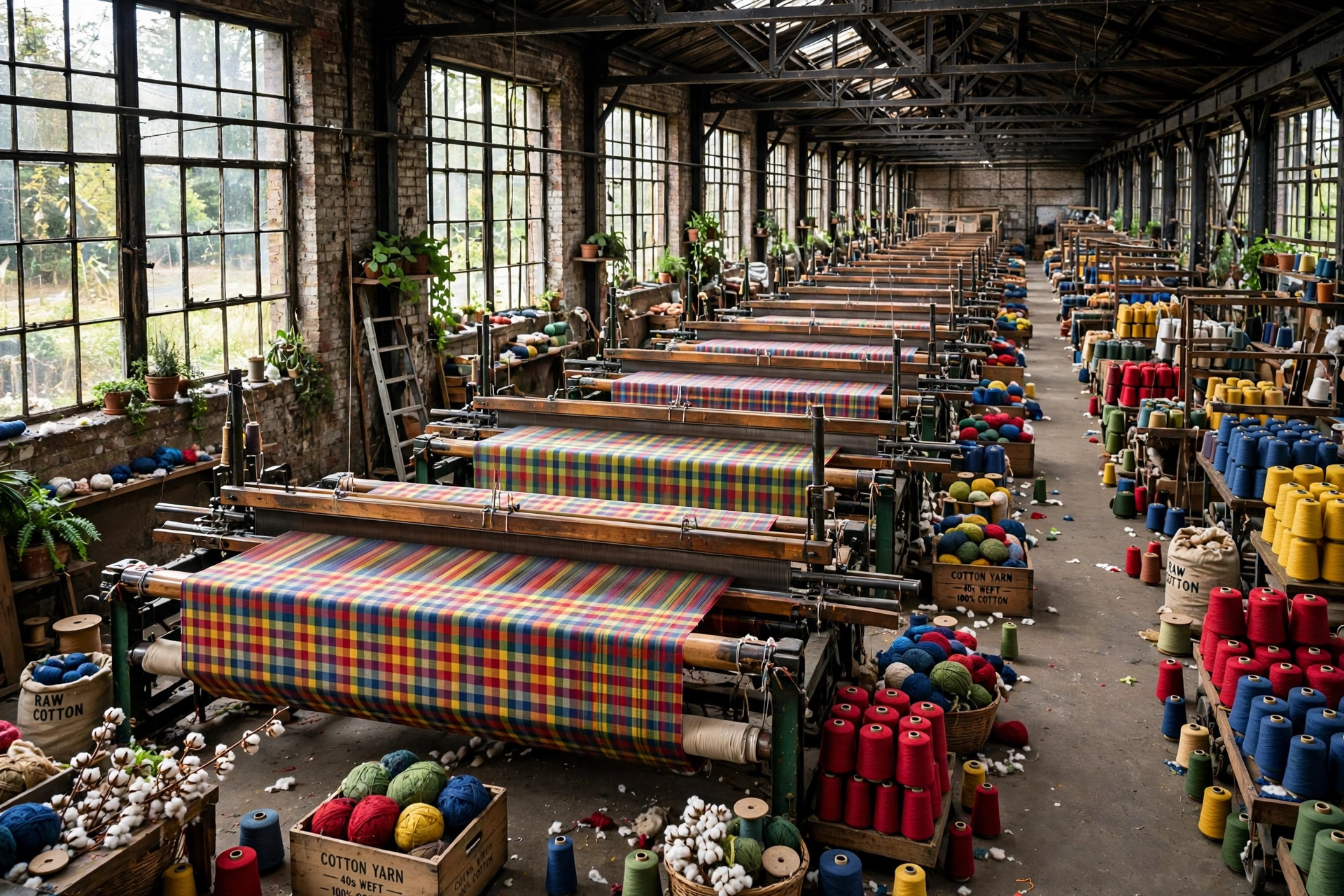
How a Madras Mill Works
A madras mill starts with color, not cloth. Cotton yarn is dyed first — historically in vats of vegetable dye, today more often with controlled commercial dyes — then wound onto warps in the exact stripe sequence of the plaid. On the loom, a second set of dyed yarns, the weft, crosses the warp in a plain weave, and the check forms where the two striped sequences intersect. That yarn-dyed sequence is the mill's real craft: a misplaced cone changes the pattern across the whole piece.
Mills work at two very different scales. Handloom production, the original method around Chennai, India, weaves short lengths slowly, with the slight irregularities and dye variation that create traditional bleeding madras. Power-loom mills weave far longer, more uniform pieces suited to garment factories cutting thousands of shirts. Neither is automatically better — the right choice depends on whether your program values handcrafted character or shade-to-shade consistency across a large order.
What Buyers Should Ask a Mill
Start with the questions that reveal whether madras is a real category for the mill or an occasional job. Ask which plaids are running currently, whether the yarn is dyed in-house or bought in, what widths the looms produce, and what minimum yardage applies per pattern and per colorway. As with any fabric sourcing, prefer a producer that already lists and regularly weaves the fabric you want — a mill that runs madras every season understands its shrinkage, dye behavior and finishing far better than one weaving it for the first time.
Then confirm the commercial details in writing: fiber content, finished weight, expected shrinkage after washing, colorfastness results, and whether the cloth will bleed by design or hold its shade. Request loom-state and finished swatches of the exact plaid, approve a lab dip or yarn-dyed strike-off before bulk weaving, and agree on how much pattern irregularity is acceptable, especially if you are ordering handloom-style goods.
Quality Checks for Mill Madras
Good mill madras shows a clean, readable plaid on both faces of the cloth, because the pattern is woven from dyed yarns rather than printed on the surface. Inspect a full-width cutting, not just a small swatch: stripes should track straight, checks should stay reasonably square, and there should be no missing picks, broken warp ends or dye streaks running through the piece. Rub a damp white cloth over deep shades to gauge how much color moves.
Wash testing matters more for madras than for many fabrics. Wash and dry a measured cutting three times, then re-measure it, note any shade change between pieces cut from different parts of the roll, and check that the plaid has not skewed. Mills with strict quality control — the kind the listing below describes in its own export operation — catch these issues at the finishing table, where pieces are inspected, rolled and packed before shipment rather than after a complaint arrives.
Working With Madras Producers
Madras is a seasonal fabric, and mill capacity fills ahead of the summer garment calendar. Place development work early, allow extra time for yarn dyeing — the dyed yarn, not the loom, is usually the long lead item — and consider carrying proven plaids forward between seasons, since reordering an established pattern is far simpler than developing a new one. Importers, retail stores and mail-order companies have long bought Indian madras directly from producing mills, so export packing, documentation and inspection routines are well established on that route.
If you know of additional madras producers that should be listed here, please let us know — helpful mill listings make this section more useful for every buyer who follows. For a wider view of weaving capacity across all fabric types, visit the fabric mills directory on Apparel Search, then return to this cluster for madras specialists.
Madras Fabric Mills Listed Here
Company-type mill listings preserved from the original guide. Marketplace portal directories are carried in References rather than as company listings.
BC Enterprises
Began in 1992 in India, producing and exporting 100 percent cotton madras fabric and clothing, including patchwork madras, for retail stores, mail-order companies and importers, with an emphasis on design and strict quality control.
Common Questions
What is the difference between handloom and power-loom madras?
Handloom madras is woven slowly in short lengths and shows slight irregularities and dye variation, including the traditional bleeding effect. Power-loom madras is woven in long, uniform pieces with more consistent shades, which suits large garment production runs.
Why is yarn dyeing important for a madras mill?
Madras plaid is created by the crossing of pre-dyed warp and weft yarns. If the yarn dyeing or the stripe sequence is wrong, the pattern is wrong through the entire piece, so dyeing control is the mill's core skill.
What should I test before a bulk madras order?
Approve a finished swatch of the exact plaid, then wash-test a measured cutting for shrinkage, shade change and color movement, and inspect a full-width piece for straight stripes, square checks and weaving defects.
More to Explore
References & Further Reading
Looking for Fabric Mills and Suppliers?
Compare madras producers with mills of every fabric type in the Apparel Search fabric directory, or return to the Fabric Search hub.