Reflective Fabric Mills
Reflective fabric producers coat, plate and laminate light-returning surfaces onto cloth, film and tape. This page explains how those producers work, profiles the mills preserved from the original guide, and sets out what buyers should verify before specifying a material.
What a Reflective Material Producer Does
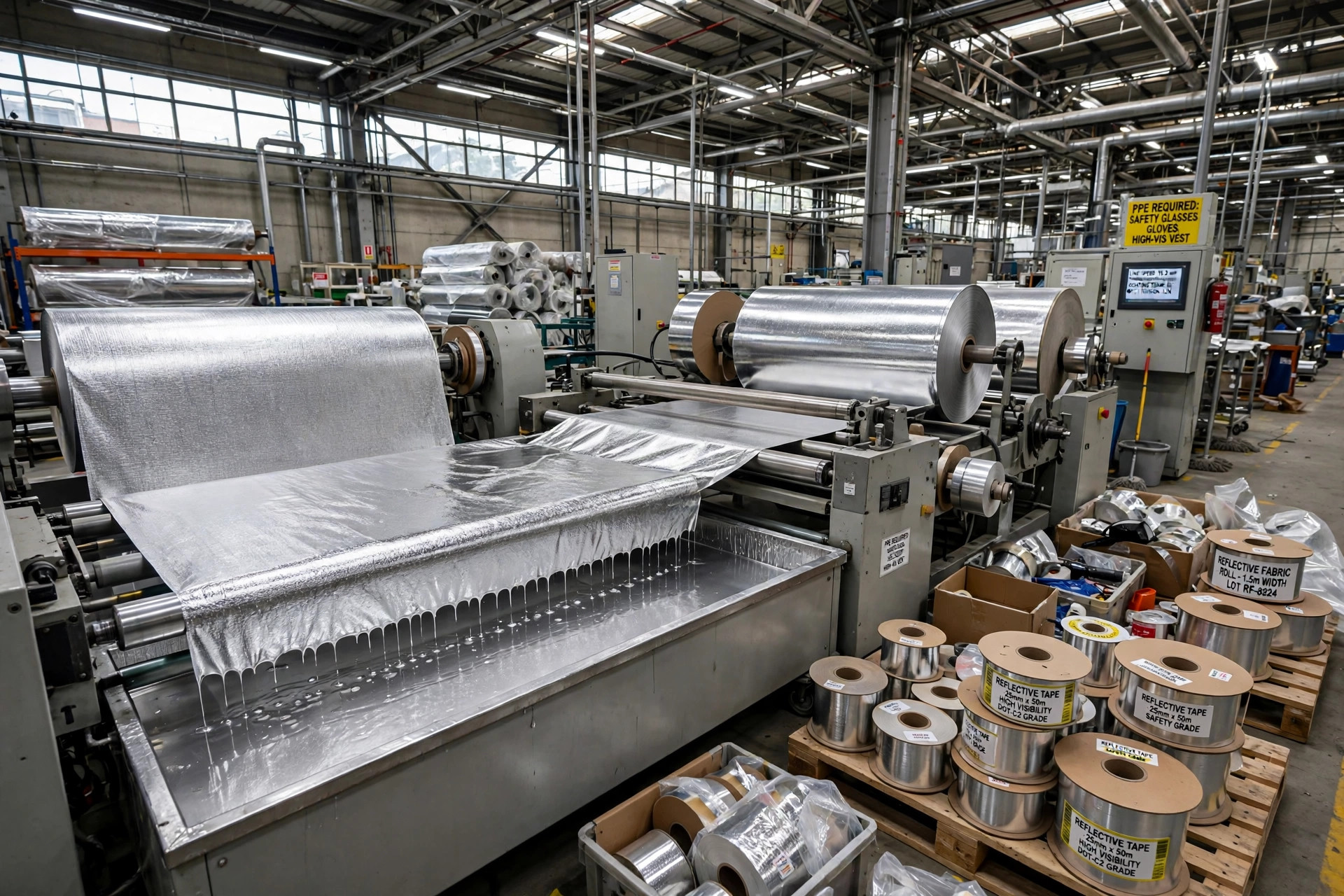
A reflective fabric mill does not weave its effect — it engineers a surface. Producers apply microscopic glass beads or mold microprismatic elements onto backing fabrics, films and tapes so the finished material returns light to its source. The backing still matters: the original guide's listings repeatedly note the same sew-on fabric offered on a polyester-cotton backing or a full polyester backing, because backing choice changes sewability, wash behavior and hand. Heat-transfer versions add an adhesive layer and a protective liner so the reflective surface can be applied to finished garments.
Producers in this sector usually make more than garment fabric. The listings below include makers whose ranges extend to reflective sheeting for traffic signs and license plates, engineering and commercial grade films, reflective artificial leather, shoe components, photoluminescent materials that glow after exposure to light, and tapes of many kinds. That breadth reflects the material's physics: once a company masters coating beads or molding prisms at width, the same competence serves road safety, advertising, labels and apparel alike.
The Producers in This Guide
The largest listing in the original guide describes a Chinese reflective material enterprise founded in 1994, with facilities covering some 200,000 square meters, an annual production capacity stated at 10,000,000 meters of reflective materials, and exports to more than 100 countries across advertisement, engineering, license plate and civil-use grades. Another Chinese producer, established in the 1990s in Jinjiang, makes retro-reflective materials for safety apparel, shoes, rainwear, gloves, sport and fashion garments, transport and sign boards, alongside photoluminescent products. A Korean producer specializes in micro-prismatic retro-reflective materials, including PVC-free versions, printable for emblems, labels and accessories.
The remaining listings show the sector's other faces. A Pakistani textile mill brings reflective material into a conventional vertically organized mill operation with computerized barcode tracking from spinning to packing. A tape and PVC materials producer working since 1991 makes flagging, barricade, reflective, anti-slip and measuring tapes for industrial safety and survey markets. An American family-owned narrow-fabric weaver, operating in Philadelphia since 1910 and now in its fifth generation, weaves twill tape, binding and light webbing and laminates reflective material — and heat-activated and pressure-sensitive adhesives — onto its products, offering high-visibility trim.
How Buyers Should Qualify a Producer
Qualify a reflective producer against measured performance, not appearance. In daylight most reflective fabrics look like dull silver cloth; their value appears only under a light source at distance. Ask for the maker's own test data for the exact construction you are buying, sample the material on your actual garment fabric, and view sewn samples under headlights or a retroreflectometer rather than judging under factory lighting. Confirm which backing, width and application method — sew-on, heat transfer or adhesive — the quoted material actually is, since the same trade name can cover several constructions.
Then test durability the way your garment will live it: wash samples through repeated cycles, flex and abrade them, and check that the reflective surface has not cracked, peeled or noticeably dulled. Commercial diligence matters equally — minimum quantities per construction, whether the producer supports custom colors, patterns or printed watermarks (one listed maker offers transparent screen printing ink, color matching and counterfeit watermarks), and export experience, which in this sector is substantial: listed producers ship across the Americas, Europe and Asia as a matter of routine.
Reading the Mill Listings Below
The company listings preserved below come from the original guide and span dedicated reflective specialists, a conventional textile mill with a reflective line, a tape producer and a narrow-fabric weaver that laminates reflective material. Use them as starting points, and verify current capabilities, constructions and performance data on each company's own site before issuing a specification, because product lines and grades change.
A major reflective material producer's catalog, linked from this cluster's main reflective fabric page, and marketplace directories aggregating reflective fabric manufacturers are carried in References rather than as listings here, since a catalog portal and a marketplace are research tools rather than individual producers. If you know of additional reflective fabric producers that should be listed here, please let us know. When researching mills that produce fabric of any kind, you may also want to visit the wider Apparel Search fabric guides.
Reflective Fabric Mills Listed Here
Producer listings preserved from the original guide, with notes drawn from the original descriptions. Marketplace directories are carried in References, not as listings.
Changzhou Hua R Sheng Reflective Material Co.
Professional reflective material enterprise founded in 1994, engaged in design, production and sales, with facilities covering 200,000 square meters, annual production capacity of 10,000,000 meters of reflective materials and exports to more than 100 countries, including advertisement, engineering, license plate and high intensity grade sheeting and reflective fabrics on polyester-cotton or polyester backings.
Masood Textile Mills
Textile mill in Pakistan whose reflective material is offered for apparel and active uses, with a computerized barcode system assuring quality in every production operation from spinning to packing, so reported problems can be traced back to their root.
Reflomax Co. Ltd.
Manufacturer of micro-prismatic retro-reflective materials under the GLODIAN name, using a micro-prism corner cube structure in flexible, resistant PVC for fashion and safety fields, also supplying PVC-free micro-prismatic material that can be printed for emblem, label and accessory use.
Shihua International Co., Ltd.
Engaged since 1991 in research, production and marketing of tape and PVC materials, producing 21,000 tons a year across FOREST, SURVEY and INDUSTRY SAFETY series including flagging tape, barricade tape, reflective tape, anti-slip tape and measuring tape, exported to Canada, North America, Austria and the UK among other markets.
Wayne Mills Co. Inc
Family owned and operated textile mill in its fifth generation, weaving twill tape, binding and light webbing at its Philadelphia factory since 1910, custom dyeing its products and laminating reflective material and adhesives — heat activated and pressure sensitive, up to six inches wide — onto its own or customers' products, including high visibility trim.
Yeshiming Reflective Material Co. Ltd.
Known as YSM, established in the 1990s in Jinjiang, China, a professional manufacturer of reflective and photoluminescent materials whose YSMLITE retro-reflective products serve safety apparel, shoes, rainproofs, gloves, sport and fashion garments, transportation, road markers and sign boards, plus reflective sheeting grades and reflective artificial leather.
Common Questions
How do reflective fabric mills make cloth reflective?
They engineer the surface rather than the weave: microscopic glass beads are coated onto a backing fabric, or microprismatic elements are molded into a film, so the finished material returns light toward its source. Heat-transfer versions add an adhesive layer and protective liner.
Why does the backing fabric matter?
Listings for the same reflective fabric commonly offer a polyester-cotton backing or a full polyester backing. The backing changes how the material sews, washes, feels and lasts, so the backing is part of the specification, not a detail.
What should I test before ordering reflective fabric in bulk?
View sewn samples of the exact construction under a light source at distance, confirm the maker's performance data, and wash, flex and abrade samples to check the reflective surface does not crack, peel or dull prematurely.
More to Explore
Looking for Fabric Mills and Suppliers?
Compare reflective producers with conventional mills in the Apparel Search fabric directory, or start again from the Fabric Search hub.