Famous Fashion Designers
What it means to be a famous designer — and why fame and influence are not the same thing.
Being a famous fashion designer is very different from being a good fashion designer. The word famous simply means being known about by many people — and it is very possible to be famous for creating hideous clothing, footwear or accessories. This page looks at fame itself: what produces it, how it differs from influence, and which names readers most often mean by it.
Among the famous fashion designers readers ask about are Karl Lagerfeld, Stella McCartney, Giorgio Armani, Alexander McQueen, Tom Ford, Marc Jacobs, Gianni Versace, Vera Wang, Christian Dior, Yves Saint Laurent, Anna Sui and Ralph Lauren — a list that mixes couturiers, brand builders and designers whose labels became global businesses.
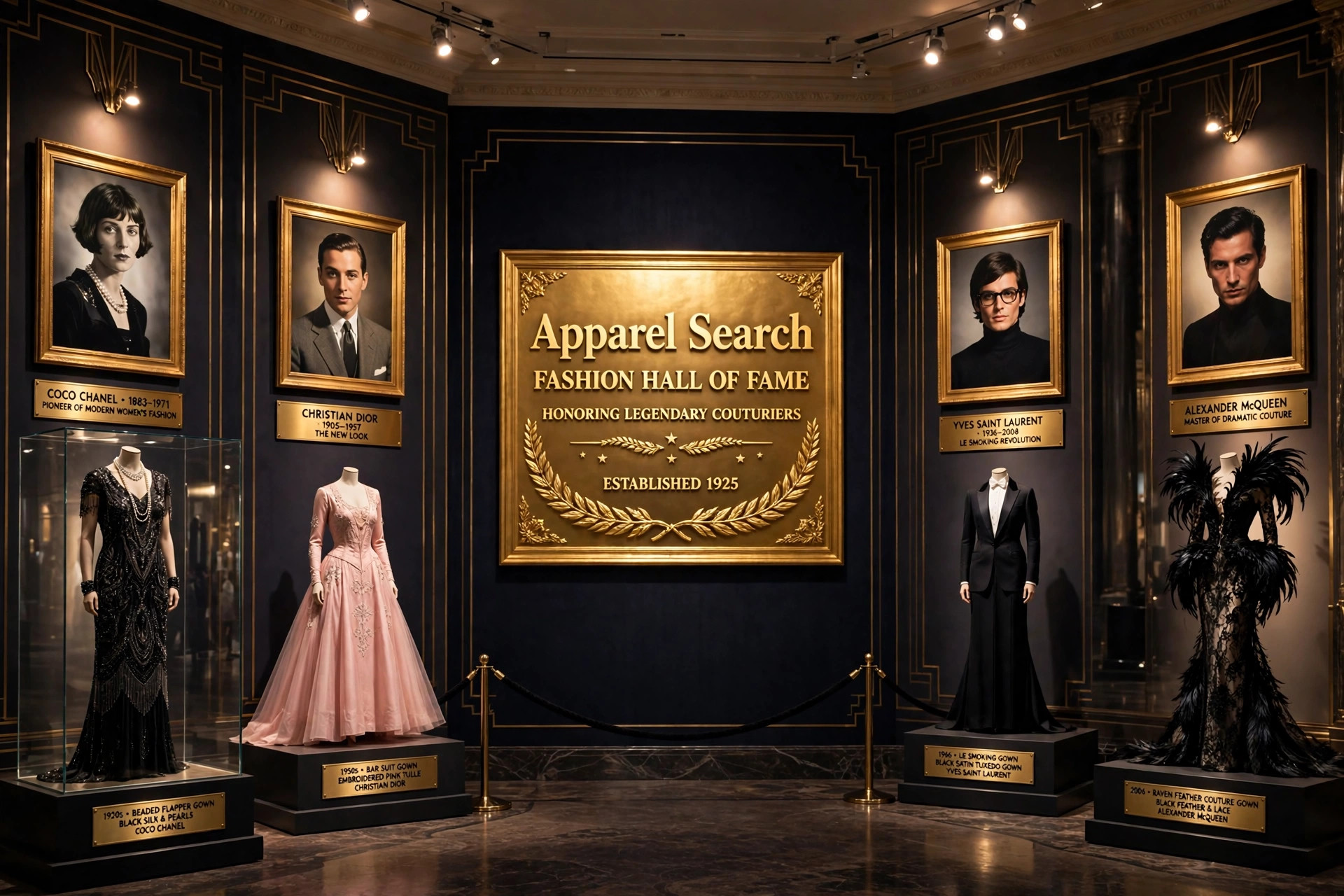
Illustrative image created for this guide — an artistic impression, not this designer's own garments.
Search Apparel Search
Designer Directory Links
Fame Is Recognition, Not a Grade
A famous name is a famous name regardless of how the fame was earned, which is why this guide treats fame as a starting question rather than an answer. The more useful exercise is the one suggested to every reader of this page: instead of looking for a ready-made list of famous designers, make your own determination. Read about designers, look at their work, and decide whose clothing you actually enjoy — your answer may include living designers and designers from the past, and it does not need to match anyone else's.
The influential designer guides linked here take the next step: influence asks what a designer changed — a silhouette, a fabric, a way of dressing — which is a harder and more interesting question than who is best known.
Eponymous Labels and Anonymous Designers
Many famous designers are famous under their own names because their labels are eponymous: the designer's name is the brand, so every garment sold advertises the person. But fame is not a necessity for success. Some fashion designers design clothing that does not utilize their name at all, and often the brand becomes more famous than the designer — the public knows the label intimately and the designer not at all.
Both arrangements produce major careers. The eponymous route ties a reputation to a person; the house route lets a brand outlive and outgrow any individual. When browsing the directory, noticing which arrangement a designer works under explains a great deal about how their fame, if any, was built.
Designers Beyond Clothing
Fame also spills sideways. Some fashion designers are involved with jewelry design as well as clothing, and accessory fame — a handbag, a shoe, a fragrance — can outrun the clothing it came from. The jewelry design guide linked on this page follows that crossover. In your opinion, who is the most famous fashion designer? If you cannot decide on one, a top few is a perfectly good answer — that indecision is itself evidence of how many kinds of fame fashion contains.
Common Questions
What makes a fashion designer famous?
Being known by many people. Fame can come from beautiful work, from celebrity clients, from a famous brand, or sometimes from notoriety — it is entirely possible to be famous for creating clothing many people dislike. Fame measures recognition, not quality.
What is an eponymous label?
A label that uses the designer's own name as the brand — the pattern behind names such as Armani, Lauren and Sui. The opposite case is just as common: a brand that becomes more famous than the designer behind it, whose name the public never learns.
Is fame necessary for a successful design career?
No. Many successful designers design clothing that does not carry their name at all, working for houses and manufacturers whose brands are the famous part. Successful careers and famous names overlap often, but neither requires the other.