Dolce & Gabbana T-Shirts
The t-shirts strand of the house's record — filed on its own page.
Some parts of a fashion house's world earn their own following, and t-shirts are one of them at Dolce & Gabbana. The house's t-shirts carry its imagery at its most direct: Sicilian prints, religious and baroque motifs, logos and photographic graphics on black and white cotton jersey — the runway's language translated into the simplest garment in the wardrobe. This page files the t-shirts strand of the house's record in this guide — the designs, the construction behind them, and the place they hold alongside the collections themselves.
The Photos section gathers t-shirts imagery, and the search routes in the references run Dolce & Gabbana t-shirts news, photo and video searches. The collections page covers the full seasons in which t-shirts appear, and the main page routes the house's wider coverage. The house's official website is linked in the references.
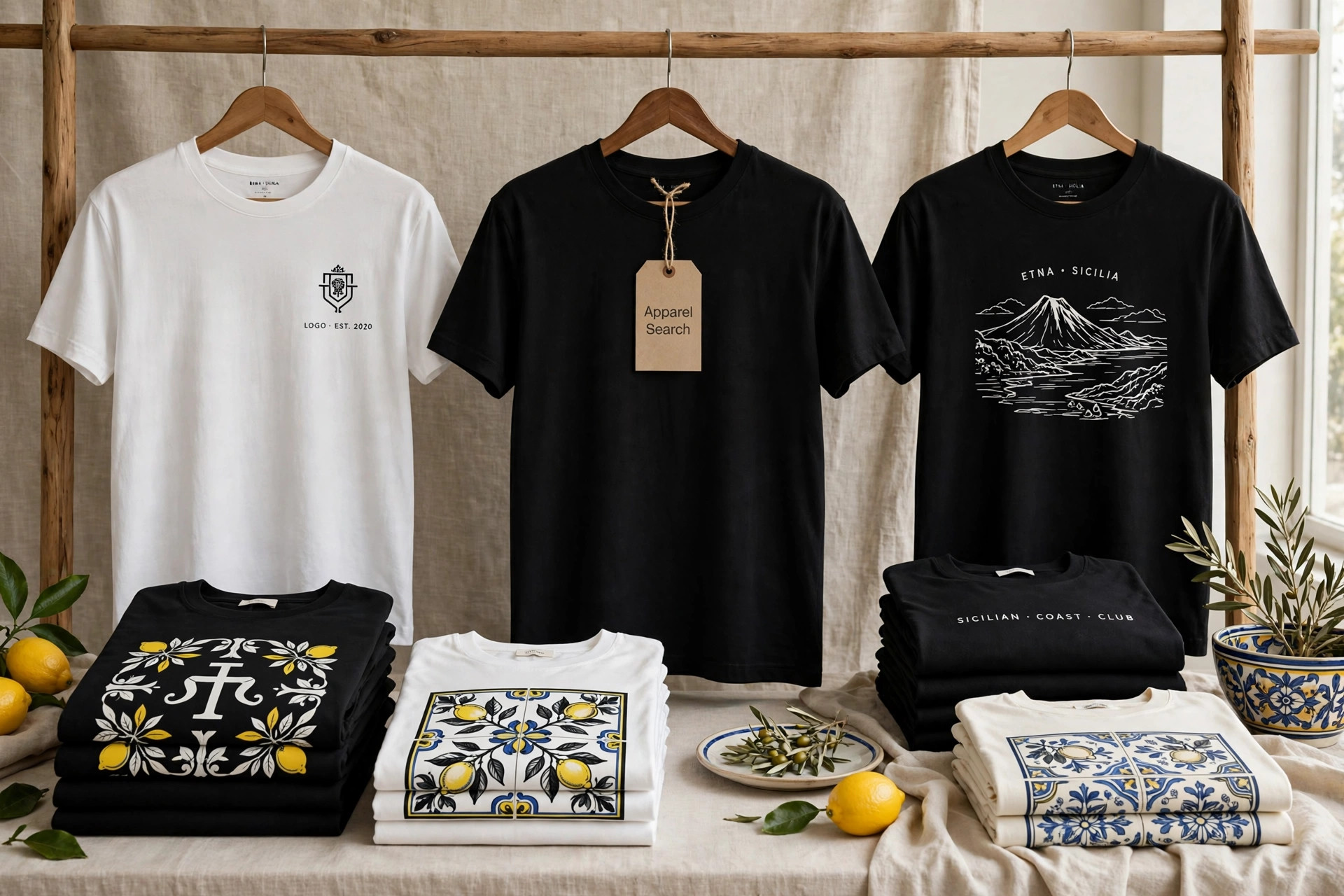
Illustrative image created for this guide — an artistic impression, not this designer's own garments.
News, Photos & VideoCollectionsDressesFall FashionsFashion WeekFootwearHandbagsNewsProfilesRunwaySpring FashionsSunglassesT-Shirts
The T-Shirts Signature
What makes a Dolce & Gabbana piece recognizable across a crowded market is the house language applied without dilution: black lace, fitted Sicilian tailoring, leopard and vivid floral prints, corsetry-inspired construction and baroque gold detail. In the t-shirts that language is worked at close range — smaller surfaces, finer finishing, and details that have to read at a glance. Print placement and jersey weight decide quality — a graphic should sit centered and level on a fabric heavy enough to hold it; the house prints its motifs at the scale of its dress fabrics, so the t-shirt reads as a piece of the collection rather than merchandise afterthought. The result is a product category that behaves like the clothes: designed as part of a wardrobe, not as merchandise detached from it.
Styled the house's way, the printed t-shirt goes under tailoring and with denim alike — the casual counterweight in a wardrobe of lace and structure, and often the first piece through which new wearers enter the house's world. Readers comparing seasons will find the same pattern here as in the collections themselves — the signatures constant, the handling renewed — because the house develops its product categories from the runway outward: a season's prints, colors and materials appear in the t-shirts in step with the clothes they are meant to accompany.
T-Shirts in the House's Record
The house behind these t-shirts gives the category its weight: Dolce and Gabbana met in Milan in 1980 and presented their first women's collection there in 1985 — a collection called Real Women, shown on amateur local women rather than professional models. A store followed a year later, knitwear in 1987, lingerie and beachwear in 1989, and the first men's collection in 1990, when the house also began designing gowns and other more expensive pieces. Product pages like this one exist because categories of that standing reward being filed properly — dated, photographed, and placed in the house's chronology rather than left to drift through search results without context.
For the full seasons, turn to the collections page; for the shows where new t-shirts are first seen completing the looks, the runway page; and for the coverage each launch receives, the news page. The profiles page carries the founders' story that the whole product world descends from.
Photos

Common Questions
What defines Dolce & Gabbana t-shirts?
The house's t-shirts carry its imagery at its most direct: Sicilian prints, religious and baroque motifs, logos and photographic graphics on black and white cotton jersey — the runway's language translated into the simplest garment in the wardrobe.
How should Dolce & Gabbana t-shirts be chosen?
Print placement and jersey weight decide quality — a graphic should sit centered and level on a fabric heavy enough to hold it; the house prints its motifs at the scale of its dress fabrics, so the t-shirt reads as a piece of the collection rather than merchandise afterthought.
Where do t-shirts sit in the Dolce & Gabbana record?
They are one strand of the house's wider world, filed here on their own page; the collections page covers the full seasons, and the main page routes the house's news, photos and videos.
More to Explore
References & Further Reading
- Dolce & Gabbana T-Shirt Search
- Dolce & Gabbana T-Shirt News
- Dolce & Gabbana T-Shirt Photos
- Dolce & Gabbana T-Shirt Videos
- Dolce & Gabbana T-Shirt
- Dolce & Gabbana T-Shirt News
- Dolce & Gabbana T-Shirt Images
- Dolce & Gabbana T-Shirt Video
- Dolce&Gabbana official website
- Apparel Search