Louis Vuitton Profiles
The house's history in order — the trunk-maker, the Monogram, and LVMH.
Louis Vuitton began as one man's trade. Louis Vuitton arrived in Paris as a teenager and apprenticed as a box-maker and packer before becoming a trunk-maker in his own right, founding Louis Vuitton Malletier in Paris in 1854. This profiles page tells the house's story in order: the flat-topped trunk that changed luggage, the Monogram canvas that made the house recognizable worldwide, and the merger and ready-to-wear years that turned a trunk-maker into a complete fashion house. Of all the pages in this series, this is the one the others depend on.
The house's official website is linked in the references, together with the biography searches. The collections, runway and handbags pages in this series file the work itself; this page keeps the chronology of the house behind it straight.
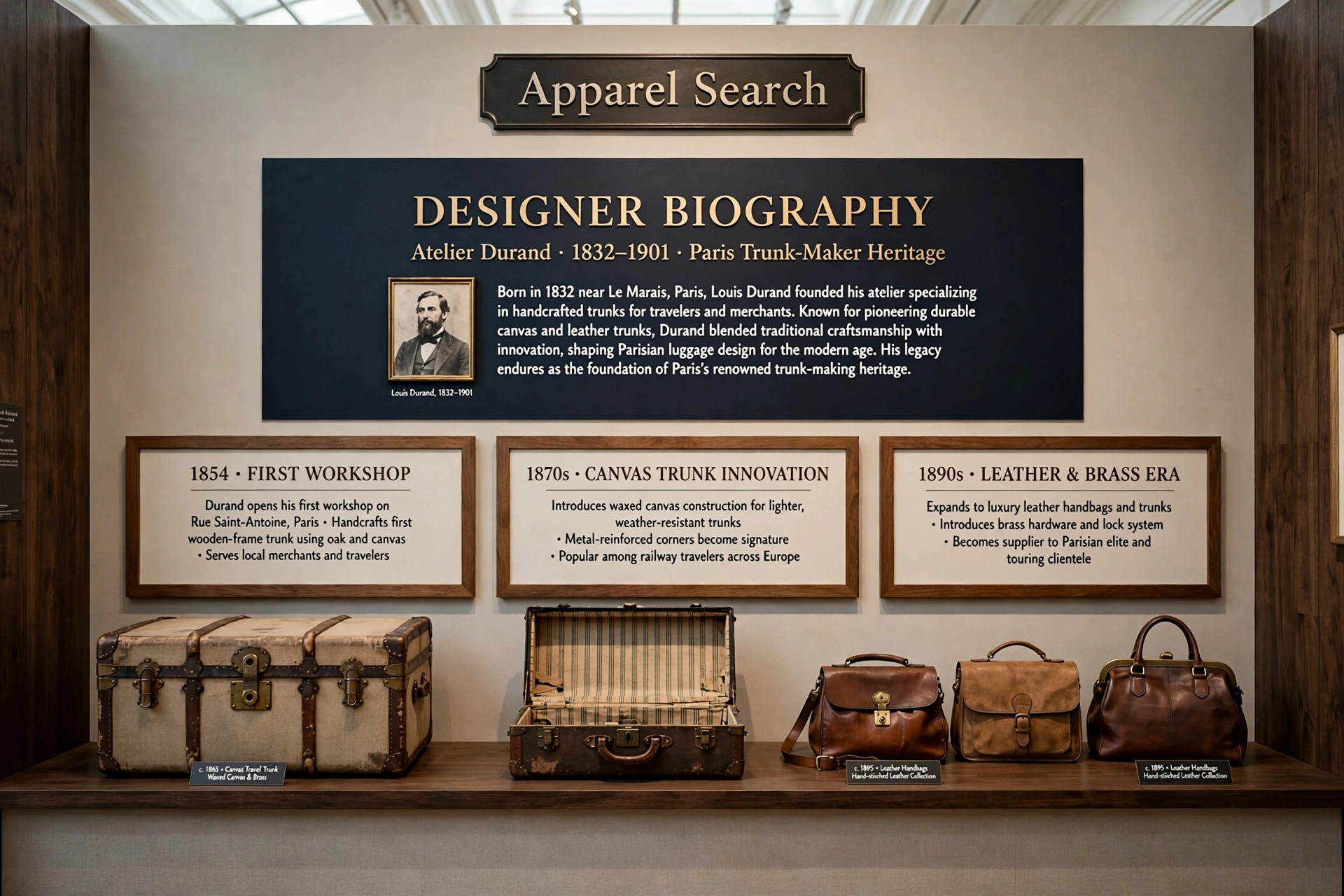
Illustrative image created for this guide — an artistic impression, not this designer's own garments.
News, Photos & VideoCollectionsFall FashionsFashion WeekHandbagsNewsProfilesRunwaySpring Fashions
The Trunk-Maker and the Flat-Topped Trunk
Vuitton's apprenticeship was in the unglamorous end of luxury: boxes and packing, the craft of fitting valuable things safely into containers for travel. His insight was geometrical. Trunks of the period had rounded tops, made for shedding rain — and impossible to stack. His flat-topped trunks, covered in lightweight canvas, could be stacked, a revolution in the age of railway travel, when luggage moved in quantity and every carriage and hotel piled it high.
That single practical idea founded a house. The trunk remained the core product for generations, made to luggage standards of precision that the house later carried into everything it made — canvas, leather and garment alike finished to trunk-making standards.
The Monogram, LVMH and Ready-to-Wear
His son Georges created the Monogram canvas in 1896 — the interlaced LV initials and floral motifs that made the house's goods recognizable at a glance and difficult to imitate. The Monogram turned a maker's mark into the most famous signature in luxury goods, and it still anchors the handbags filed on the handbags page in this series.
In 1987 the house merged with Moët Hennessy to form LVMH, becoming the flagship house of the group. Ready-to-wear followed a decade later, and with it shoes and accessories beside the leather goods — the transformation the rest of this series documents: the collections and seasonal pages file the clothes, the fashion week and runway pages follow the Paris shows, and the news page gathers the continuing coverage of the house.
Photos


Common Questions
Who founded Louis Vuitton?
Louis Vuitton, who arrived in Paris as a teenager, apprenticed as a box-maker and packer, and founded Louis Vuitton Malletier in Paris in 1854 as a trunk-maker in his own right.
What did Louis Vuitton invent?
The flat-topped trunk covered in lightweight canvas, which could be stacked — a revolution in the age of railway travel, when luggage had to be piled in quantity. His son Georges created the Monogram canvas in 1896.
When did Louis Vuitton become a fashion house?
In 1987 the house merged with Moët Hennessy to form LVMH, and ready-to-wear followed a decade later, turning the trunk-maker into a complete fashion house producing clothing, shoes and accessories beside its leather goods.