Fashion on Television · Screen Style Topics
Gossip Girl: Headbands, Plaid and the Art of Dressing to Be Seen
Gossip Girl took the most standardised wardrobe in a young life — the school uniform — and restyled it, week after week for six seasons, into a fashion system its audience could decode and shop. Eric Daman, who had trained as Patricia Field's assistant, designed the whole original run and returned for its continuation. This guide tells the design story: the headband that became a crown, the prep code rewritten as personal style, and the two documented retail effects — a designer's sales that stayed high for months, and a national collection built on the show as its muse.
At a Glance
- Series
- Gossip Girl (The CW, 2007–2012), six seasons, plus the 2021 HBO Max continuation
- Setting
- The Upper East Side of New York City — elite schools, parties and the social world around them
- Costume designers
- Eric Daman (all six seasons of the original series, and the 2021 continuation)
- Signature look
- The prep code restyled: blazers, plaid and ties layered and personalised, finished with Blair Waldorf's signature headbands
- The fashion effect
- Jennifer Behr headband sales that would skyrocket and stay high for months after screen appearances; Anna Sui's 2009 Target collaboration built on the show as its muse
The Design Brief
School Uniforms, Rewritten as Fashion
Gossip Girl, on The CW from 2007 to 2012, began with a premise a costume designer could build an empire on: wealthy New York teenagers, on the Upper East Side, whose school dress codes were a starting point for personal display rather than a limit on it. Eric Daman, costume designer for all six seasons, took the raw materials of prep — blazers, plaid, ties, headbands, tailored coats — and treated them the way a fashion editor treats a rail of samples: as components to be mixed, layered, accessorised and personalised until a uniform stops being a uniform and becomes a signature. The result was a wardrobe that a young audience could decode, copy and shop with unusual precision, because its ingredients were specific, nameable and, crucially, attainable at more than one price level.
Daman arrived with a pedigree that matters to this section of our guides. Before Gossip Girl, he had been Patricia Field's assistant on Sex and the City, across its second to fourth seasons — trained, that is, inside the department that had pioneered the modern relationship between television wardrobes and the fashion industry. Gossip Girl is what that education produced when it was handed a younger cast, a school setting and a new generation of viewers: the Field instinct for character-led, high-low, headline-making styling, translated into the visual language of privileged adolescence. The line from one show to the other is not an influence spotted by critics. It is a direct line of employment and training.
The design problem was differentiation inside sameness. A school-based cast spends much of its screen time in variations of the same dress code, so character has to be expressed through deviation: how a tie is worn, what a blazer is paired with, which accessory becomes a personal crest. Daman made those deviations systematic. Each central character's styling is consistent enough to be recognised across a crowded hallway shot and flexible enough to evolve across six seasons of growing up, falling out and changing sides. That consistency is what turned styling choices into signatures — and signatures, as the effect section shows, into sales.
The Wardrobe
The Upper East Side Wardrobe, Piece by Piece
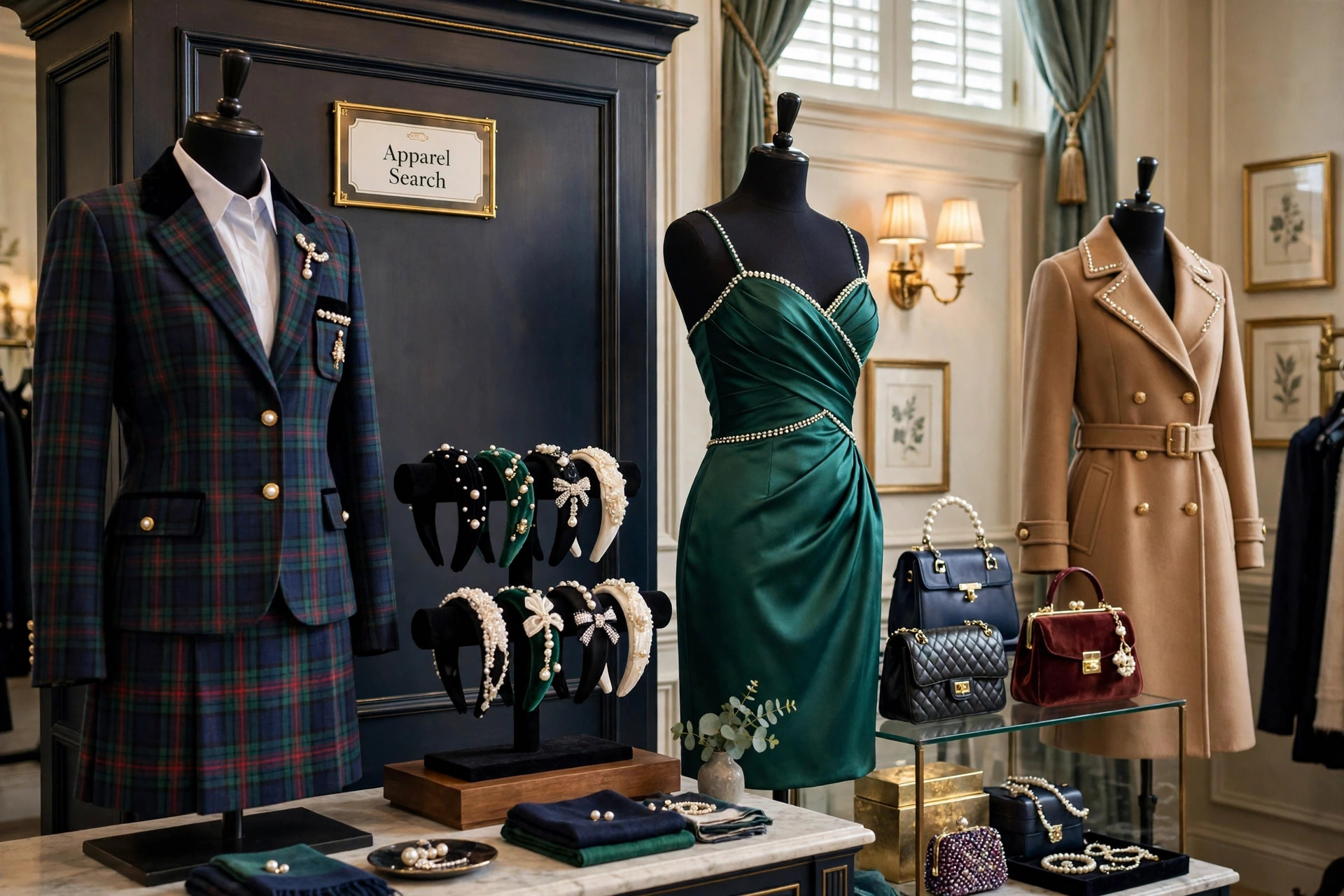
The headband. The signature piece of the entire series is also its smallest. Blair Waldorf's headbands — structured, embellished, worn as the finishing authority of an outfit — became so identified with the character that they function as her crown within the show's social monarchy, and as the most commercially documented accessory in the series outside it. The headbands were the work of designer Jennifer Behr, and their story is told, in Behr's own account, in the fashion-effect section below. As a design choice, the headband is a masterclass in economy: one small, repeatable, affordable-category accessory, varied endlessly, carrying a whole character's identity.
The blazer and the plaid. The school blazer, plaid skirt and tie form the wardrobe's base layer, and Daman's treatment of them is the show in miniature: never worn straight when they can be styled. Layers go over and under, tailoring is mixed with dresses and coats, and the prep codes are quoted rather than obeyed. For the audience, this was the most copyable lesson the show taught — how to take the most standardised garments in a young wardrobe and make them personal with proportion, layering and accessories.
Coats, dresses and occasion dressing. Outside school hours, the wardrobe opens out into the full register of wealthy New York dressing: tailored coats that became audience favourites in their own right, party and gala dresses that raised the stakes of every social plot, and a sharp distinction between the polished, controlled styling of the Upper East Side insiders and the looser, more downtown register of the characters who enter that world from outside it. Costume maps the show's central border — who belongs, who is visiting, who is performing belonging — and it redraws that map every time a character's circumstances change.
Colour and control. The most controlled character dresses with the most control: coordinated, deliberate, finished. Characters in emotional or social freefall loosen — in palette, in silhouette, in the care of the finish. It is an old costume language, but Gossip Girl spoke it to an audience fluent in reading clothes from social media and magazines, and that fluency is part of why its styling was tracked, itemised and shopped so closely while it aired.
Character in Clothes
Dressing as Social Strategy
In Gossip Girl, clothes are not self-expression in the abstract. They are strategy, in a social world the series portrays as a permanent negotiation of rank. A headband is authority. A perfectly judged party dress is a claim. A coat chosen well is armour for a difficult entrance. Daman's wardrobe understands this and dresses the negotiation rather than the mood, which is why the styling holds up as storytelling long after the specific trends have dated: the audience is not just admiring outfits, it is reading moves in a game.
One small, repeatable accessory, varied endlessly, can carry a whole character's identity — and a designer's business with it.
The outsider characters make the system visible. Dressed at first in a different register — less polished, less coded, more Brooklyn than Upper East Side — they are gradually restyled as they move inward, and the wardrobe lets the audience measure their progress socially by measuring it sartorially. When an outsider's styling becomes indistinguishable from an insider's, the costume department has told you the plot's real event before the dialogue confirms it. Few series aimed at a young audience have trusted clothes with that much narrative responsibility, or been rewarded with an audience that rose to the trust so completely.
That audience response is the bridge to the show's documented impact. Gossip Girl's viewers did not merely enjoy its wardrobe in the way audiences enjoy a beautiful period drama. They itemised it, searched for its pieces and bought its signatures, sometimes within days of an episode. A costume department rarely gets to watch its work convert into a named designer's sales in near-real time. This one did, and the designer kept the receipts.
The Lineage
From Field's Assistant to Lead Designer — and Back Again
Eric Daman's career line gives this section of our series one of its clearest through-stories. He learned television styling as Patricia Field's assistant on Sex and the City, seasons two to four — inside the department that had made designer lending and headline accessories part of TV production. He then led Gossip Girl for its full six-season original run, building a younger, prep-coded version of the same philosophy: character first, signature accessories, clothes the audience could find and buy. And when Gossip Girl returned in the 2021 HBO Max continuation, Daman returned with it as costume designer, dressing a new generation of Upper East Side characters for an audience that now shopped through a phone while the episode was still playing.
The continuation credit matters for accuracy as much as for symmetry. This guide credits the original 2007 to 2012 series and the 2021 continuation to the same designer — a rare case of a wardrobe's author being invited back to extend his own world — and keeps both under his name, exactly as the record in our roster documents it. Few costume designers get to revisit their signature series. That Daman did is a measure of how completely the show's look was understood, by its makers and its audience alike, to be his.
The Fashion Effect
Headbands That Skyrocketed, a Target Collection as Muse
Gossip Girl's fashion effect is documented in two unusually concrete forms. The first is a designer's own sales account. Jennifer Behr, whose headbands were Blair Waldorf's signature, described what an appearance on the show did to her business: sales, in the account reported by Fashionista, would skyrocket when a headband appeared on screen — and stay high for months afterwards. Note the second half of that sentence. A brief spike is publicity; a lift that stays high for months is a changed business. A television accessory, worn by the right character in the right series, did that for an independent accessories designer, and Behr's account remains one of the clearest pieces of first-hand evidence in this whole series of guides for what screen exposure is actually worth.
The second form is a retailer building a collection on the show outright. Anna Sui's 2009 designer collaboration for Target was explicitly built on Gossip Girl as its muse — not loosely inspired by teen drama, but constructed around this series and its characters' world. A mass retailer and a named designer jointly deciding that a television wardrobe was a sufficient foundation for a national collection is a different order of evidence from trend commentary. The collaboration's afterlife confirms its standing: it was re-released for Target's twentieth-anniversary celebration of its designer collaboration programme, placing the Gossip Girl collection in the retailer's own chosen canon of its historic partnerships.
Our Fashion on Television overview uses this show to make a wider point about timing. Gossip Girl aired exactly as its audience's shopping moved online and onto social platforms, so the distance between seeing a headband in an episode and finding the designer's own site had never been shorter. Daman's wardrobe — specific, signatured, attainable in pieces — was perfectly engineered for that distance, whether or not anyone used the word engineered at the time.
Legacy
The Prep Code, Permanently Restyled
Gossip Girl's legacy rests on three durable contributions. It proved that a youth series could carry the full fashion weight of an adult one — designer collaborations, independent-label sales effects and a named muse credit from a national retailer. It completed the clearest mentorship line in modern television costume, from Patricia Field's department to a lead designer's own signature series, a line this section's guides trace from both ends. And it fixed a styling idea in the culture: that the most standardised wardrobe in a young life — the school uniform and its prep relatives — is not the end of personal style but a base layer for it, awaiting a headband, a layer and a decision.
Daman's return for the 2021 continuation closes the story in the way our Fashion on Television series most values: with the credit correctly given and the authorship continuous. The Upper East Side of Gossip Girl was a costume designer's construction — built from blazers, plaid and one small, mighty accessory — and its documented effects, in Behr's sales and Target's collection, are the proof that the construction held weight in the real world of fashion business. School, on this show, was never just school. It was a runway with a dress code, and the dress code lost, beautifully, every single week.
Common Questions
Questions & Answers
Who designed Gossip Girl's costumes?
Eric Daman designed all six seasons of the original Gossip Girl on The CW, from 2007 to 2012, and he returned as costume designer for the 2021 HBO Max continuation. Before Gossip Girl, Daman had been Patricia Field's assistant on Sex and the City during its second to fourth seasons.
Why are Blair Waldorf's headbands so significant?
The headbands, designed by Jennifer Behr, were Blair Waldorf's signature accessory and the show's clearest documented sales story. In Behr's own account, sales would skyrocket when a headband appeared on screen and stay high for months afterwards, showing how one small repeatable accessory could change an independent designer's business.
Was there a real fashion collection based on Gossip Girl?
Yes. Anna Sui's 2009 designer collaboration for Target was explicitly built on Gossip Girl as its muse, translating the show's Upper East Side world for a national retail audience. The collection was later re-released as part of Target's twentieth-anniversary celebration of its designer collaboration programme.
In This Series
The Fashion on Television hub this guide belongs to, the parent film section, and companion guides including the series where this show's designer trained.
Search Apparel Search