Apparel Search Consumer Guides
Fashion Gift Cards Guide
The clothing gift that is never the wrong size — chosen well and presented properly.
Every December, shoppers stand in clothing stores holding a sweater and thinking the same thought: I have no idea what size she wears. The fashion gift card exists to end that moment. It is the one clothing gift that cannot be the wrong size, the wrong color or the wrong style — and, spent in the post-Christmas sales, it often buys the recipient more than the same money would have bought the week before. This guide, part of our Holiday Fashion & Gift Shopping Guide, covers how to choose a card well, how the last-minute email version saves Christmas Eve, and the balance, expiry and fee details worth knowing before you give or spend one.
Why a Gift Card Beats a Guessed Size
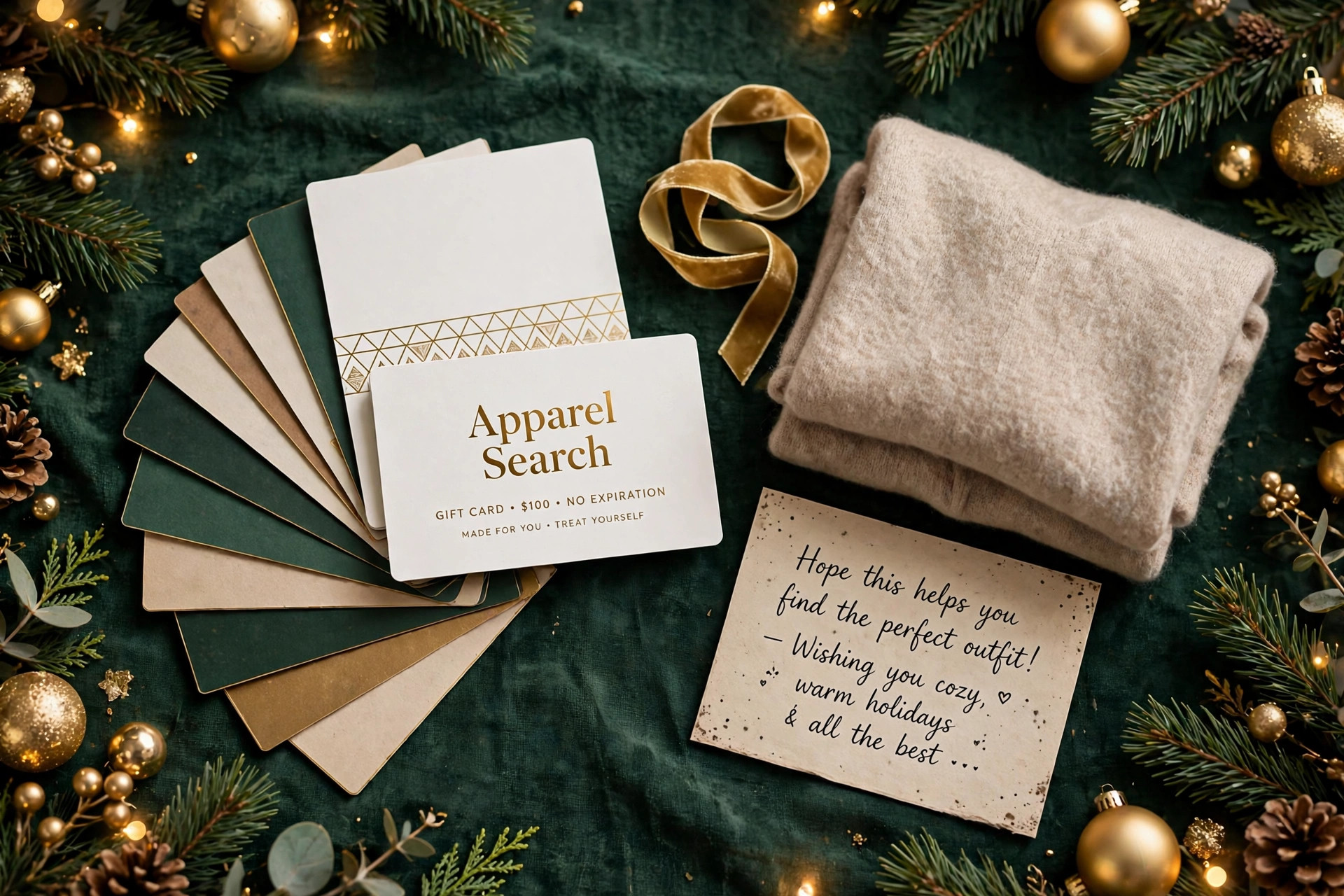
Clothing is the most returned category of gift, and size is the main reason. A gift card removes the gamble entirely and replaces it with something arguably better: the recipient chooses the garment, the fit and the moment. There is a second, underappreciated advantage — timing. A card given on Christmas Day is usually spent between December 26 and mid-January, which is clearance season, when the same dollars buy coats and boots at their lowest prices of the year. The giver pays full value; the recipient shops at 40 percent off. Few gifts improve in value by being opened.
Choosing the Right Card
- A store they already wear. The best signal is the label in their closet: give the card of a retailer whose clothes they actually own and like, not the store you wish they shopped at.
- Store card versus bank card. A retailer's own card usually comes with no fees and no expiry pressure, and it shows you thought about the person. A general-purpose bank gift card spends anywhere but often carries purchase fees and reads as less personal — useful for teenagers and for recipients whose taste you truly cannot read.
- The amount. Match the amount to a plausible purchase: enough for a sweater or a good pair of jeans at that store. A card that covers most of a real item feels generous; one that covers a fifth of everything feels like a coupon.
- Online, in hand, or both. Physical cards present better; e-gift cards arrive instantly. Many retailers sell both against the same balance system, so the recipient can spend either way.
The Christmas Eve Save: E-Gift Cards
It is December 24, the shops are closing, and one name is still unticked. The e-gift card — bought online, delivered to the recipient's email in minutes — is the legitimate answer: not a compromise announced with an apology, but a real gift that arrives on time, in the right amount, from a store they like. Print the confirmation or forward it with a personal note, and put the printout in a card or even a stocking. Just buy it from the retailer's own website, never a resale marketplace: discounted second-hand cards are a known fraud channel, and a card that arrives with a drained balance is worse than no card at all.
Balances, Expiry and Fees
A few facts protect both giver and recipient. Under US federal rules, gift cards sold by retailers cannot expire for at least five years from issue or last load, and dormancy or inactivity fees are restricted — they cannot begin within the first year. State laws are sometimes stricter still. Checking a balance is free: the retailer's website, the phone number on the card, or any store register will report it, and the recipient needs the card number and usually a PIN under a scratch strip. Keep the purchase receipt or order email until the card is spent — with the receipt, a lost card can often be replaced; without it, rarely. And spend cards fully and reasonably soon: protections are strong, but a card forgotten in a drawer for years earns nothing for anyone, and a retailer that closes its doors takes unspent balances with it.
Presenting a Card Like a Gift
The one fair criticism of gift cards is that they unwrap in two seconds. Fix it with pairing: tape the card to a small physical present — a pair of good socks, a scarf, a stocking stuffer from our stocking stuffer guide — so there is something to hold and something to choose. Write the store and amount plainly in your card (recipients genuinely forget which card holds what), and if your exchange has drawn names and limits, the same pairing works inside a Secret Santa budget, as our Secret Santa fashion gifts guide describes.
Shop Clothing Gift Cards on Amazon
Ready to shop? Product links are kept in one place on the Apparel Search shopping guide:
Shop Clothing on AmazonThis link opens the Apparel Search shopping guide for Amazon, where the product links are kept in one place.
Common Questions
Do clothing gift cards expire?
Not quickly. Under US federal law a retail gift card cannot expire within five years of issue or its last reload, and inactivity fees cannot start during the first year. Some states add stronger protections. The exact date is printed on the card or available from the retailer.
How can I check a gift card balance?
Free, three ways: the retailer's website (enter the card number and PIN), the phone number printed on the back of the card, or any checkout in the store. Keep your purchase receipt or order email — with it, a lost card can often be replaced.
Is an e-gift card a thoughtless last-minute gift?
No — it is often the most considerate version. The recipient gets the right size and style by definition, and a card spent in the post-Christmas clearance buys more than the same money spent in December. Buy it from the retailer's own site, and pair it with a small wrapped item for the unwrapping.
Gift card or cash for a fashion gift?
A well-chosen store card says more: it shows you noticed what the person wears and where they shop, and it is earmarked for them rather than absorbed into general spending. Cash is the safer choice only when you know nothing about their taste at all.
Back to the Holiday Fashion & Gift Shopping Guide
The full season in one plan — sales events, party outfits, gift guides and clearance strategy.