Kmart
Apparel industry financial guide — Retail Company Stocks.
Kmart was the discount department-store chain created by the S.S. Kresge Company, opening its first store in Garden City, Michigan in 1962 and growing into one of America's largest retailers, selling clothing, footwear, home goods and everyday essentials at discount prices. Kmart Corporation filed for Chapter 11 in January 2002, emerged in 2003, and in 2005 bought Sears, Roebuck and Co., forming Sears Holdings Corporation. That parent filed for Chapter 11 on October 15, 2018 and sold its assets, including Kmart, to ESL Investments' Transformco in February 2019; closures then reduced the chain to a handful of stores, and the last full-size Kmart stores closed in 2024.
Company Snapshot
Status: Closed as a national chain — its parent Sears Holdings filed for Chapter 11 in October 2018 and sold its assets to ESL Investments' Transformco in February 2019; the remaining Kmart stores closed in the years that followed
Type: Private — defunct as a chain (was part of Sears Holdings, Nasdaq: SHLD)
Headquarters: Formerly Hoffman Estates, Illinois, United States (as part of Sears Holdings)
Founded: 1899 as Kresge; the first Kmart store opened in 1962
Company Profile
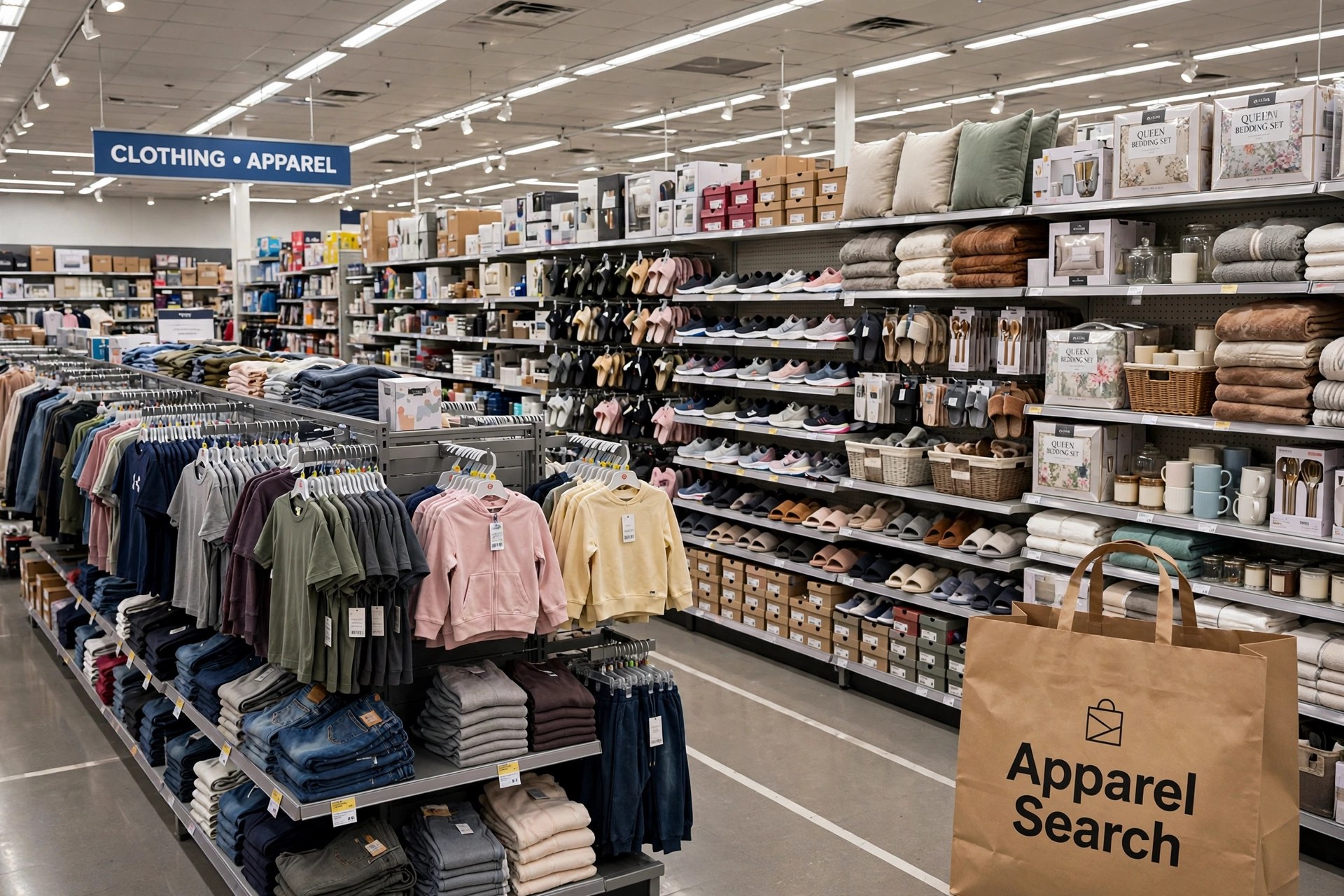
Kmart's place in apparel history is the mass market: for decades its stores were where much of America bought basic clothing — family apparel, work clothes, shoes and seasonal goods — at prices below the department stores. The Blue Light Special, its famous in-store flash promotion, became a piece of American retail folklore, and celebrity and designer lines for Kmart, most famously Jaclyn Smith's long-running apparel collection, showed how much fashion volume the discount channel could move.
The stock record on this page is deliberately short: Kmart was a division, not a separately listed company in its Sears Holdings years, and its own financial page simply pointed readers to the Sears page. The listed story therefore belongs to the parent — Kmart Holding Corporation before 2005 and Sears Holdings (Nasdaq: SHLD) afterwards — and it is told in full on the Sears Holdings profile in this section.
The range behind the name is discount department-store clothing, footwear, home goods and everyday essentials. Its customers are American families shopping for value, in stores across the United States. That combination — what is sold, and to whom — is the simplest way to place Kmart in the industry: it explains the company's costs, its competitors and the kind of news that moved its shares when it had them. A change in either half of the combination, a new product category or a new customer, is usually the first sign that the business described in the older summaries is turning into something different.
Scale should be read from the dated summaries with their dates attached. Store counts, sales descriptions and market positions quoted there were the company's own account of itself in that year, and they are the right basis for comparing Kmart with the other companies in this section — a component supplier against a retailer, or a catalogue house against a mall chain — as long as each figure is compared with figures from roughly the same period.
Because Kmart no longer operates independently, there is no current company website to link from the snapshot, and enquiries that would once have gone to its head office belong with the successor named in the status line — or, where the business closed entirely, the record here is the end of the trail. The dated summaries remain useful to researchers precisely because the company can no longer update its own account of itself.
The stock record matters because Kmart sat at a point where fashion meets the public markets: investors following the shares were really following discount spending by American families on clothing and everyday goods. The dated company summaries gathered in this section were written for that audience, recording store counts, sales descriptions and company statements as they stood at the time. Read together with the current status above, they show both halves of the story — the business as it presented itself in its listed years, and what became of it afterwards.
History in Brief
Kmart's own record is a pointer rather than a profile: a division of Sears Holdings, it asked readers to use the Sears page for financial information. Its earlier independent history — the 1962 launch, the 2002 Chapter 11 filing and the 2005 purchase of Sears — is summarised in the profile above.
Common Questions
Is Kmart still in business?
Not as a national chain. Its parent Sears Holdings filed for Chapter 11 in October 2018, Transformco bought the assets in February 2019, and the remaining Kmart stores closed in the years that followed, the last full-size stores in 2024.
Who owned Kmart?
Kmart bought Sears in 2005 and the combined company traded as Sears Holdings Corporation. After the 2018 bankruptcy its assets passed to Transformco, an ESL Investments affiliate.
When did the first Kmart open?
In 1962, in Garden City, Michigan. The business behind it, S.S. Kresge, dated to 1899.
References & Further Reading
Company details such as leadership, ownership, store counts and web addresses can change. This company no longer operates independently, so there is no current official website to check; the information here is a historical record of the business as it was.