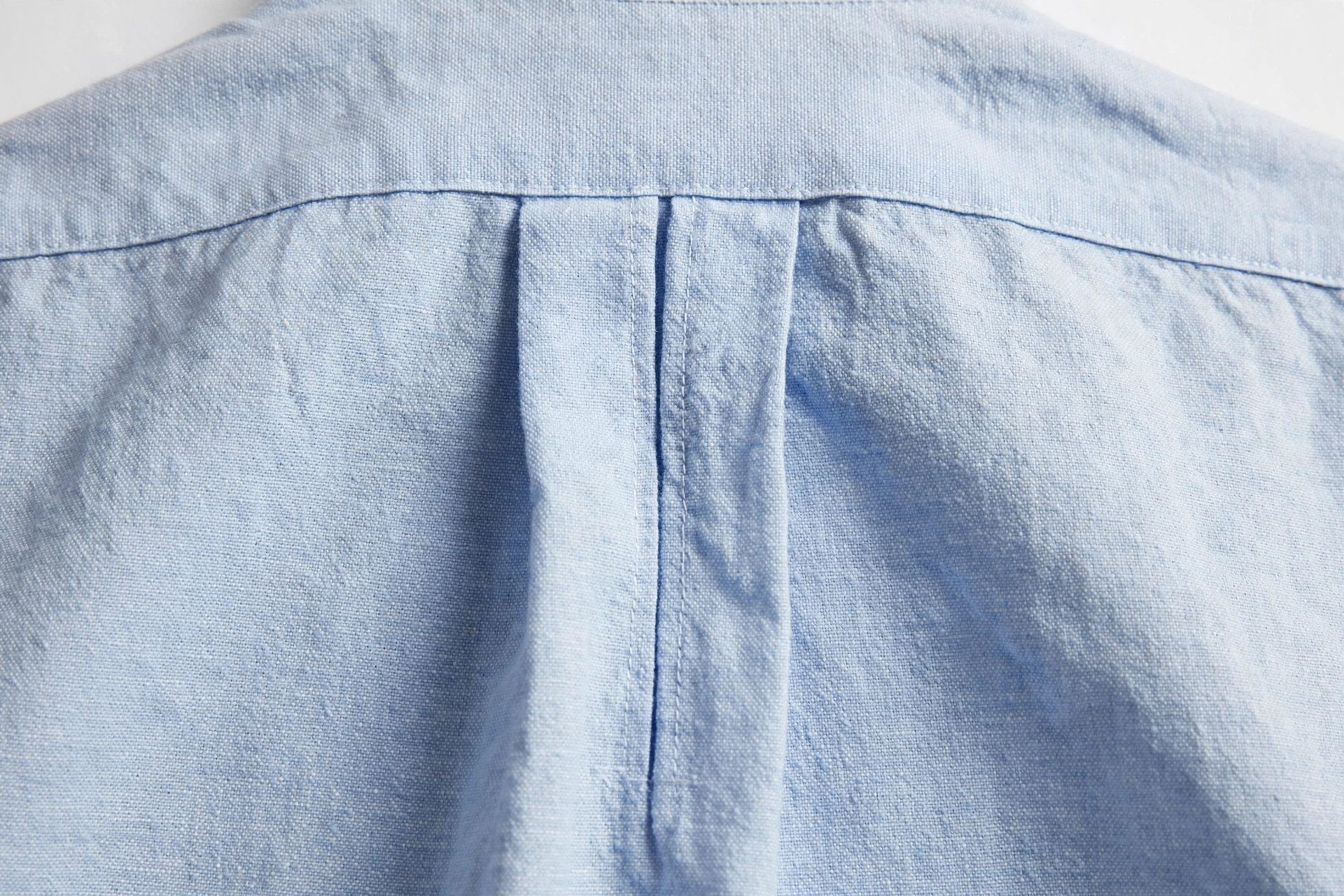
A box pleat is a pleat formed by two folds of fabric turned away from each other, so the pleat sits on the surface as a flat, raised box shape with fullness hidden underneath. A single box pleat runs down the back of the classic button-down shirt; repeated box pleats make the traditional school and uniform skirt.
Where Box Pleats Appear
The most familiar box pleat in menswear is invisible in daily life: the single pleat centred on the back of an oxford shirt, just below the yoke, which gives the shoulders room to reach and move. In womenswear, rows of box pleats make skirts that sit flat at the waist and release into even, architectural fullness.
Box pleats also appear at the centre back of jackets and coats, where the 'box' opens as the wearer moves, and on curtains and valances for the same tailored effect.
Forming a Box Pleat
- Mark the centre line of the pleat and bring a fold to it from each side, folds facing away from each other.
- The visible flat section is the 'box'; the spare fabric is tucked in folds beneath it on the inside.
- Press firmly, and stitch the pleat down at the top (through the waist or yoke) so it opens only where movement is wanted.
FAQs
- What is the difference between a box pleat and an inverted pleat?
- They are mirror images. A box pleat's folds face away from each other and the flat box sits on the outside; an inverted pleat's folds face each other and the fullness hides inside a slit-like opening.
- Why do shirts have a box pleat in the back?
- For ease. The hidden fullness lets the shirt give across the shoulders when you reach forward, then settles flat again.
- Are box pleats flattering?
- Because they are flat on the surface and release below a stitched point, box pleats add controlled fullness without bulk at the waist or hip line.
Detailed Guides: see Box Pleat in the glossary A–Z listing of the Apparel Search fashion glossary for related terms.