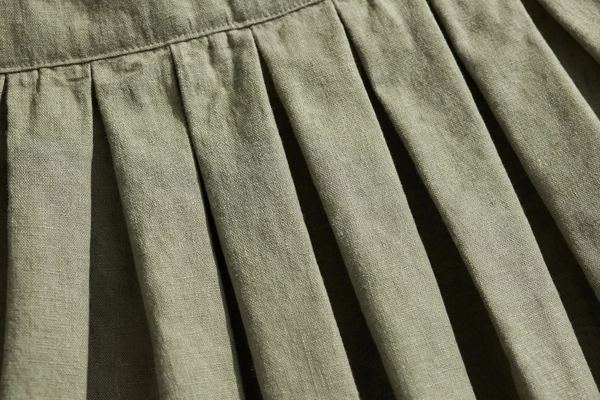
A pleat is a fold in fabric - pressed or unpressed - that adds fullness, texture, and movement to garments.
Types of Pleats
- Knife pleats - all folds pressed in one direction; the classic school-uniform and kilt pleat
- Box pleats - two folds facing away from each other, creating a flat box on the surface
- Inverted pleats - two folds facing each other, hiding fullness inside (common at the back of jackets and skirts)
- Accordion pleats - fine, narrow, permanent pleats; the shimmering Fortuny-style finish
Setting Pleats
Mark the pleat lines, fold, and press - precision at the marking stage determines everything. On natural fibers, pleats are pressed in and maintained with pressing; on synthetics, heat-setting makes them permanent (polyester pleats can survive years of washing). Always press from the wrong side first to avoid shine.
FAQs
- What's the difference between a pleat and a dart?
- Pleats add fullness; darts remove it. Both shape flat fabric to a three-dimensional body.
- Do pleats fall out?
- Unpressed pleats relax over time; heat-set pleats on synthetics are effectively permanent.
- How much fabric do pleats need?
- Typically 2-3 times the finished width, depending on pleat depth and spacing.
Glossary: see the full fashion glossary for more apparel industry terms.