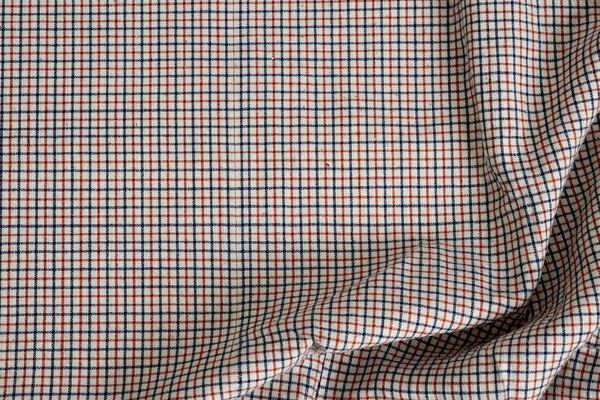
Tattersall is a checked fabric pattern with thin, evenly spaced lines in two alternating colors forming squares on a light background - a classic shirting check.
What Tattersall Looks Like
Tattersall is all about restraint: thin, evenly spaced lines in two alternating colors (traditionally a dark color and a lighter one) crossing over a light, usually cream or white, background. The result is a neat grid of small squares - smaller, finer, and more regular than tartan, and more understated than most plaids. It's a pattern that reads as texture from a distance and reveals its crisp geometry up close.
Tattersall vs Gingham vs Tartan
- Tattersall - thin two-color lines on a light ground, forming small even checks; no overlapping color mixing
- Gingham - overlapping horizontal and vertical stripes of the same color; where they cross, the color deepens, creating the check effect
- Tartan - bold multi-color plaids with wide bands, historically associated with Scottish clans; much larger scale than tattersall
Where It's Used
Tattersall is first and foremost a shirting fabric - dress shirts and casual button-downs are its natural home. It also appears in linings (a classic tattersall lining elevates a plain jacket), equestrian wear (nodding to its horse-market origins), and casual shirts where a refined check is wanted without the boldness of tartan.
FAQs
- Where does the name come from?
- Tattersall's horse market in London - the checks were used on horse blankets, and the pattern moved from stable to shirt.
- Is tattersall only for shirts?
- Mostly shirting, but also used in linings, casual wear, and accessories where a refined check works.
- What colors is tattersall?
- Traditionally dark lines (navy, brown, black) on cream or white. Modern versions vary widely.
Glossary: see the full fashion glossary for more apparel industry terms.