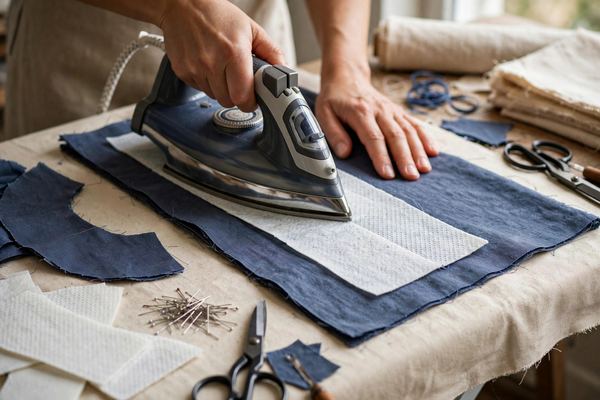
Fusible interfacing is interfacing with heat-activated adhesive on one side - ironed onto fabric to add body, stability, and crispness to collars, cuffs, and facings.
How It Works
One side of fusible interfacing is dotted or coated with a heat-activated adhesive resin. When you press it with a hot iron - using heat, pressure, and usually a few seconds of dwell time - the adhesive melts and bonds the interfacing permanently to the wrong side of your fabric. The result is a single stabilized layer that behaves as one piece through cutting, sewing, and wearing.
Types
- Woven fusible - stable with a defined grain; best for woven fabrics where you want crisp, controlled results
- Knit (weft-insertion) fusible - stretches with the fabric; the right choice for knits and anywhere you need to preserve drape and give
- Weights from feather to heavy - match the interfacing weight to your fabric; featherweight for silks, medium for shirting, heavy for bag-making and structured outerwear
Application Tips
Always test on a scrap first - wrong temperature ruins both interfacing and fabric. Use a press cloth to protect your iron and fabric, apply firm even pressure (don't slide the iron), hold for the recommended time (usually 10-15 seconds), and let the piece cool completely before moving it. Moving too soon is the number one cause of bubbling.
FAQs
- What's the difference between interfacing and interlining?
- Interfacing is fused or sewn directly to one fabric layer; interlining floats between two layers (like quilt batting).
- Why is my fusible bubbling?
- Too hot, too fast, or moved before cooling. Test on scraps first and let each section cool fully.
- Can fusible be removed?
- With difficulty - steam, patience, and gentle scraping. Prevention (testing first) beats removal every time.
Glossary: see the full fashion glossary for more apparel industry terms.