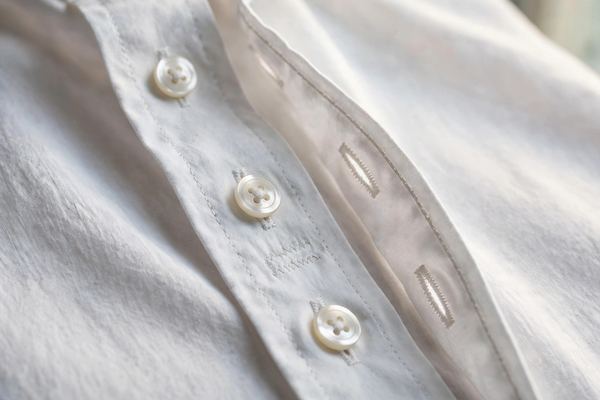
A placket is a finished strip of fabric with buttonholes (or buttons) - the opening that lets you put a shirt, blouse, or cuff on.
Types of Plackets
- Front placket - the classic shirt front: a folded, topstitched strip running down the center front, carrying the buttonholes on one side
- Cuff placket - the small opening at the sleeve cuff that lets your hand through before the cuff buttons
- Concealed (French) placket - buttons hidden behind a fold with no visible stitching; the clean, formal look
Construction
A good placket is folded precisely and topstitched for durability, interfaced for crispness (it must support buttonholes through years of wear and washing), and cut so buttonholes sit evenly spaced and perfectly centered. On quality shirts the placket is a single folded strip; on cheaper ones it may be a separate sewn-on piece. Either way, it takes more stress than almost any other part of the shirt.
FAQs
- What's a French placket?
- A concealed placket with no visible stitching - the buttons hide behind a fold for a clean, formal front.
- Why do plackets need interfacing?
- For crispness and to support buttonholes through wear and washing - an uninterfaced placket goes limp fast.
- Men's vs women's plackets?
- Men's button left-over-right; women's right-over-left. A centuries-old convention nobody fully agrees on the origin of.
Glossary: see the full fashion glossary for more apparel industry terms.