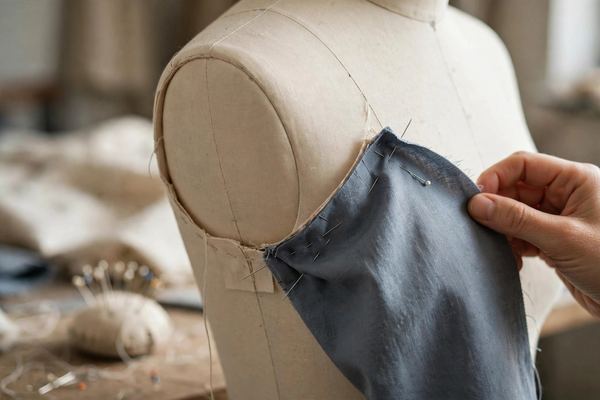
The armhole (armscye) is the opening in a garment where the sleeve is attached - its shape and size determine comfort and range of motion.
Armhole Shape
Armhole shape is a design decision with real consequences. A high, small armhole - cut close under the arm - looks tailored and refined but restricts movement; it's the choice for fitted jackets and dress shirts. A low, large armhole gives plenty of ease for reaching and movement but looks casual and can gap; it's standard in relaxed shirts and workwear. The sweet spot depends on the garment's purpose.
Setting Sleeves
- Pin at notches first - match the sleeve's front and back notches to the bodice, then the underarm seams, then distribute the rest
- Ease the cap - the sleeve cap is slightly larger than the armhole; ease (don't gather) the fullness evenly across the top
- No puckers on the outside - tiny pleats inside the seam allowance are fine, but the outside must be smooth
Fit Issues
The armhole reveals fit problems quickly: gaping at the front means it's too large or the wrong shape; binding or pulling means too small; diagonal wrinkles from bust to armhole suggest the bust dart or armhole shape needs adjusting. Because the armhole connects to the sleeve cap, alterations here ripple outward - it's advanced fitting territory.
FAQs
- What's an armscye?
- The technical term for armhole - from 'arm' + 'scye', an old word for a cut or incision.
- Why do my armholes gap?
- Too large or the wrong shape for your body - one of the most common fit issues in ready-to-wear.
- Can armholes be altered?
- Yes, but it's advanced - changing the armhole affects the sleeve cap too, so both must be adjusted together.
Glossary: see the full fashion glossary for more apparel industry terms.