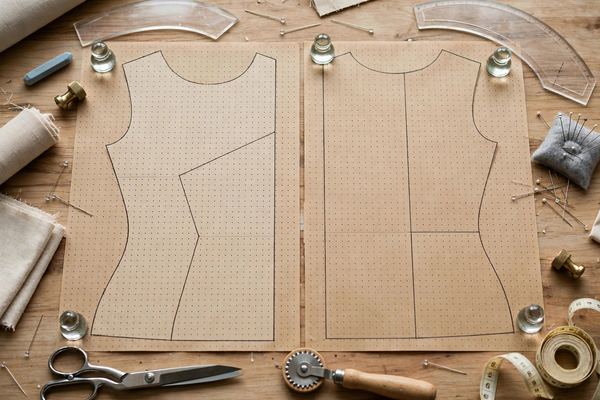
A sloper (basic block) is a foundational pattern with no seam allowances, style lines, or design details - the starting template from which all patterns for a garment type are developed.
Sloper vs Block vs Pattern
The terminology can be confusing, but the hierarchy is simple. A sloper (or block - the terms are interchangeable) is the bare foundation: a perfectly fitted bodice, skirt, pant, or sleeve with no design features at all. A pattern is what you get when you take that sloper, add style lines (seams, darts moved, necklines shaped), and add seam allowances. In short: sloper + design details + seam allowances = pattern.
What Makes a Good Sloper
- Perfectly fitted to the target body - a sloper is only as good as its fit; it must match the brand's fit standards exactly
- True darts and balanced seams - every dart leg trued, every seam matching its partner with no puckering or gaps
- Tested and trued through muslins - a sloper earns its status only after being sewn, fitted, corrected, and proven in test garments
Using Slopers
Every new style starts at the sloper. The pattern maker traces the sloper, adds the design's style lines - moving darts, shaping necklines, adding fullness - then trues all the lines and adds seam allowances. Because the sloper's fit is already proven, the new pattern inherits that fit, and development focuses on the design rather than fixing basic fit problems.
FAQs
- What's the difference between a sloper and a block?
- They're essentially the same - 'sloper' is the American term, 'block' the British.
- Do I need slopers for every garment type?
- Yes - bodice, skirt, pant, and sleeve slopers are the standard set.
- Can I buy slopers?
- Yes - commercial sloper sets exist, but most professionals draft their own to their fit standards.
Glossary: see the full fashion glossary for more apparel industry terms.