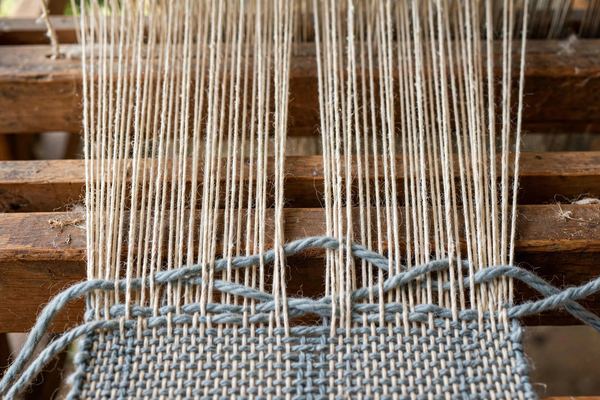
Warp yarns run lengthwise on the loom; weft yarns run crosswise. Their interlacing creates every woven fabric.
Warp vs Weft
- Warp - the lengthwise yarns, held taut on the loom under tension. Because they take the stress of weaving, warp yarns are stronger, tighter-twisted, and higher quality
- Weft (also called woof or fill) - the crosswise yarns, carried back and forth over and under the warp by the shuttle or rapier
Why It Matters
The warp/weft distinction drives fundamental garment decisions. The grainline on patterns follows the warp - the stable, strong direction. Warp shrinks less and stretches less than weft, so garments cut on-grain hold their shape. The bias - 45 degrees to both warp and weft - is the stretchiest direction, prized for drape in bias-cut dresses.
Selvage
The selvage (self-edge) is the finished edge where the weft turns back on itself - it runs along the warp direction, parallel to the warp yarns. It's your built-in compass: find the selvage and you've found the warp direction.
FAQs
- Which is stronger, warp or weft?
- Warp - it's under tension during weaving so it uses stronger, tighter-twisted yarns.
- How do I tell warp from weft?
- Warp runs parallel to the selvage; it's also the direction with less stretch.
- Do knits have warp and weft?
- No - knits are interlooped yarns, a completely different structure with wales and courses instead.
Glossary: see the full fashion glossary for more apparel industry terms.