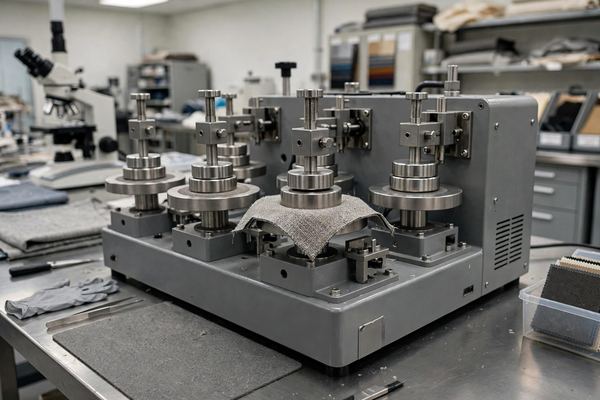
Abrasion resistance is a fabric's ability to withstand surface wear from rubbing - tested by machines that rub fabric until it breaks down.
How It's Tested
Two standard machines dominate: the Martindale tester rubs fabric in a figure-eight (Lissajous) pattern against a standard abrasive, while the Wyzenbeek tester rubs back and forth in one direction. Both count cycles to failure - either yarn breakage or visible wear. Results let buyers compare fabrics objectively instead of guessing.
What Affects It
- Fiber type - nylon and polyester resist abrasion best; cotton and rayon are moderate; silk and linen are delicate
- Weave density and yarn twist - tighter weaves and higher-twist yarns hold up longer
- Finishes - some finishes improve resistance; others (like heavy softeners) can reduce it
Why It Matters
Abrasion resistance decides where a fabric belongs. Workwear, uniforms, and upholstery demand high cycle counts. In garments, high-friction zones - elbows, knees, cuffs, pocket edges, inner thighs - fail first, so abrasion data guides fabric selection for those areas.
FAQs
- What's a good Martindale score?
- Apparel: 20,000+ cycles is good. Upholstery: 25,000-100,000+, depending on use.
- Which fibers resist abrasion best?
- Nylon is the champion, followed by polyester. Cotton and rayon are moderate.
- Can abrasion resistance be improved?
- Yes - tighter weaves, stronger fibers, and some finishes all help.
Glossary: see the full fashion glossary for more apparel industry terms.