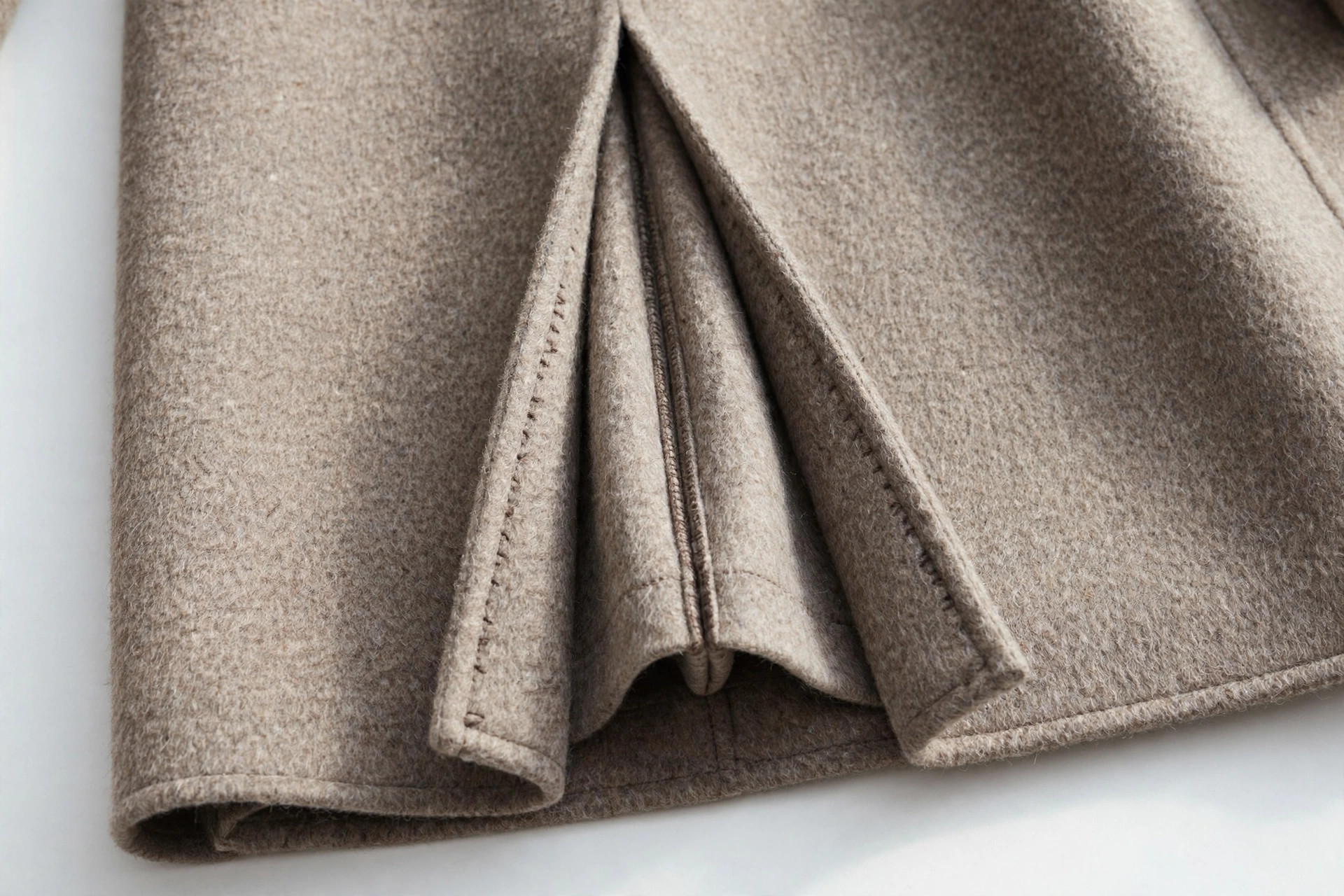
An inverted pleat is a pleat formed by two folds of fabric brought to face each other, meeting at a centre line on the surface while the spare fabric hides inside. Lying perfectly flat when the wearer stands still, it opens only when movement demands room — which is why it is the pleat of skirt backs, coat vents, and jacket backs.
The Pleat That Hides Itself
An inverted pleat is essentially a box pleat turned inside out. Instead of a raised box on the surface, you see a clean slit-like join; the box of extra fabric is folded away on the inside. Walk, sit, or climb stairs and the pleat silently opens to give the stride room, then folds itself shut again.
Tailors place inverted pleats where a garment must look sleek but move freely: the centre back of a pencil skirt, the back vent of a coat or jacket, the back of a shift dress, and the front of some trousers and culottes.
Construction Notes
- The two folds meet exactly at the centre; uneven folds make the pleat twist or gape.
- The pleat is usually stitched down from the top to a marked point, then released.
- Inside, an underlay or the pleat's own folds prevent any gap from showing skin or lining when it opens.
FAQs
- What is the difference between an inverted pleat and a kick pleat?
- A kick pleat is a short inverted pleat (or simple overlap vent) placed low at the back hem of a skirt specifically to allow walking. Every kick pleat is short; inverted pleats can run any length.
- Why do coats have an inverted pleat at the back?
- It works as a vent — closed and neat at rest, opening with each stride so a long coat does not hobble the wearer.
- Can inverted pleats be used on trousers?
- Yes, as a single pleat at the front of each leg in some styles, where the fold faces inward and the extra fabric eases the fit over the thigh.
Detailed Guides: see Inverted Pleat in the glossary A–Z listing of the Apparel Search fashion glossary for related terms.