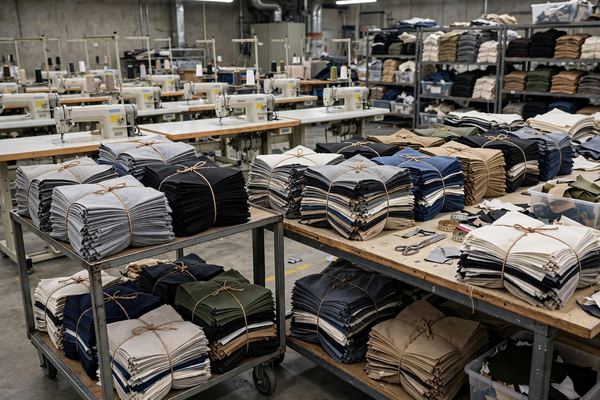
A bundle is a group of cut garment pieces tied together - usually one size, one color, one operation's worth - that travels through the sewing line as a unit.
The Bundle System
The cutting room groups cut pieces into bundles, each with a bundle ticket identifying the style, size, color, and quantity. Bundles move through the sewing line from operation to operation - one operator sews their operation on a whole bundle, then passes it to the next operator. The bundle is the basic unit of work-in-progress on a traditional line.
Bundle Size
Bundles typically contain 12 to 36 pieces - sized so an operator can finish a bundle in a reasonable time without the bundle becoming unwieldy. Smaller bundles flow faster but create more handling; larger bundles are efficient to move but slow the line's rhythm.
Why Bundles Work
- Traceability - the ticket shows which cutter, which fabric roll, and which lay the pieces came from
- Organization - keeps sizes and colors from mixing on a busy line
- Piece-rate pay - completed bundles are the natural unit for counting operator output
FAQs
- What is bundle tracking?
- Following bundles through each operation to monitor progress and quality.
- Do all factories use bundles?
- Most traditional lines do. Modular/single-piece-flow systems are the alternative.
- What happens if pieces go missing from a bundle?
- Shortages are flagged at the next operation - the ticket system makes losses visible.
Glossary: see the full fashion glossary for more apparel industry terms.