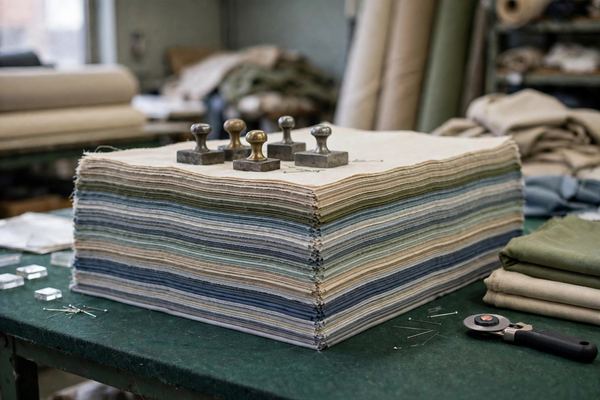
A ply is a single layer of fabric in a multi-layer lay (or spread) prepared for cutting. Dozens or hundreds of plies are cut at once in bulk production.
Ply and Lay
A lay (also called a spread) is the stack of fabric layers prepared on the cutting table. Each individual layer in that stack is a ply. The cutter cuts through the entire lay at once, so one cut produces one piece from every ply - meaning a 100-ply lay yields 100 identical pieces per pass. The maximum height of a lay is limited by the cutting method and the fabric.
How Many Plies
- Depends on fabric thickness, cutting method, and order size - thin shirting allows far more plies than heavy denim
- Knife cutting: straight knives can cut through up to 6+ inches of compressed plies
- Laser and waterjet: fewer plies per pass, but more precision and no blade friction
Ply Accuracy
Spreading quality determines cutting accuracy. If plies are stretched, wrinkled, or misaligned during spreading, the pieces cut from lower layers come out distorted - and those defects multiply across every garment in the lay. Good spreading is the quiet foundation of good cutting.
FAQs
- What's the difference between a ply and a lay?
- A ply is one layer; the lay (spread) is the whole stack of plies.
- How tall can a lay be?
- Depends on the cutter - straight knives handle several inches; band knives and lasers less.
- Why does ply alignment matter?
- If plies shift during spreading, pieces cut from lower layers come out wrong.
Glossary: see the full fashion glossary for more apparel industry terms.