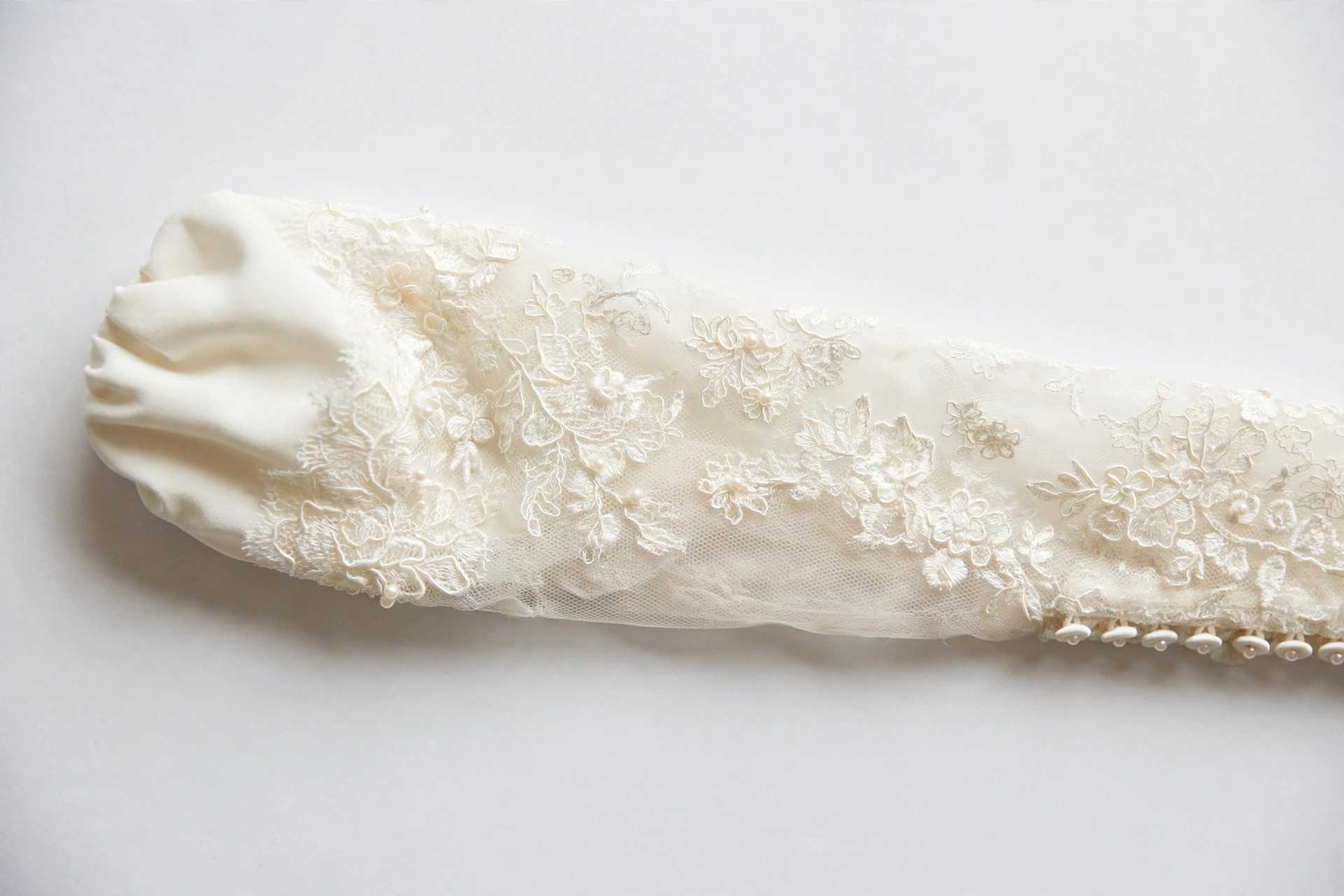
A Juliet sleeve (also spelled Juliette sleeve) is a long, close-fitting sleeve finished at the shoulder with a small, round puff. The combination — a modest pouf at the top and a smooth, fitted arm below — comes from Renaissance dress, and the sleeve is named for Juliet of Shakespeare's Romeo and Juliet, whose stage and portrait costumes made the style emblematic of romantic, youthful femininity.
Where the Juliet Sleeve Lives
The Juliet sleeve belongs to occasions rather than everyday dress: bridal gowns, bridesmaids' dresses, historical costume, ballet and theatre wardrobes, and romantic evening styles. The small puff gives a young, storybook emphasis to the arms without the drama of a full gigot — historically the puff was sometimes made of a contrasting fabric or banded with trim to look like a separate sleeve cap tied over the fitted sleeve beneath.
Construction is two sleeves in effect: a gathered puff set into the armhole, joined at its lower edge to the fitted sleeve that continues to the wrist, often ending in a point over the back of the hand in bridal versions.
Juliet vs. Its Neighbours
- Juliet — small puff at the shoulder only; the rest is long and fitted.
- Leg-of-mutton — the same idea at maximum scale, with a huge shoulder mass.
- Balloon — fullness continues down the whole arm to a gathered cuff.
FAQs
- Is it spelled Juliet or Juliette sleeve?
- Both spellings are used. Juliet is the common modern form; Juliette appears in older glossaries — including Apparel Search's own A–Z listing — for the same sleeve.
- Why is the Juliet sleeve popular for weddings?
- It reads romantic and historical, photographs beautifully, and gives coverage of the arm while keeping a delicate, youthful silhouette.
- Is the puff part of the same sleeve?
- In modern construction, yes — the puff and the fitted lower sleeve are joined in one seam, though the style imitates historical layered sleeves.
Detailed Guides: see Juliet Sleeve in the glossary A–Z listing of the Apparel Search fashion glossary for related terms.