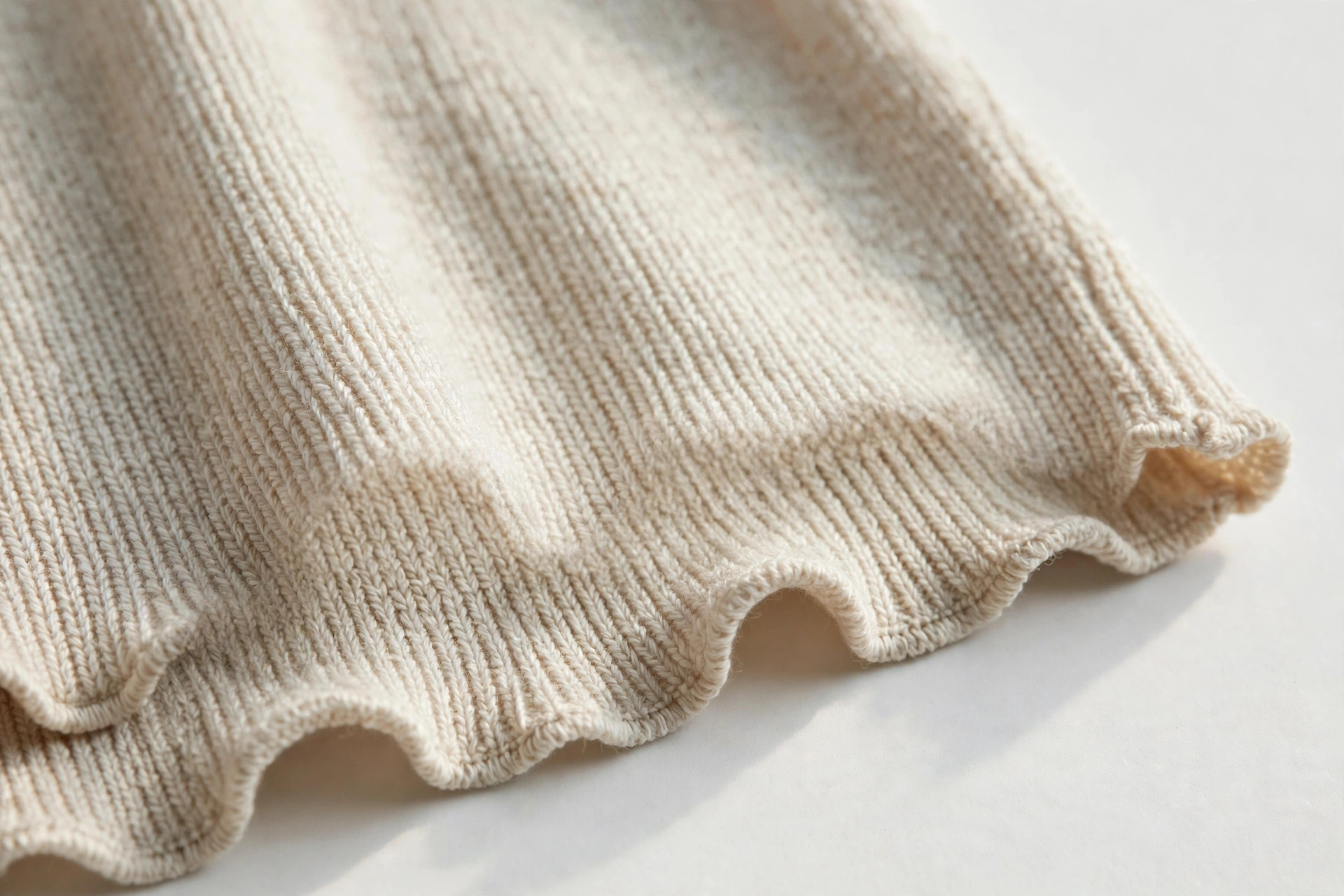
A lettuce hem — also called a lettuce edge — is a narrow, wavy, ruffled hem finish used on knit and stretch fabrics. It is made by overlocking (serging) the raw edge while stretching the fabric as it feeds through the machine; when the fabric relaxes, the stretched edge ripples into the frilly waves of a lettuce leaf, which is exactly what it is named for.
How the Waves Are Made
The technique depends on stretch. The fabric edge is pulled taut as the overlocker stitches a tight, narrow rolled hem over it. Because knit fabric recovers unevenly — the stitched edge has been permanently extended while the fabric above it has not — the edge is forced into regular ripples. No extra material is added; the frill is the fabric's own edge, distorted on purpose.
The effect is strongest on lightweight jerseys, mesh, and rib knits, and it can be worked in a matching thread for a soft finish or a contrasting thread for a visible, playful outline.
Where You Will See It
- On the hems and sleeve edges of baby clothes and children's knitwear.
- On 1990s-style fitted tees and tanks, where the lettuce edge is a signature retro detail.
- On dancewear, lingerie, and layering tops, where a flat hem would look unfinished on such light fabric.
- As a decorative edge on scarves and knit dresses.
FAQs
- Can you make a lettuce hem on woven fabric?
- Not effectively — the waves depend on the fabric stretching and recovering. Woven fabrics need a ruffle or flounce added instead.
- Is a lettuce hem the same as a rolled hem?
- A lettuce hem is a type of rolled (overlocked) hem, but the deliberate stretching during sewing is what turns it into waves; an unstretched rolled hem lies flat.
- What machine do you need for a lettuce hem?
- An overlocker (serger) is the standard tool. A stretch stitch on a regular machine can imitate the effect on small projects.
Detailed Guides: see Lettuce Hem in the glossary A–Z listing of the Apparel Search fashion glossary for related terms.