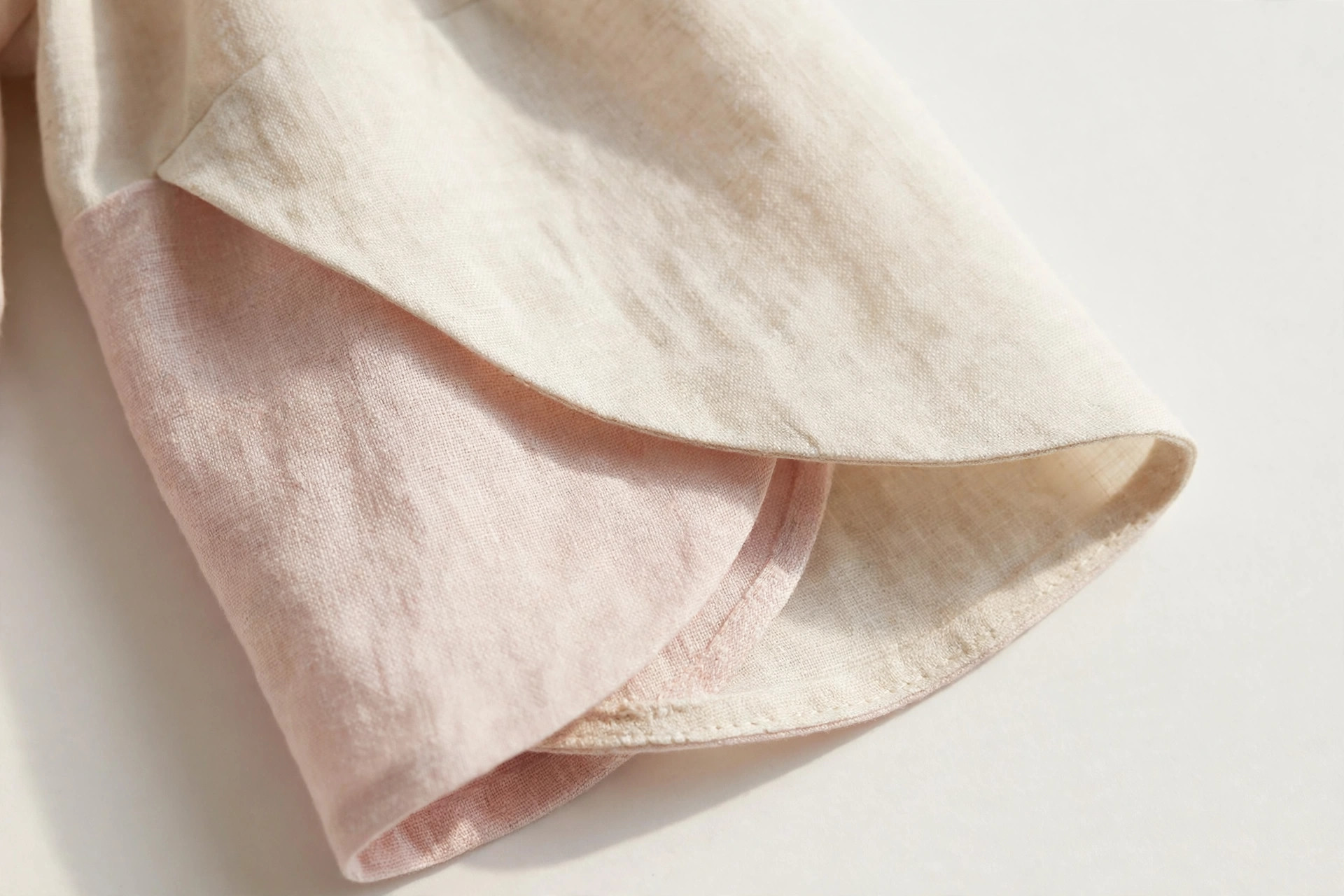
A petal sleeve — also called a tulip sleeve — is a short sleeve made from two pieces of fabric that overlap each other across the top of the arm, like the petals of a flower or the segments of a tulip bud. Each panel is curved along its free edge, and together they cover the shoulder and upper arm while opening slightly as the arm moves. It is a soft, feminine alternative to the plain short set-in sleeve on dresses, blouses, and bridesmaid styles.
Construction of the Overlapping Panels
Each half of the petal sleeve is a curved panel set into the armhole; the front panel wraps over the back panel (or the reverse), and the overlap is secured in the seam at the top of the shoulder and under the arm, leaving the curved edges free across the arm. Because the edges are free, they are finished with a narrow hem, binding, or — in lined formal dresses — by lining the panel so no raw edge or stitching shows.
The overlap gives the sleeve its character in motion: raise the arm and the petals part slightly, then settle closed again. It also means the style cannot be very long — beyond the upper arm the panels would gap — so petal sleeves are always short.
Where Petal Sleeves Are Used
- Dresses and blouses — a prettier covering for the upper arm than a cap sleeve.
- Bridesmaid and occasion dresses — soft structure in chiffon, lace, or satin.
- Girls' dresses — the overlap reads as a flower petal at small scale.
FAQs
- Is a petal sleeve the same as a tulip sleeve?
- Yes — petal and tulip are two names for the same two-panel overlapping short sleeve.
- What is the difference between a petal sleeve and a cap sleeve?
- A cap sleeve is one small piece covering just the shoulder point. A petal sleeve is two overlapping panels that cover more of the upper arm and part as the arm moves.
- Does a petal sleeve cover the upper arm?
- Partly — it covers the shoulder and the top of the arm while staying short and airy, which is why it is chosen as a modest but light sleeve.
Detailed Guides: see Petal Sleeve in the glossary A–Z listing of the Apparel Search fashion glossary for related terms.