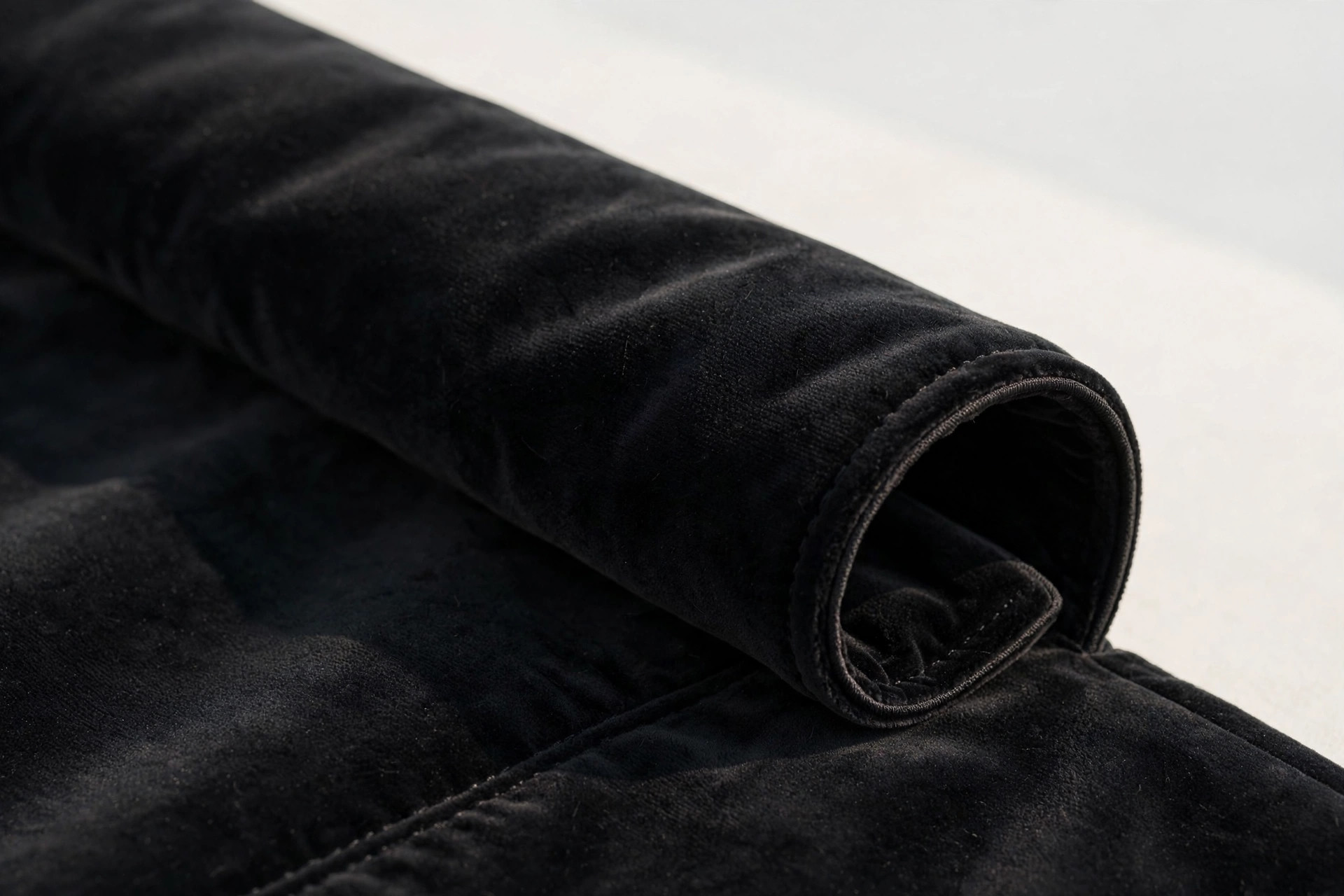
A shawl collar is a collar formed in one continuous, unbroken roll: the fabric turns back from the centre front, follows the neckline up and around the back of the neck, and returns down the other side, with no separate lapel notch and no separate collar piece. The smooth tapering roll is the signature of the classic dinner jacket (tuxedo), and the same construction softens cardigans, robes, and wrap coats.
One Piece, No Notch
Ordinary jackets are built from a lapel plus a collar joined at a notch and gorge seam. A shawl collar abolishes both: front and collar are cut (or shaped) so the roll runs uninterrupted from the button point around the neck. Making one well is a tailor's test — the roll must lie flat against the chest, curve smoothly around the neck without breaking, and taper to nothing at the closure. In satin-faced formal versions the facing itself forms the shawl, shining in one unbroken sweep.
The name is borrowed from the shawl: a wrap thrown around the shoulders and crossed over the chest — exactly the line the collar imitates.
Where Shawl Collars Live
- Dinner jackets / tuxedos — the classic alternative to the peak lapel, in satin or grosgrain facing.
- Cardigans and knit jackets — a soft knitted shawl roll that folds back and keeps the neck warm.
- Robes, wrap coats, and smoking jackets — the continuous roll suits belted, wrapping closures.
FAQs
- What is the difference between a shawl collar and a shawl lapel?
- Nothing — 'shawl lapel' is the common tailoring synonym for the same one-piece rolled collar-and-lapel.
- Is a shawl collar formal?
- On a dinner jacket, yes — it is one of the two classic formal lapels. In knitwear and robes the same construction is purely casual and cosy.
- Why does a shawl collar have no notch?
- Because collar and lapel are one continuous roll of fabric — there is no join at which a notch could form.
Detailed Guides: see Shawl Collar in the glossary A–Z listing of the Apparel Search fashion glossary for related terms.