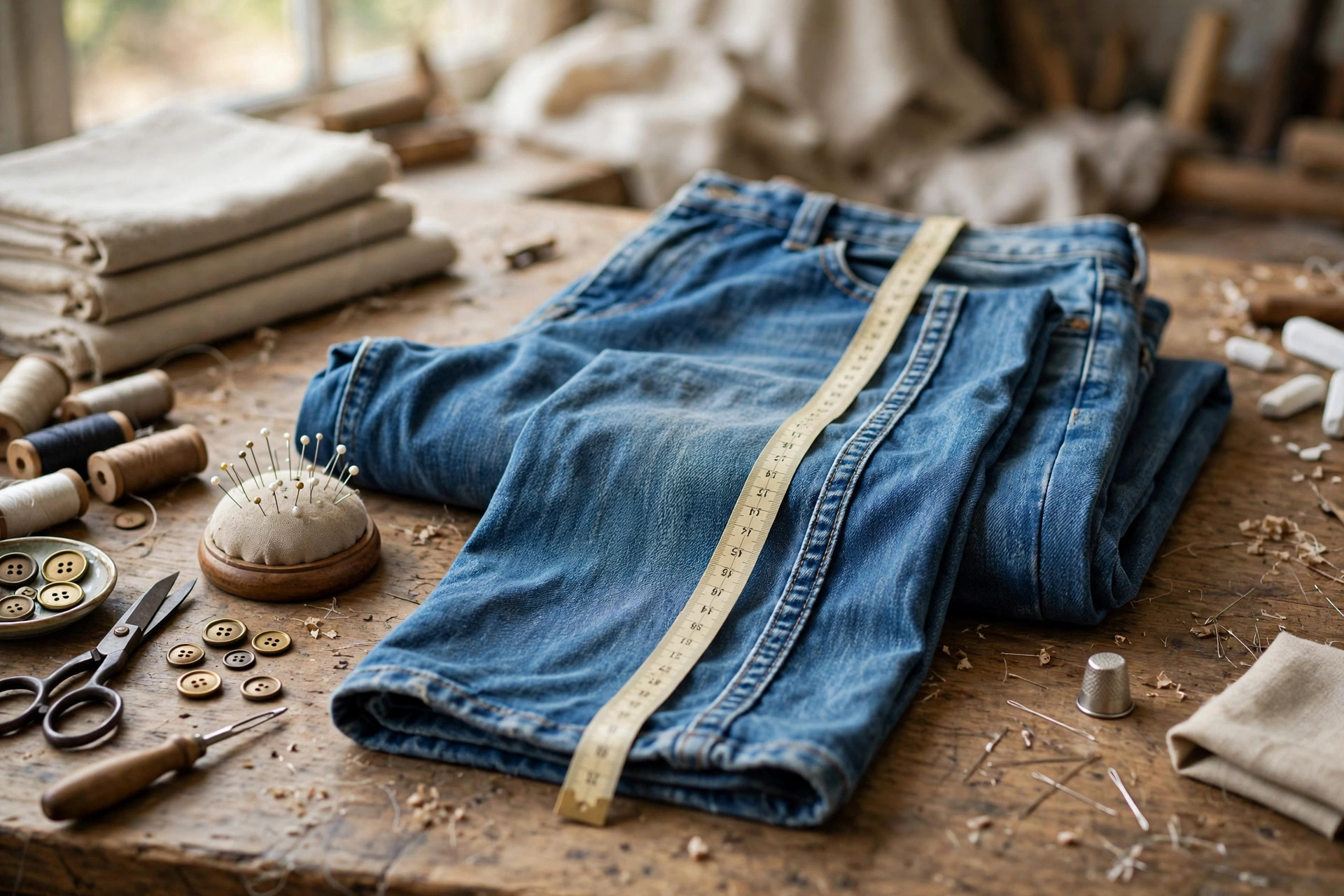
Your inseam is the distance from the crotch seam of a pair of pants down the inside of the leg to the hem. It is the second number in most pants sizes - a 32 x 30 jean has a 32-inch waist and a 30-inch inseam - and it decides whether hems land where they should or pool on your shoes. One careful measurement takes two minutes and works for jeans, trousers, chinos and leggings, because every brand cuts to the same tape even when their fit names differ.
There are two reliable ways to get the number: measure a pair of pants that already fits you, or measure your own leg. The pants method is more accurate, because it measures the garment dimension brands actually use. The leg method is the fallback when nothing you own fits the way you want yet. Both are explained below, along with the lengths different styles usually need. For the garment-side view of the same measurement, the Apparel Search education section shows how inseam is taken on clothing for patterns and tech packs.
Method 1: Measure Pants You Already Own
Lay the pants flat on a table or bed, buttoned and zipped, and smooth out any wrinkles so the legs lie straight. Find the point where the front and back inseams meet at the crotch - the cross seam. Place the end of a soft measuring tape exactly on that seam and run it down the inside of one leg to the bottom edge of the hem, keeping the tape along the seam rather than the outer edge of the leg. Read the number at the hem. That is the inseam.
Measure the pair whose length you like best, and write the number down rather than trusting memory. If you own two good pairs, measure both: a difference of half an inch is normal between brands, and the average of the two is a safer shopping number than either one alone. On jeans, measure after washing and drying, because denim can shrink slightly in length during the first few washes.
Method 2: Measure Your Own Leg
Stand barefoot against a wall in thin clothing, with your weight even on both feet. Have a helper place the tape at the crotch point - as high as is comfortable, where a pants seam would sit - and run it straight down the inside of your leg to the ankle bone. Read the number at the ankle, then adjust for the style you are buying: dress trousers and jeans usually sit at or just past the ankle bone, while a full-break trouser adds about half an inch and a cropped style subtracts two to four inches.
Measuring yourself alone is possible with a book: stand with your back to a wall, place a hardcover book edge-up between your legs at the crotch, mark the top edge's height on the wall, and measure down from the mark. It is less precise than a helper, so take it twice and use the larger reading - a too-long inseam can be hemmed, while a too-short one cannot be fixed. The same tape position is described for the body in the body measurements guide.
Typical Inseam Lengths by Style
Labels such as petite, regular and tall are built around inseam bands, and knowing the bands helps you shop across brands that name them differently. Treat these as typical retail ranges, not fixed standards - brands set their own.
| Style | Typical inseam | Notes |
|---|---|---|
| Women's petite jeans & trousers | 27-29 in | Cut for frames roughly 5'3" and under |
| Women's regular jeans & trousers | 30-32 in | The standard length most brands stock first |
| Women's tall jeans & trousers | 34-36 in | For longer legs; often online only |
| Men's trousers & jeans | 28-36 in | Sold by the inch; 30, 32 and 34 are the core sizes |
| Cropped / ankle pants | 25-28 in | Meant to end above the ankle bone |
| Shorts (men's) | 5-11 in | Measured the same way, down a much shorter leg |
Hem style changes what length looks right. A slim jean with no break can be an inch shorter than a wide-leg trouser that needs extra length to drape over a shoe. When a size chart is available, compare your number to the chart before ordering - the Apparel Search size guides collect the standard charts in one place.
Mistakes That Throw the Number Off
- Measuring the outseam instead. The outseam runs from the waistband down the outside of the leg and is always several inches longer. Only the inner-seam measurement is the inseam.
- Measuring pants that have shrunk or stretched. Use a pair in its normal worn state, not fresh from a hot wash or at the end of a long day of wear.
- Reading the tape at an angle. The tape should follow the inseam straight; a diagonal read adds phantom length.
- Ignoring the shoes. A length that works with flat sneakers will drag in heels and look short in boots. Measure in, or account for, the shoes you will actually wear.
- Rounding down. Between two lengths, take the longer one - hemming is easy, adding length back is impossible.
If you are between sizes and buying jeans specifically, the jeans and denim guide explains how rise and leg shape interact with length - two jeans with the same inseam can sit very differently.
Common Questions
- What is the difference between inseam and outseam?
- The inseam is measured from the crotch seam down the inside of the leg to the hem. The outseam is measured from the top of the waistband down the outside of the leg. The outseam is longer because it includes the rise of the pants, and it is not the number used in pants sizing.
- Should the inseam touch the floor when I measure my leg?
- No. Measure to the ankle bone, then adjust: most jeans and trousers are worn at or slightly past the ankle, and the correct garment length depends on the break you want and the shoes you wear. Barefoot floor length would give you a number that is too long.
- What inseam do petite sizes use?
- Petite jeans and trousers are typically cut with inseams around 27 to 29 inches, compared with 30 to 32 inches for regular lengths. The exact band varies by brand, so compare your measured inseam with the brand's own chart.
- Can I measure an inseam without a soft tape?
- Yes. Use a length of string or a ribbon along the seam, mark it, and measure the string against a ruler or a metal tape measure. A rigid ruler alone tends to read short on a curved leg, so the string method is more accurate.
Measure & Convert: The Full Series
This page is part of the Apparel Search measuring and size conversion series. Browse the full series below, or start from the size guides hub.