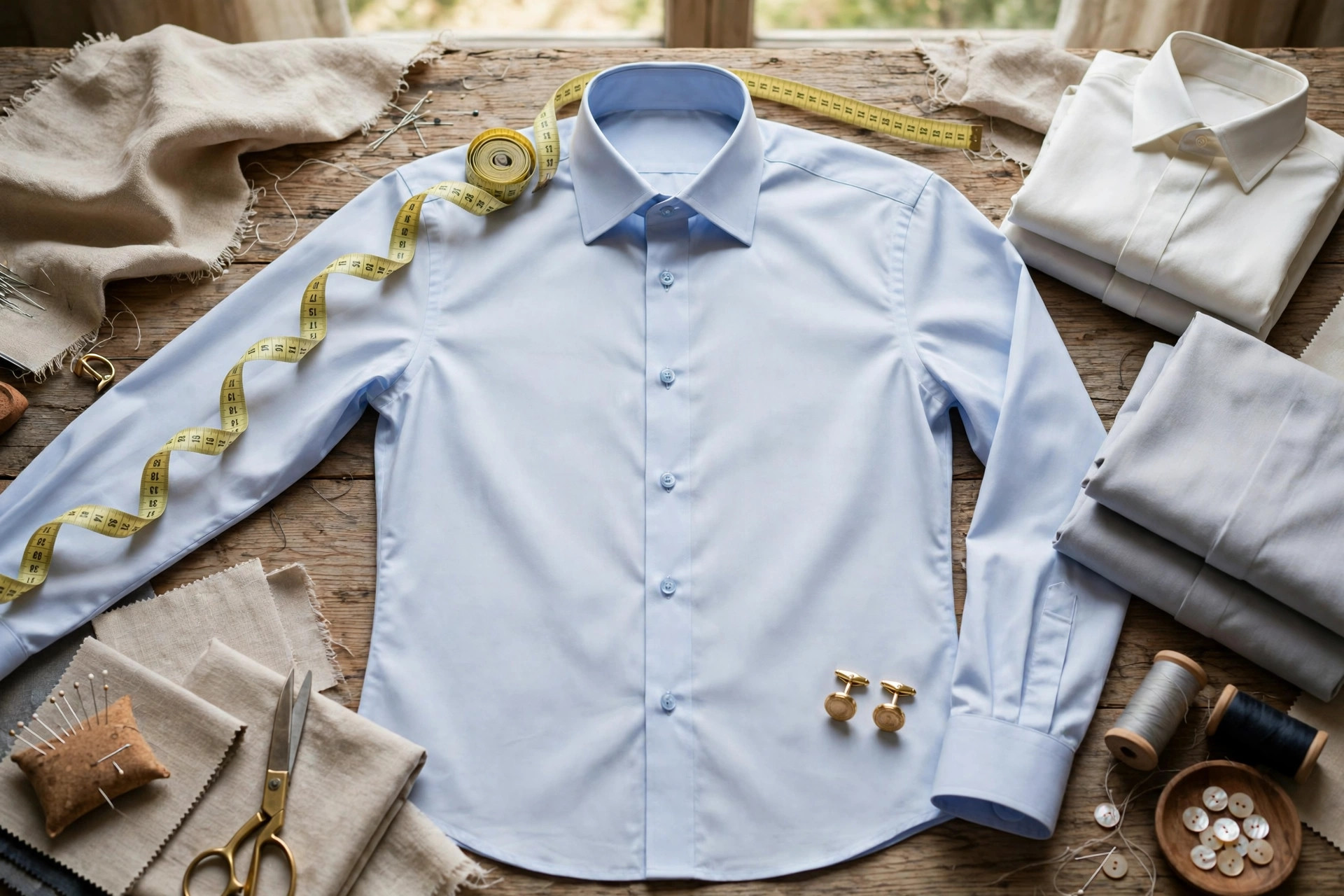
Dress shirts are the one garment sized directly from body measurements: the label's first number is the neck size in inches and the second is the sleeve length - a 16 x 34/35 shirt fits a 16-inch neck and a 34-to-35-inch sleeve. Getting both numbers right takes one soft tape and two minutes, and it is worth doing rather than guessing from a letter size, because necks and arms do not change at the same rate as chests and waistlines.
Measure over a thin undershirt or bare skin, standing relaxed. If you own a dress shirt whose collar and cuffs already sit exactly right, measuring the shirt itself - collar buttoned, tape inside the band - is an equally good route to the same two numbers. The garment-measurement approach is also used in the clothing measurements guide.
Measuring Your Neck
Wrap the tape around the middle of your neck, at the height where a collar sits - just below the Adam's apple, level all the way around. Keep the tape snug against the skin, then slip two fingers between the tape and your neck and read the number with the fingers in place. That reading, including the two-finger allowance, is your collar size. Round up to the next half inch: a reading of 15 3/4 becomes a 16 collar.
The two fingers stand in for the collar band itself and for comfort - a collar sized exactly to a bare-tape measurement will feel like a tie knot worn all day. Too small shows immediately (skin bulging over the band, the button straining); too large leaves a visible gap and lets a tie slide sideways. If you always wear the top button open, you have some forgiveness on this number - but size it closed anyway, because the day you need it closed is the day it matters.
Measuring Your Sleeve
Shirt sleeve length is not measured from the shoulder alone. Stand with your arm slightly bent and your hand on your hip. Place the tape end at the center of the back of your neck, run it over the shoulder point and down the outside of the arm, past the slightly bent elbow, to the wrist bone. Read the number at the wrist. That is your sleeve length; most shirts are sold in combined ranges such as 32/33 or 34/35, and you choose the range containing your number.
The bent arm matters: a sleeve measured on a straight, hanging arm reads short, and the cuff will ride up every time you bend your elbow - which is most of the day. A correct cuff shows about half an inch of shirt beyond a jacket sleeve and reaches the base of the thumb. If your two arms differ noticeably, size to the longer arm; tailors can shorten a sleeve, but they cannot add cloth that is not there. When only letter sizes are offered, the chart below maps neck sizes to the usual letters.
Shirt Sizes by Neck Measurement
| Letter size | Neck size (in) | Typical sleeve lengths offered |
|---|---|---|
| S | 14 - 14.5 | 32/33 |
| M | 15 - 15.5 | 32/33, 34/35 |
| L | 16 - 16.5 | 34/35 |
| XL | 17 - 17.5 | 34/35, 36/37 |
| 2XL | 18 - 18.5 | 36/37 |
Letter-sized shirts bundle the two numbers, which is why a medium can fit your neck and miss your arms. Whenever a brand offers numbered neck-and-sleeve sizing, prefer it - and check your numbers against the men's size chart, which also carries chest and waist for the same sizes. The education section's suit and sport coat size conversions are the companion reference for the jacket worn over the shirt.
Common Questions
- Where exactly do you start the sleeve measurement?
- At the center of the back of the neck - the same point a tailor uses. From there the tape runs over the shoulder and down the outside of a slightly bent arm to the wrist bone. Starting at the shoulder seam instead gives a shorter number that does not match shirt sizing.
- How much room should a collar have?
- About two fingers between the closed collar and your neck. Less than that will feel tight by midday, especially with a tie; much more leaves a gap that looks sloppy and lets the tie knot drift.
- My neck fits a large but the sleeves are too long. What should I do?
- Buy for the neck and have the sleeves shortened, or look for brands that sell each neck size in several sleeve lengths. Fit order matters: the collar cannot be altered easily, while sleeve length is one of the simplest tailor adjustments.
- Should I measure over a T-shirt?
- No. Measure over bare skin or the thinnest undershirt you actually wear under dress shirts. A thick T-shirt adds to the neck reading and can push you up half a size you do not need.
Measure & Convert: The Full Series
This page is part of the Apparel Search measuring and size conversion series. Browse the full series below, or start from the size guides hub.