Apparel Search Consumer Guides
How to Spot Fake Sneakers
Sneakers are checked differently from bags, because the paperwork is printed on the box and sewn into the shoe: style codes, size tags and labels first, then construction — plus the channel checks that matter more than any single detail.
Sneaker counterfeiting runs on volume and speed: a hyped release sells out in minutes, and the fakes are waiting for everyone who missed it. The good news is that sneakers carry their own identity documents — a style code printed on the box and sewn into the shoe — and industrial mass production makes genuine pairs astonishingly consistent from box to box. This page runs the checks in order, as part of our designer authentication guide: the channel and the price first, then the box, then the codes, then the shoes themselves. As everywhere in authentication, you are building a pattern, not hunting for one magic flaw.
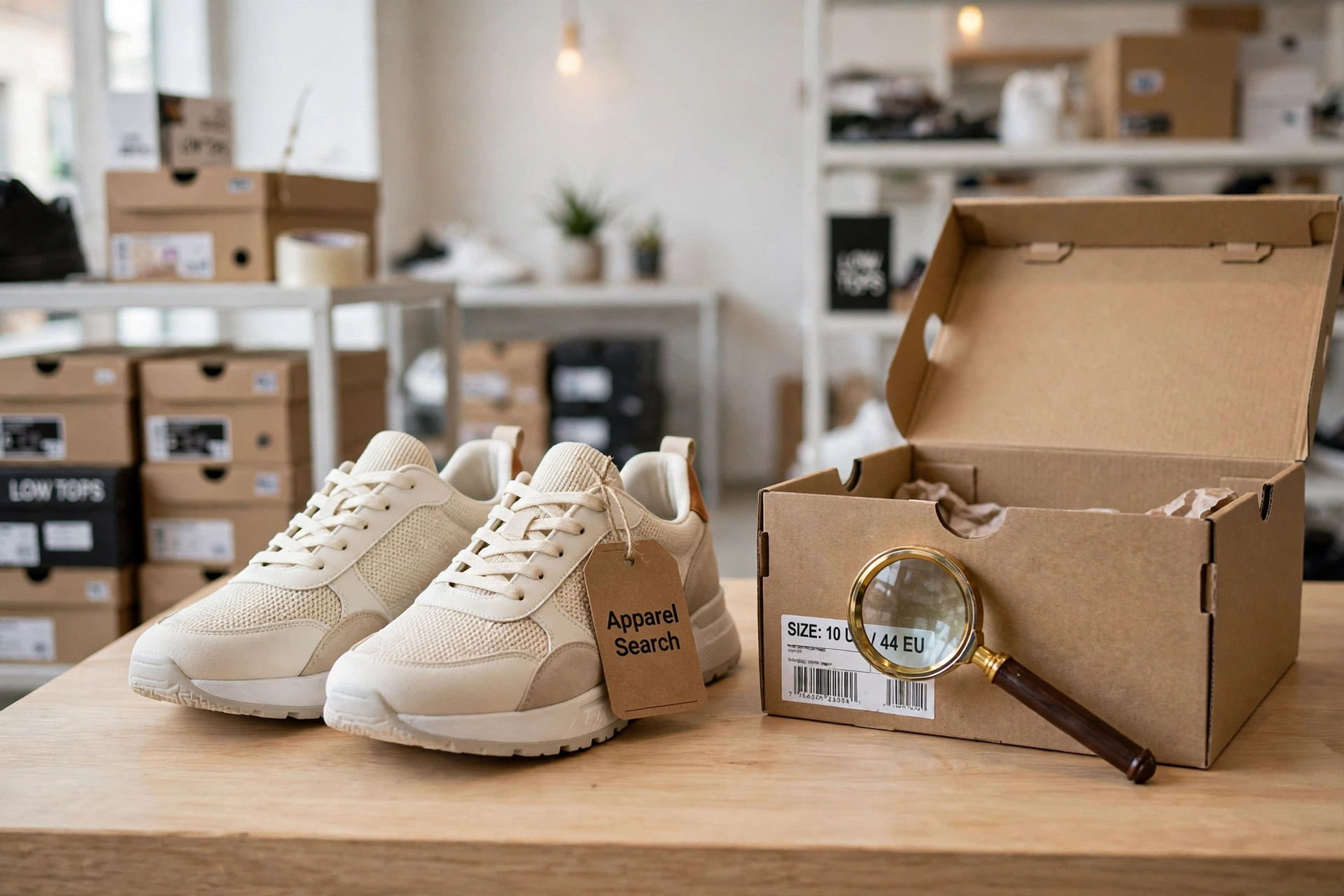
The Checks, in Order
- Price and channel reality. Begin before the shoes. What does this pair sell for right now across reputable resale channels, and how does this offer compare? A current limited release offered well below the going rate, by a seller with no history and no returns, is the loudest signal in sneaker buying — louder than any stitch. Prefer sellers and platforms with an authentication step and buyer protection, and pay by a method you can dispute. A deal that requires gift cards, wire transfers or friends-and-family payments has already failed the one check that cannot be faked: your way out if it goes wrong.
- The box. Genuine boxes are printed sharply: correct type, correct colors, and an end label carrying the model name, sizes, colorway description and style code in the brand's current label format, on a box with the weight and finish the brand's boxes have. Blurred print, off shades, misspellings, a flimsy box or a label layout from the wrong era all count against the pair. Check the label's details against the actual release, too — counterfeit labels are often copied from a real label belonging to a different colorway.
- The style-code cross-check. Every genuine pair carries a style code — the SKU that identifies model and colorway — printed on the box label and on the size tag inside the shoe. The two must match exactly, character for character. Then search the code: it should return this model, in this colorway, from retailers and reference listings. A code that returns a different shoe, a different colorway, or nothing at all is close to a verdict by itself. This is the single most productive check in sneaker authentication, because it is fast, free, and very hard for a careless fake to survive.
- The size tag inside the shoe. The sewn-in tag carries the size run (typically US, UK, European and centimeter columns), the style code, factory and production-date information and usually a barcode or QR element, printed in a format the brand keeps consistent. Look for crisp printing set squarely on the tag. Fakes frequently show fuzzy type, crooked tags, production dates that do not fit the release window, or size conversions between systems that do not add up. Compare against a photograph of a known-genuine tag from the same release — retailer and authentication-guide reference images exist for most popular models.
- Shape and silhouette. Set the pair side by side, then against retailer photographs of the same release. Toe-box height and slope, heel shape, panel proportions and the stance of the shoe are fixed by the brand's patterns and lasts; copies are modeled second-hand and drift — a toe slightly too boxy, a heel slightly too tall, a logo or signature shape placed a few millimeters from its proper seat. Compare left against right as well: genuine pairs are near-mirror images, and visible asymmetry between the two shoes is exactly what factory quality control exists to catch.
- Stitching and glue. Genuine stitching is even and consistent, including in the places nobody photographs. The classic fake tells live at the joins: excess glue squeezed out along the midsole line, messy stitching at heel and toe, loose threads, sloppy embroidery ends. The best current fakes have cleaned much of this up — which is why this check sits sixth, after the codes and the box — but across the mass of counterfeits it remains decisive, especially combined with any code or label irregularity.
- Materials and smell. Uppers should be the materials the release specifies: leather that behaves like leather, suede with a real nap that moves under a thumb, textiles with the correct weight and weave, cushioning that feels alive rather than dead. Fakes substitute — stiffer synthetics, brushed plastic standing in for suede, flat foam under a famous cushioning name. Use your nose as well: a strong chemical, glue-heavy smell out of the box is characteristic of cheap adhesives and materials. None of these alone convicts; together with a failed code, they close the case.
- The decision. If the codes match, the tag is right, the box is right and the construction is clean, you have done what a buyer can do — buy protected. If the price is high and anything is off, buy only where an authentication step or a return protects you, or have the pair checked professionally before the money is final. And if the style code fails — box against shoe, or shoe against search — stop there. That is not a quibble; walk away.
A Note on Well-Made Fakes
The checks above are ordered the way they are because sneaker counterfeiting has tiers. The bottom tiers fail everywhere at once and are easy to catch. The top tier is manufactured to pass construction inspection — clean stitching, correct materials, plausible shape — and is beaten mainly on documentation and detail: the tag's typography, the label's layout, the code's history, the dates against the release calendar. That is why this guide spends its first four checks on paper and print rather than on the shoe. Against a top-tier fake, your strongest protections are structural rather than visual: a platform that authenticates before delivery, a seller who accepts returns, a payment you can dispute. Build those into every significant purchase and the visual checks become what they should be — a screen, not a gamble.
The Two-Minute Version
Short on time? Three checks catch most of the problem: the price against the current resale market, the style code matched between box and shoe and searched online, and a hard look at the size tag's printing and dates. If all three pass and the seller offers returns, the pair has earned a closer look. If any one fails, it has earned a walk-away.
Common Questions
What is the quickest check for fake sneakers?
The style-code cross-check. The code printed on the box label and the code on the size tag inside the shoe must match each other exactly, and searching that code should return this model, in this colorway, from retailers and reference sites. A code that returns a different shoe — or a shoe whose tag code does not match its box — is close to a verdict on its own. It takes a minute, costs nothing, and sloppy counterfeits rarely survive it.
Do all fake sneakers have sloppy stitching and glue?
No. That was a reliable tell when counterfeits were cruder; the best current fakes are finished cleanly, with tidy stitching and little excess glue. Construction checks still catch the great mass of fakes, but they sit after the channel, box and code checks in this guide for a reason: on a well-made fake, the paperwork and the purchase route are where the truth usually survives.
The box code and the shoe code do not match. Is the pair definitely fake?
Not automatically — boxes do get swapped at retail and in resale handling, so a mismatched box can travel with a genuine shoe. The deciding test is the shoe's own tag: its style code must search back to exactly this model and colorway, and its production dates must fit the release. If the shoe's code is wrong for the shoe, the pair fails. If only the box disagrees, treat the purchase as unproven and buy elsewhere unless the price and the seller's return policy leave you fully protected.
Are authentication services worth it for sneakers?
For high-value pairs, usually yes. Photo-based legit-check services examine the same points this guide covers — codes, tags, box, shape, construction — but against release-specific reference libraries built from thousands of genuine pairs, and they work quickly for a fee that is small next to a hyped resale price. On an ordinary general-release pair bought from a protected channel, your own checks plus the seller's return policy are generally proportionate.
Back to the Designer Authentication Guide
The verification mindset: seller and provenance first, what authentication can and cannot prove, and when a professional opinion earns its fee.