Fascinators
Fashion Influence — how style shapes, and is shaped by, the people who wear it
A fascinator is millinery reduced to pure decoration: a small arrangement of feathers, loops of sinamay, flowers or veiling fixed to a band, comb or clip. This guide covers where the style came from, how a fascinator is built, and the occasions — weddings, race meetings, royal events — where it has replaced the hat.
Fascinators
A fascinator is a headpiece that keeps the decoration of a hat and discards everything else. In place of a crown and brim there is a small arrangement — loops of stiffened sinamay, feathers, silk flowers, a puff of veiling — fixed to a headband, a comb or a clip, and worn tilted to one side of the head. It does not keep off sun or rain and was never meant to; it exists to finish a formal outfit, and at weddings, race meetings and royal occasions it has largely taken the place of the hat it grew out of. It belongs to the wider world of hats while technically not being one.
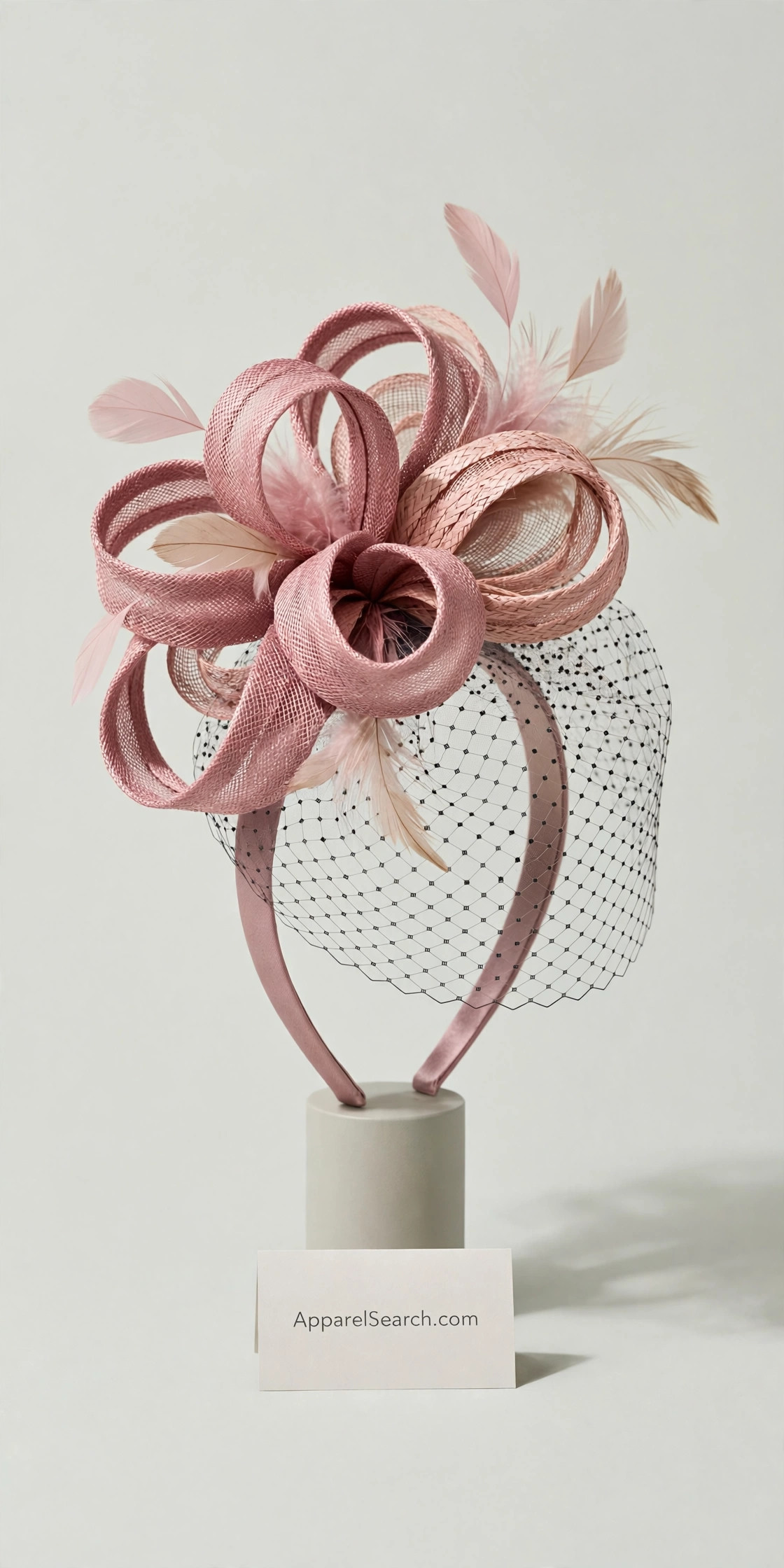
The word has changed its meaning once already. Through the nineteenth century a fascinator was a soft, lacy head shawl — knitted or crocheted, worn by women over the hair at home and outdoors — and the name (from the idea of bewitching) clung to light head coverings long after the shawl itself was gone. The modern object descends from the cocktail hat and the percher of the 1940s and 1950s: tiny hats, worn forward and tilted, that satisfied the rule that a dressed woman wore a hat while leaving her hairstyle untouched. When everyday hat-wearing collapsed in the 1960s, the little formal hat survived at exactly the occasions where dress codes survived, shrinking decade by decade toward pure ornament. The milliners of the 1990s — Philip Treacy and Stephen Jones above all — completed the transformation, building sculptural headpieces of feathers and sinamay on nothing but a band, and royal weddings did the rest: the fascinator worn by Princess Beatrice to the 2011 royal wedding, Treacy's famous bow design, put the word itself into every newspaper.
Anatomy of a Fascinator
Three things make a fascinator: a fixing, a base and a decoration. The fixing is a headband (the most secure and the modern default), a comb pushed into an updo, a clip, or an elastic worn under the hair. The base, where there is one, is a small disc or teardrop of sinamay or buckram that gives the decoration something to stand on. The decoration is the milliner's art: sinamay — a stiff, open weave made from the abaca banana plant — twisted into loops and swirls; feathers, curled, stripped or dyed; silk or fresh-look flowers; veiling of spotted net; beads and crystals for evening. The whole thing commonly weighs a few ounces, is made by hand, and is sold by milliners and occasionwear departments in colours matched to dress fabrics.
Wearing One
The fascinator's home ground is the formal daytime event. At weddings it is the standard headwear of guests and of the mothers of the couple; at the Kentucky Derby it shares the stands with the big Southern hats; at Royal Ascot it meets a rule — the Royal Enclosure dress code asks for a hat or a headpiece with a solid base at least four inches across, a requirement that pushed race-day designs toward the larger, hat-based 'hatinator'. Convention places the piece tilted forward and to the side, traditionally the right, with any veil stopping short of the eyes it would annoy. A fascinator is not weather equipment and not evening wear in its classic form, though beaded and jewelled versions are made for formal nights.
The fascinator's direct ancestor is defined on this site in the cocktail hat entry, the term itself in the fascinator definition, and its parent category is the guide to hats.
Fashion Products Fashion Products A-F Fashion Products F
Return to the Influence Fashion home page.
Common Questions
What is a fascinator?
A small, decorative headpiece worn on a headband, comb or clip rather than as a hat. It is made of light materials — feathers, sinamay, silk flowers, veiling — and is meant to finish an outfit, not to cover the head or protect it from the weather.
When do you wear a fascinator?
At weddings, race meetings such as the Kentucky Derby and Royal Ascot, christenings and formal garden parties — the dressed-up daytime occasions where a full hat can feel like too much, or where the wearer wants the hairstyle to stay visible.
What is the difference between a fascinator and a cocktail hat?
A cocktail hat is a small hat: a shaped base that sits on the head, worn tilted. A fascinator is lighter still — an arrangement of decoration on a band, comb or clip, with no hat body at all. The fascinator developed out of the cocktail hat, and large fascinators built on a solid base are sold as hatinators.