Shock-Resistant Watches
Built to keep time through knocks and drops
A shock-resistant watch is engineered to keep running and keep accurate time after the mechanical shocks of daily life: a drop onto a hard floor, a knock against a door frame, the vibration of tools, sport and physical work. The vulnerable part is the movement, above all the balance staff, the fine axle of the regulating organ, which a sharp impact can bend or break in an unprotected watch. Shock resistance works on several levels at once. Shock absorber mechanisms suspend delicate components, most famously the balance jewel bearings, in spring mountings that let them give under impact and return to position. Rubber mounts and springs inside the case cushion the movement as a whole, and case and component materials including elastomers, polymers and advanced ceramics are chosen to absorb and disperse energy by deforming slightly rather than transmitting it. The synthetic ruby and sapphire jewels used as pivot bearings reduce friction and wear at the points where moving parts meet. No watch is immune to extreme impact, but a well-engineered shock-resistant watch withstands a wide range of everyday shocks while maintaining accuracy. This guide explains the technology, its limits, and which wearers benefit most.
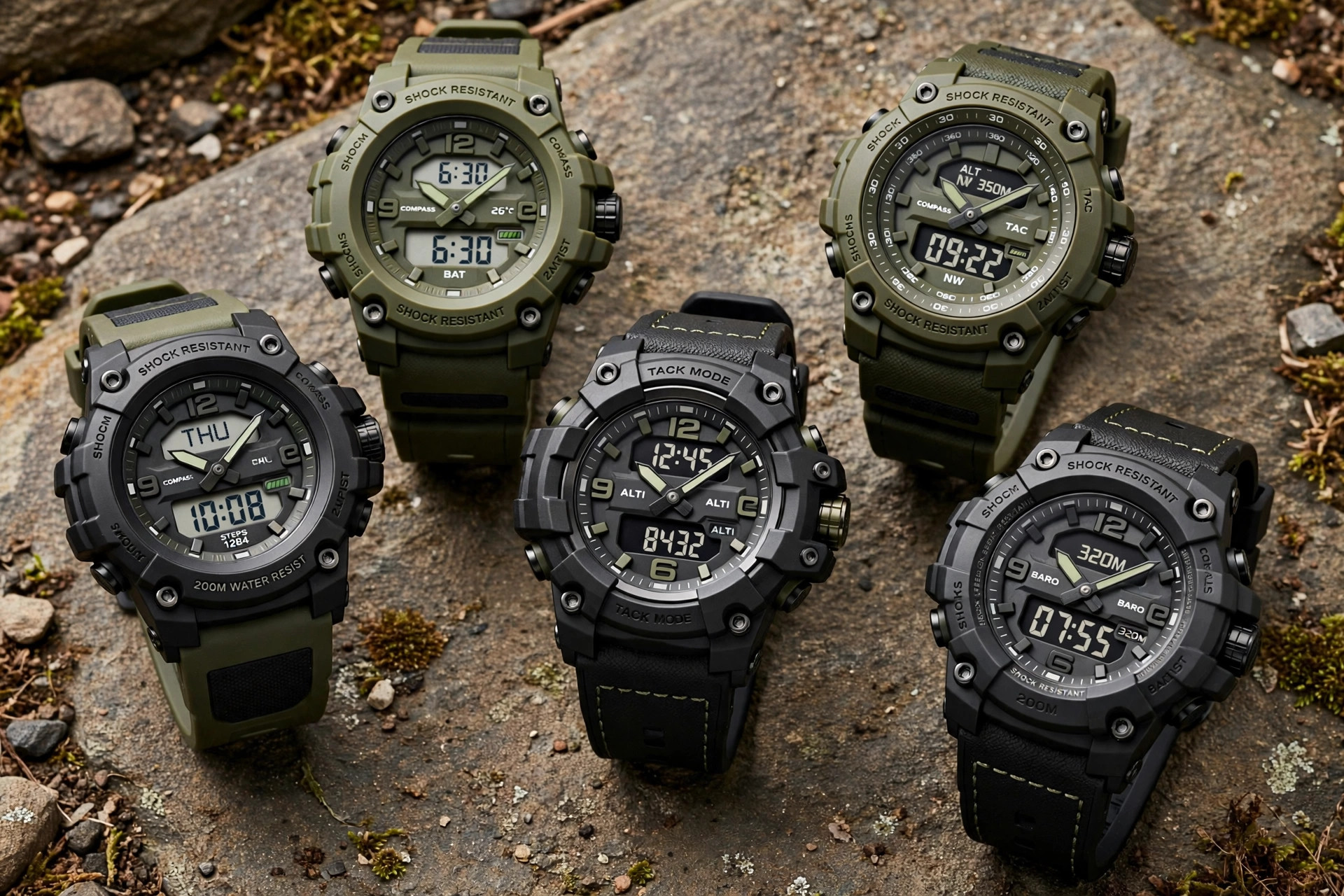
Shock Resistant Watches: Durability in Motion
In the fast-paced world we live in, watches must endure the rigors of daily life, especially for those with an active lifestyle or jobs that demand physical movement. Shock-resistant watches have emerged as a solution to ensure that timepieces remain accurate and functional, even amidst the knocks and jolts of daily activities.
What Are Shock Resistant Watches?
Shock-resistant watches are timepieces engineered to withstand mechanical shocks and vibrations encountered in daily life. These shocks can result from accidental drops, impacts, or sudden movements. The goal is to protect the delicate movement and internal components of the watch, preserving its accuracy and functionality.
The Technology Behind Shock Resistance
Shock Absorption Systems:
Shock-resistant watches utilize innovative designs and materials to absorb and dissipate the energy from external shocks. One common design is a "shock absorber" mechanism that suspends the movement within the case, minimizing direct impact.
Rubber Mounts and Springs:
Manufacturers use specially designed rubber mounts or springs within the watch case to cushion the movement. These components act as shock absorbers, reducing the force of impact and protecting the delicate inner workings.
Material Selection:
High-impact materials like elastomers, polymers, and advanced ceramics are integrated into the watch structure to absorb and disperse shocks. These materials can deform slightly on impact, absorbing and diffusing the energy.
Incorporation of Jewels:
Watches often contain synthetic jewels (e.g., synthetic rubies or sapphires) in the movement. These jewels act as frictionless pivot points, reducing wear and enhancing the movement's resistance to shocks.
Spring Mechanisms:
Some watches feature specially designed springs within the movement.
These springs allow certain components to move or "flex" upon impact,
protecting the more delicate parts of the movement.
Effectiveness of
Shock Resistance
Shock-resistant technology significantly improves a watch's durability. While no watch is entirely immune to extreme impacts, shock-resistant watches can withstand a wide range of everyday shocks, maintaining their accuracy and functionality over time. The effectiveness depends on the design, quality of materials, and engineering precision employed by the manufacturer.
Popular Watch Companies Known for Shock-Resistant Watches
Casio:
- Casio, renowned for their G-Shock series, is a pioneer in shock-resistant watches. G-Shock watches are celebrated for their exceptional shock resistance and durability, making them a favorite among athletes and outdoor enthusiasts.
Seiko:
- Seiko, a Japanese watchmaker, offers a range of shock-resistant watches under their "Prospex" line. These watches feature robust designs and are built to withstand demanding conditions.
Rolex:
- Rolex incorporates shock-resistant technology in their watches, ensuring durability and precision in challenging environments. Their watches are known for enduring harsh conditions without compromising accuracy.
Omega:
- Omega, a Swiss luxury brand, produces shock-resistant watches with advanced engineering, particularly in their sport and professional lines like the Speedmaster and Seamaster, ensuring durability in various scenarios.
Citizen:
- Citizen, another Japanese watchmaker, offers shock-resistant watches with their "Promaster" series. These watches are designed for adventure and outdoor activities, emphasizing durability and precision.
Shock-resistant watches are a testament to innovative engineering, utilizing a combination of design elements and materials to protect the delicate movement from the shocks of daily life. These timepieces provide wearers with the confidence that their watches will continue to keep accurate time, regardless of the challenges they face. Brands like Casio, Seiko, Rolex, Omega, and Citizen have successfully integrated shock-resistant technology into their watches, ensuring that wearers can rely on their timepieces even in the most demanding circumstances.
According to Apparel Search, you should try to avoid dropping your watch or smashing it into a wall. Even if it is shock resistant.
You may want to also learn about sports watches for men & women.
Learn about water resistant watches.
From Shock Absorbers to Rugged Cases
The first line of defense is inside the movement. The balance staff's pivots are extremely fine, so their jewel bearings are set in spring mountings that flex when the watch is struck, absorbing the blow that would otherwise snap a pivot. That single invention, developed in the first half of the 20th century, is why mechanical watches became practical for soldiers, pilots and sportsmen, and some form of it is now fitted to nearly every mechanical movement made.
Rugged sports watches add the second line: the movement is suspended in a cushioned inner case, surrounded by resin or polymer structures that deform on impact, under an outer case designed to take the hit first. Digital and quartz watches start with an advantage, since they have no delicate balance assembly, which is why the toughest tool watches are often quartz or digital at their core. Whichever construction, the honest test is the maker's stated standard and testing, not the toughness of the styling.
Common Questions
What does shock resistant actually mean for a watch?
It means the watch has been designed and tested to survive a defined impact, in the industry standard test equivalent to a drop of about one meter onto a hard surface, without stopping or losing its rate beyond a set tolerance. In construction terms it describes the spring-mounted jewel bearings and movement cushioning that protect the balance assembly, not an unbreakable watch. Crystals, cases and bracelets can still be damaged cosmetically by impacts the movement itself survives, so shock resistant is a statement about the movement's protection, not a promise that nothing can break.
How is shock resistance different from water resistance?
They protect against different threats with different constructions. Shock resistance guards the movement against sudden mechanical impact through internal mountings and cushioning. Water resistance guards against water entering the case through gaskets, sealed crowns and case construction, and it is rated by depth or pressure. A watch can have either, both or neither: many rugged sports watches combine strong shock protection with high water resistance, while a dress watch may have modest water resistance for splashes and only standard shock protection for its balance jewels.
Who needs a shock-resistant watch most?
Anyone whose watch takes knocks in normal use: people in physical and outdoor jobs, military and emergency workers, athletes and players of racket and contact sports, and anyone who has already broken a watch by dropping it. Modern spring-mounted balance bearings give even ordinary mechanical watches a useful level of protection, but watches built for shock, with cushioned movements and protective case structures, are the right choice where impacts are routine rather than occasional, since repeated small shocks also wear pivots and disturb timing over time.