Swiss Watches Guide
Precision and craftsmanship from Switzerland
Swiss watches carry a reputation built over centuries: meticulous craftsmanship passed through generations of trained watchmakers, movements engineered and tested for accuracy, premium materials from high-grade steel and precious metals to sapphire crystals, and designs that stay wearable across decades. The industry's roots reach to the 16th century, when Huguenot craftsmen fleeing religious persecution settled in Switzerland bringing jewelry and watchmaking skills. An 18th century cottage industry of home workshops making movements and components gave way in the 19th century to industrial production and great watchmaking centers such as Biel/Bienne and Geneva, and to luxury houses including Patek Philippe, Audemars Piguet and Longines. The 20th century brought intense innovation and competition, the quartz movement, and the Swiss response through the Quartz Crisis, strengthening traditional mechanical watchmaking. In 1971 the Swiss Made label was formalized, marking watches that meet specific criteria of Swiss origin, quality and precision. The makers and designers behind the tradition include Abraham-Louis Breguet, inventor of the tourbillon, Gérald Genta, designer of the Royal Oak and the Nautilus, and Hans Wilsdorf, founder of Rolex. This guide covers what Swiss Made stands for, how the industry developed, and who shaped it.
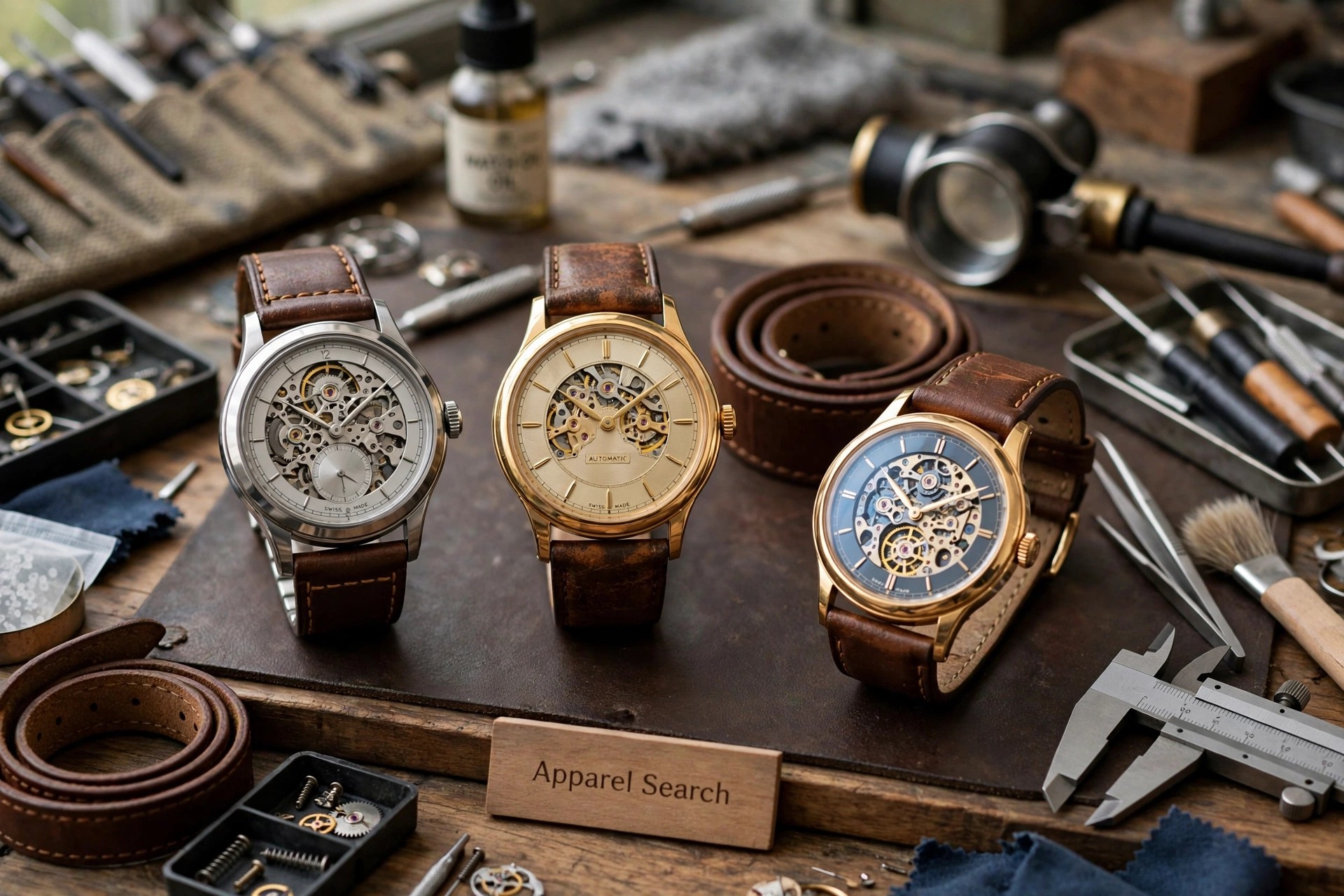
It is "time" to learn about watches from Switzerland.
Swiss Watches: A Timeless Legacy of Precision and Craftsmanship
Swiss watches have established a global reputation synonymous with precision, luxury, and enduring craftsmanship. What makes a Swiss watch special is the meticulous attention to detail, the rich heritage of horological innovation, and the dedication to producing timepieces that stand the test of time.
The Essence of Swiss Watches
Heritage of Craftsmanship:
Swiss watches are renowned for their exceptional craftsmanship, often passed down through generations. Watchmakers in Switzerland undergo rigorous training and adhere to the highest standards of precision and quality, ensuring that each timepiece is a masterpiece.
Precision and Accuracy:
Precision is the hallmark of Swiss watches. These timepieces are known for their accurate timekeeping, owing to the use of advanced movements and rigorous testing protocols. The "Swiss Made" label guarantees superior accuracy and reliability.
Innovation in Movements:
Swiss watches are celebrated for their innovative movements. Swiss watchmakers have pioneered various movement types, including automatic, quartz, and manual. Brands continually innovate to enhance performance, longevity, and aesthetic appeal.
High-Quality Materials:
Swiss watchmakers utilize premium materials, such as high-grade stainless steel, precious metals, sapphire crystals, and top-quality leather or metal straps. The meticulous selection and use of these materials contribute to the durability and elegance of the watches.
Timeless Design:
Swiss watches boast timeless designs that blend classical elegance with contemporary aesthetics. The designs are versatile, appealing to a broad range of tastes, making Swiss watches suitable for both formal and casual occasions.
History of Swiss Watch Design and Manufacturing
The roots of Swiss watchmaking can be traced back to the 16th century. Here's a brief overview of its historical journey:
Early Beginnings:
The origins of Swiss watchmaking can be linked to the Huguenots, French Protestants fleeing religious persecution. They settled in Switzerland and brought with them skills in jewelry and watchmaking.
Cottage Industry:
In the 18th century, Swiss watchmaking evolved into a cottage industry. Craftsmen, often working from home, focused on creating intricate movements and watch components.
Industrial Revolution:
The 19th century saw significant developments with the advent of the Industrial Revolution. Switzerland embraced mass production techniques, leading to the establishment of major watchmaking centers such as Biel/Bienne and Geneva.
The Birth of Luxury Brands:
Renowned Swiss luxury watch brands like Patek Philippe, Audemars Piguet, and Longines emerged during the 19th century, setting new standards in horology.
Innovation and Competition:
The 20th century witnessed intense competition and innovation in Swiss watchmaking. The creation of the quartz movement revolutionized the industry, with the Swiss responding through the Quartz Crisis by enhancing their traditional mechanical timepieces.
Swiss Made Certification:
In 1971, the "Swiss Made" label was formalized, indicating that the watch met specific criteria of Swiss origin, quality, and precision. It has since become a symbol of excellence in watchmaking.
Swiss watchmaking is not merely an industry but a cultural heritage deeply ingrained in the Swiss identity. The passion for precision and innovation, coupled with a legacy of craftsmanship, has propelled Swiss watches to the zenith of horological artistry, making them truly exceptional timepieces admired and revered worldwide.
There have been notable individuals who significantly contributed to the art and innovation of Swiss watchmaking. These skilled watchmakers and designers have left an indelible mark on the industry. Here are some of the most famous Swiss watchmakers and designers in history:
Abraham-Louis Breguet (1747-1823):
Often referred to as the "Father of Modern Horology," Breguet was a pioneering Swiss-French watchmaker. He invented the tourbillon, a mechanism that improves the accuracy of pocket watches, among numerous other innovations.
Jacques-David LeCoultre (1747-1817):
Jacques-David LeCoultre was a skilled watchmaker and one of the founders of Jaeger-LeCoultre, a prominent Swiss watchmaking company known for its high-quality and innovative timepieces.
Louis-Ulysse Chopard (1836-1915):
Louis-Ulysse Chopard was the founder of Chopard, a Swiss luxury watch and jewelry manufacturer. He established the brand's reputation for precision and quality.
Charles-Édouard Guillaume (1861-1938):
Charles-Édouard Guillaume, a Swiss physicist, and Nobel laureate, developed Invar and Elinvar, important materials used in watchmaking to improve the accuracy of timepieces in varying temperatures.
Gérald Genta (1931-2011):
Gérald Genta was a renowned Swiss watch designer known for creating iconic watch designs like the Audemars Piguet Royal Oak, Patek Philippe Nautilus, and many more. His designs revolutionized the industry.
Jean-François Bautte (1772-1837):
Jean-François Bautte was a skilled Swiss watchmaker and jeweler, known for his high-quality pocket watches and complicated timepieces. He is considered a pioneer in the Swiss watchmaking industry.
Hans Wilsdorf (1881-1960):
Although not a watchmaker in the traditional sense, Hans Wilsdorf was the founder of Rolex. His vision and marketing acumen played a crucial role in establishing Rolex as a leading Swiss watch brand.
Edouard Heuer (1852-1914):
Edouard Heuer was a Swiss watchmaker and the founder of TAG Heuer. He is recognized for his contributions to the chronograph mechanism and precision timekeeping.
Ferdinand Berthoud (1727-1807):
Ferdinand Berthoud was a Swiss-French horologist known for his pioneering work in marine chronometers, which were crucial for accurate navigation at sea.
These individuals have left an enduring legacy, and their contributions have helped shape the Swiss watchmaking industry into what it is today. Their innovative designs, technical expertise, and dedication to precision have elevated Swiss watches to a level of global renown and admiration.
Learn about the top 10 international watch brands.
Research the international designer watch brands.
Learn about the best watches on the planet in our consumer guide section.
Movements and Materials
Swiss watchmakers have worked across every movement type, automatic, quartz and manual, and continually innovate to improve performance, longevity and appearance. The automatic and manual mechanical movements are where the heritage sits, assembled and regulated by hand, while Swiss quartz serves the accurate, lower-maintenance end of the market. Materials are selected with the same care: high-grade stainless steel for cases and bracelets, precious metals for luxury models, sapphire crystals for scratch resistance, and top-quality leather or metal straps.
Design is the third leg of the reputation. Swiss watches blend classical elegance with contemporary aesthetics in proportions that change slowly, which is why a Swiss design can suit formal and casual wear and why older models remain in demand. Genta's Royal Oak and Nautilus showed that even a radical new design, the luxury sports watch, could become a classic when the underlying making was Swiss at the highest level.
Common Questions
What does the Swiss Made label on a watch mean?
It is a formal certification, formalized in 1971, indicating that the watch meets specific criteria of Swiss origin, quality and precision. It is the visible guarantee behind the reputation: a Swiss Made watch is not simply styled in Switzerland, it satisfies the defined requirements for where and how it is made and inspected. Because the label is regulated rather than decorative, it has become a symbol of excellence in watchmaking and one of the first things to check on any watch sold as Swiss.
Why are Swiss watches known for precision?
Precision is the product of the whole system rather than one invention: movements designed for accuracy, rigorous testing protocols, materials developed for stability, such as the temperature-resistant alloys created by the physicist Charles-Édouard Guillaume, and watchmakers trained to the highest standards over generations. Swiss houses also competed on precision for centuries, in observatory trials, marine chronometers for navigation, and chronometer certification, so accuracy became the industry's defining measure of itself.
What happened to Swiss watchmaking during the Quartz Crisis?
The quartz movement, arriving in the late 20th century, offered accuracy and low cost that mechanical watchmaking could not match on those terms, and it shook the Swiss industry hard. The Swiss response was to strengthen what quartz could not copy: traditional mechanical timepieces, hand finishing, heritage and luxury positioning, while also producing quartz watches of their own. The industry that emerged was smaller in volume, higher in value, and more clearly divided between mechanical craftsmanship and electronic convenience.