Handbag Manufacturers
How handbags are manufactured, stage by stage, and where to find the factories.
Welcome to the Handbag Manufacturers section of the Apparel Search directory. The purpose of this area is to help you find handbag factory resources to produce your handbag designs. This section of the site is intended for the trade, not for consumers: it explains how handbags are manufactured and points to the factory directories where producers can be found.
A handbag looks simple and is not. It is a structured soft product that must hold its shape empty, carry weight from two handle attachments, open and close thousands of times, and look precise at arm’s length. The process below is the one manufacturers follow, and understanding it is the fastest way to judge whether a factory is right for your product.
Handbag Manufacturing Sections
Understanding the Handbag Manufacturing Process
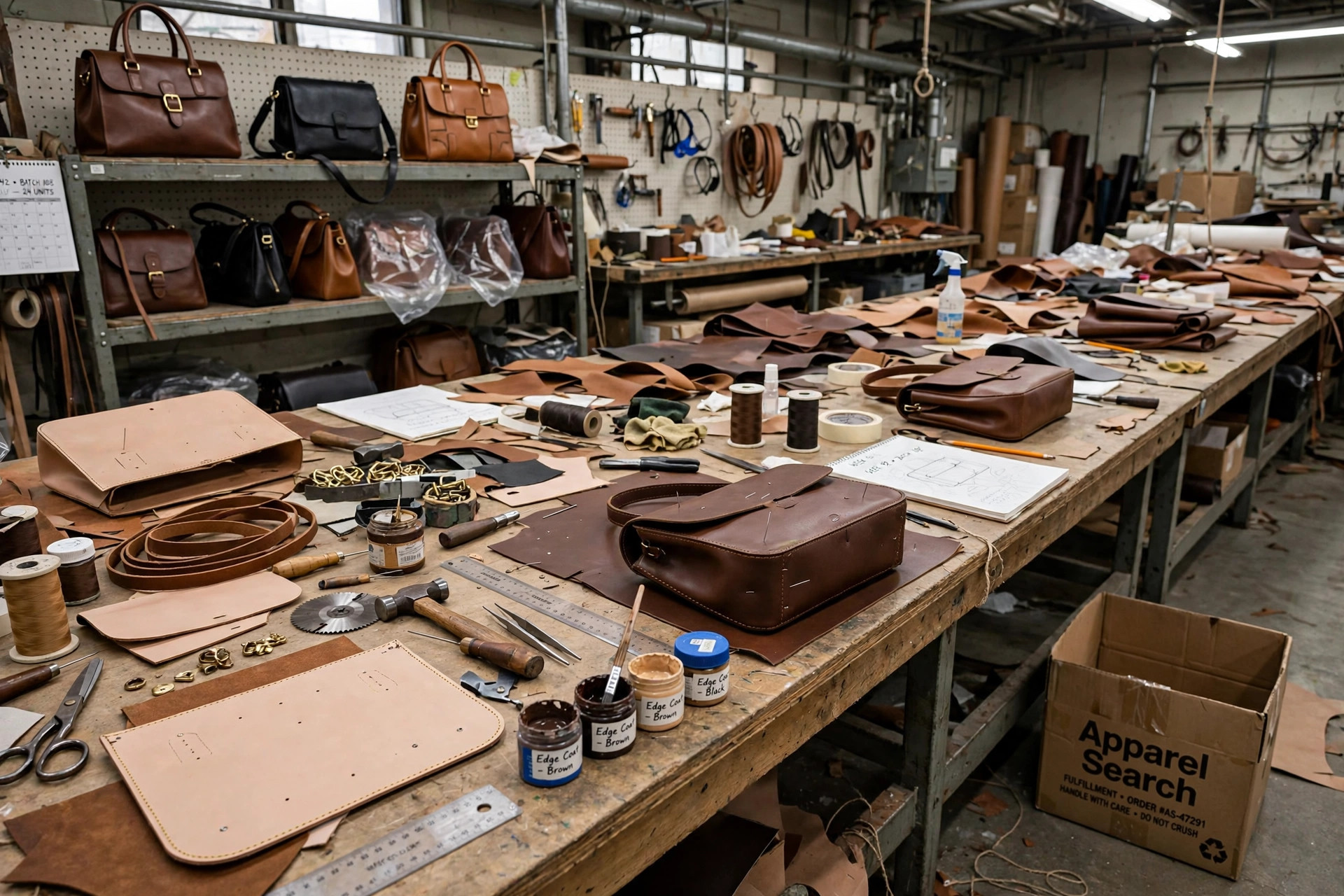
The manufacturing process of handbags involves several stages, from design to distribution. 1. Design and prototyping: the process starts with the creation of a design concept; designers sketch the bag’s shape, size and features, and prototypes are made to test the design’s functionality and aesthetics. 2. Material selection: the choice of materials is crucial; common materials include leather, synthetic leather, fabric, canvas, nylon and various textiles, and hardware components such as zippers, clasps and buckles are selected. 3. Pattern making: skilled pattern makers create templates for each part of the bag, ensuring proper dimensions and seam allowances. 4. Cutting: the pattern templates are used to cut out the bag’s individual components from the chosen materials; precision is crucial to ensure uniformity and minimize waste.
5. Stitching: skilled artisans sew the cut pieces together using sewing machines or hand-stitching techniques, and handles, straps and other attachments are added during this stage. 6. Assembly: the bag’s main body is assembled, and additional compartments, pockets or linings are added, and any decorative elements or embellishments are attached. 7. Quality control: inspectors carefully examine each bag for defects, ensuring it meets quality standards, and any necessary corrections or adjustments are made. 8. Finishing: the bag undergoes final finishing touches, which may include cleaning, polishing and adding brand labels or logos. 9. Packaging: the finished bags are packaged, often with protective coverings, dust bags or boxes, and packaging may include branding and labeling for retail. 10. Distribution: bags are prepared for distribution to wholesalers, retailers or customers through various channels, including physical stores and e-commerce platforms.
Materials Used Most Often in Handbag Manufacturing
The choice of materials in handbag manufacturing varies with style, function and price point. Leather, genuine and synthetic, is a popular choice for its durability and quality feel; canvas and nylon serve casual and travel bags; woven fabrics and straw serve seasonal styles. Structure comes from what is inside: many bags are built over reinforcements, including split leather stiffeners, foam, bonded nonwovens and board, and the lining, usually a woven twill, nylon or suede cloth, is a product in itself with its own pockets and zips. Hardware is sourced separately, which is why this directory has its own section for handbag trim factories: a factory may sew beautifully and still be the wrong choice if it cannot source zippers, frames and fittings at the quality the design needs.
Where Handbags Are Made
Several countries are major exporters of handbags to the United States, and the top exporting countries include China, Italy, Vietnam, India and Bangladesh. China in particular is known for its significant production capacity and its exports of handbags to the US market, across every price tier from promotional totes to premium leather goods. Italy anchors the luxury end, where the value lies in leather quality and hand finishing; Vietnam and India have grown quickly in leather and synthetic bags respectively; Bangladesh is a rising source for both leather and fabric bags. A brand chooses its country, and then its factory, by matching the product’s materials, quantities and price to what that production base does best.
Photos

Common Questions
What are the main stages of handbag manufacturing?
Design and prototyping, material selection, pattern making, cutting, stitching, assembly, quality control, finishing, packaging and distribution. The stages that most affect quality are pattern making, cutting accuracy and the stitching and assembly work where handles and hardware are attached.
Which countries export the most handbags to the United States?
China, Italy, Vietnam, India and Bangladesh are among the top exporters. China is known for its significant production capacity across all price tiers, Italy for luxury leather goods, and Vietnam, India and Bangladesh for growing leather and fabric bag production.
What materials are most common in handbag manufacturing?
Leather and synthetic leather lead, followed by canvas, nylon and woven textiles. Inside the bag, reinforcements such as foam, bonded nonwovens and board give the bag its shape, and zippers, clasps and buckles provide the hardware.