Handbag Trim Factories
Directory of handbag components for the manufacturing of handbags.
Welcome to the Handbag Trimming Factory section of our guide. In this area you will find places to search for the components used to manufacture handbags: the zippers, buckles, buttons, toggles and metal fittings that a bag factory buys in, and on which the finished bag’s quality visibly depends.
When designing handbags a designer has many issues to consider: the silhouette, color, materials and more. Choosing a proper handbag closure is also an important design element, and closures are where trim sourcing starts, because the zipper or clasp is the part of the bag a customer operates every day.
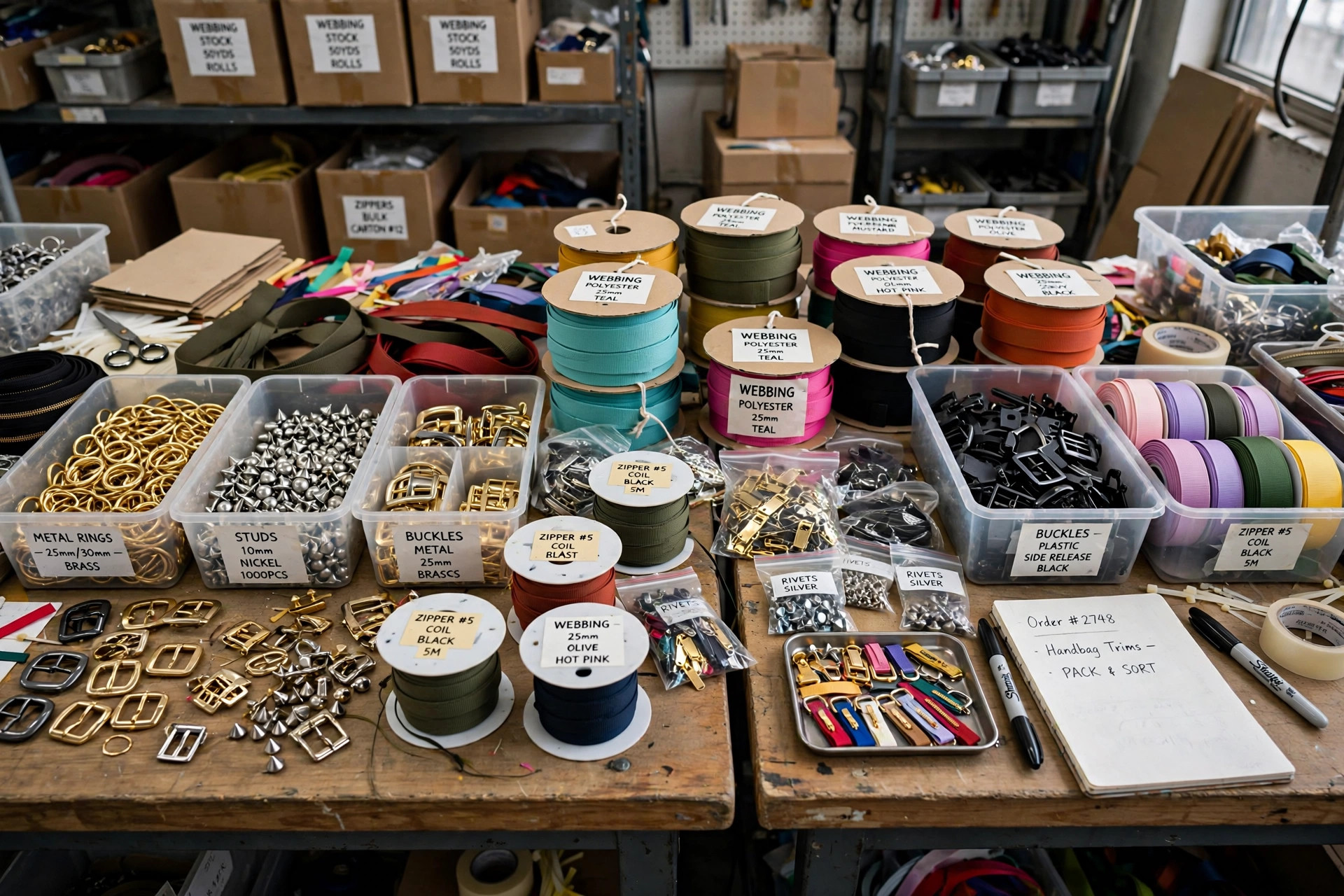
Handbag Trim and Components
Zippers for Handbags
If you are looking for zippers for handbags, the zipper directories divide the field by construction, and the differences matter. Metal zipper factories supply the teeth-and-tape zippers used on premium leather bags; plastic and molded-tooth zippers serve casual and waterproof styles; polyester coil zippers are the flexible general-purpose choice for linings, pockets and soft bags; invisible zipper factories make the concealed zippers used where the closure should disappear into a seam (the terms section explains what an invisible zipper is, linked below). Zipper slider and pull suppliers finish the system, because the pull is the visible, branded part, and zipper heat seal patches serve the welded and waterproof bag market. PVC tape zippers are the waterproof variant worth knowing for rain and beach lines.
How Trim Sourcing Works
Trim is usually bought one of two ways. In a full-package arrangement the bag factory sources components against the designer’s specification and absorbs the trim minimums into the bag price; in a CMT arrangement the brand buys and supplies the hardware and zippers itself, which gives control over finish and quality but puts the minimums, the freight and the shortage risk on the brand. Either way, the specification should name each component precisely: zipper type, gauge and finish, slider model, buckle material and plating, and the test expectations, because plated hardware that tarnishes or a slider that separates are the defects customers actually return bags for. Designers working near a price point often reverse the process, choosing from a factory’s stock trim library first and designing the bag around components that carry no custom minimum at all.
Other Closures and Components
In addition to zippers, learn about other closure methods such as toggles, buckle factories, buttons and hook and loop fasteners, each with its own factory category linked below. Magnetic snaps, frame and kiss-lock closures, turn locks and drawstring systems each have their own specialist suppliers as well, usually found through the metal components and components directories, and a designer changing a closure late in development should expect the bag’s reinforcement and pattern to change with it, because closures carry structural loads. Beyond closures, the components section of Apparel Search covers the wider world of garment and bag components, and the fashion trimming area lets you search for trim such as closures, buttons and bows. If you know of any additional handbag trim resources, please let us know so they can be considered for this section.
References and Further Reading
Zipper and Closure Factories
Common Questions
Which zipper type is best for a leather handbag?
Metal teeth zippers are the premium standard for leather bags because they run smoothly under load and match leather hardware. Polyester coil zippers are used for linings and interior pockets, where flexibility matters more than appearance.
What hardware does a handbag factory need besides zippers?
Buckles, rings, swivel clasps, feet, frames, locks, rivets and sliders, plus the strap materials and edge finishes. The metal components and buckle directories linked above cover the main factory categories for each.
Why do trim minimums matter in handbag production?
Custom-finished hardware and dyed-to-match zippers carry minimum order quantities of their own, which can exceed the bag order itself. Designers confirm trim minimums before finalizing a style, or choose stock hardware the factory already buys.