Higg Index
The apparel and footwear self-assessment suite for measuring environmental and social sustainability across the supply chain.
The Higg Index is an apparel and footwear industry self-assessment standard for assessing environmental and social sustainability throughout the supply chain. Developed by the Sustainable Apparel Coalition, it is a suite of tools that enables brands, retailers, and facilities of all sizes — at every stage in their sustainability journey — to accurately measure and score a company or product's sustainability performance. Instead of every brand inventing its own factory questionnaire, the Higg tools give the industry a shared set of questions, a shared scoring approach and a shared vocabulary for comparing performance.
This page explains what the Higg Index measures, how its tools and modules fit together, how scoring and verification work, and where the suite came from. It also states the limits plainly: a Higg score is the output of a structured self-assessment, and understanding what sits behind the score matters more than the number alone. For the broader picture of sustainability in clothing and textiles, see the sustainability guide linked at the top of this page.
Higg Index & Sustainability Resources
What the Higg Index Measures
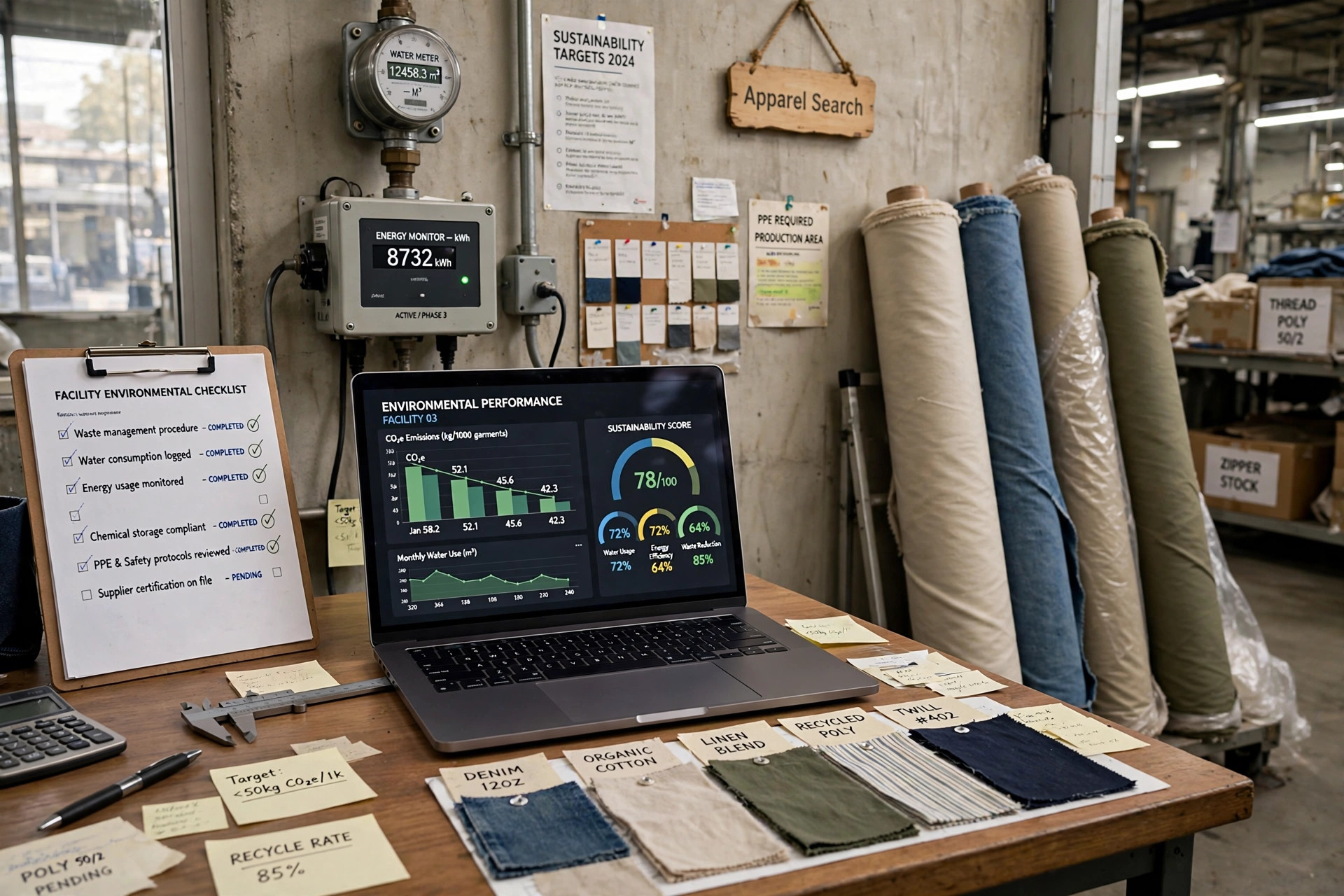
The Higg Index measures sustainability performance in two broad dimensions: environmental impact and social impact. On the environmental side, the questions follow the life of a product and the operations of the facilities that make it — energy use and greenhouse gas emissions, water use, wastewater, waste, chemicals management and the environmental management systems a facility has in place. On the social side, the tools address labor conditions inside facilities: working hours, wages and benefits, worker treatment, health and safety, and the management systems that keep those standards in force. The point of a standard is comparability: when many facilities answer the same questions in the same way, brands and retailers can benchmark suppliers against each other and track whether performance improves year over year.
Because the suite is a self-assessment standard, the starting point is honest internal measurement rather than a pass-or-fail judgment. A small facility at the beginning of its sustainability journey uses the same framework as a large brand, answering at the depth its data supports and identifying the gaps it needs to close. That design is deliberate: measurement comes first, improvement plans follow from the measurement, and scores give management a way to show progress over time instead of relying on general claims about being green.
The Higg Tools and Modules
The suite is organized into tools for the different actors in the supply chain. Facility tools are completed by the factories and mills themselves. The best known is the Higg Facility Environmental Module — Higg FEM — which assesses a facility's environmental performance across energy, water, wastewater, air emissions, waste and chemicals. A companion facility tool covers social and labor performance. Brand and retail tools assess a company's own operations and management practices, while materials and product tools work at the level of the things products are made from: the Materials Sustainability Index compares the environmental profiles of materials, and product-level tools apply that thinking to a finished item. Used together, the modules let a brand look at the same supply chain from the fiber, the facility and the finished product at once.
The modular structure matters in practice. A factory typically completes the facility modules once and can share the resulting scores with the many brands it supplies, instead of filling out a different proprietary audit for every customer. A brand, in turn, can require or request Higg facility assessments from its suppliers and combine them with its own brand-level assessment to see where its supply chain is strong and where it is exposed. That shared-infrastructure role — one assessment, many users — is the main reason the Higg Index spread through the apparel and footwear industry.
How Scoring and Verification Work
Each Higg tool produces scores that benchmark a company or facility against the practices the questions describe: basic compliance and tracking at the foundation, progressing to established management systems, reduction targets and demonstrated improvement. Scores are therefore best read as a maturity measure — how systematically a facility manages its energy, water, waste, chemicals and labor practices — rather than as a simple grade of a finished product. Brands use facility scores in sourcing decisions, and facilities use their own results to prioritize investments, for example metering and energy projects, wastewater treatment upgrades or chemicals inventory controls.
Self-assessment raises an obvious question: what stops a facility from grading itself generously? For the facility modules, completed self-assessments can be checked through verification, in which a trained and approved verifier reviews the facility's answers against evidence on site. Verification does not turn the Higg Index into a certification — it checks that the self-assessment was completed accurately, so the score other companies rely on is grounded in records, meters and documents rather than in optimism. Buyers who use Higg scores should ask whether the assessment behind a score has been verified, and should read section-level results instead of relying on a single headline number.
Where the Higg Index Came From
The first version of the Higg Index was adapted from two previously existing sustainability measurement standards: the Nike Apparel Environmental Design Tool and the Eco Index created by the Outdoor Industry Association, the European Outdoor Group and the Zero Waste Alliance. Building on tools the industry already used, rather than starting from a blank page, helped the new standard gain acceptance quickly.
The Higg Index was developed by the Sustainable Apparel Coalition, a nonprofit organization founded by a group of fashion companies, the United States government Environmental Protection Agency, and other nonprofit entities. The coalition later rebranded as Cascale, and the Higg Index tools are now administered under that name; the coalition's Higg Index page linked below now leads to the Cascale website, where the current tools and guidance are published.
Limits of a Self-Assessment Score
A Higg score is a management tool, not a guarantee. The quality of a score depends on the quality of the data entered, self-assessment involves judgment calls, and two facilities with similar scores can have quite different individual strengths and weaknesses. A facility score also describes the facility, not automatically every product made inside it, and no Higg result by itself certifies a garment as sustainable. Used properly — verified where possible, read at section level, and tracked over time — the Higg Index is a disciplined way to measure and improve. Used as a marketing shortcut, a bare score says less than it appears to say.
A Note on Scores and Claims
Higg Index tools, scoring rules and verification requirements are set by Cascale (the Sustainable Apparel Coalition) and change as the tools are revised. Any company relying on a Higg score — its own or a supplier's — should check the current methodology, module versions and verification rules with Cascale before treating a score as final, and should not present a Higg result as a certification or an official endorsement of a product.
References & Further Reading
More Manufacturing Resources
Common Questions
What is the Higg Index?
An apparel and footwear industry self-assessment standard for assessing environmental and social sustainability throughout the supply chain. Developed by the Sustainable Apparel Coalition, its suite of tools lets brands, retailers and facilities measure and score a company or product’s sustainability performance.
What does Higg FEM stand for?
Higg FEM is the Higg Facility Environmental Module. It is the facility-level tool that assesses a factory or mill’s environmental performance, covering areas such as energy use, water use, wastewater, waste and chemicals management.
Is the Higg Index a certification?
No. The Higg Index is a self-assessment and measurement suite, not a certification. Facility self-assessments can be checked through verification, which confirms the answers were completed accurately, but a Higg score by itself does not certify a company, facility or product as sustainable.