Chuck Taylor All Star History
Earlier company descriptions, brand line-ups, store counts and photographs from the history of Chuck Taylor All Star, kept for historical reference.
← Back to the current Chuck Taylor All Star profile
The Company Description of Its Time
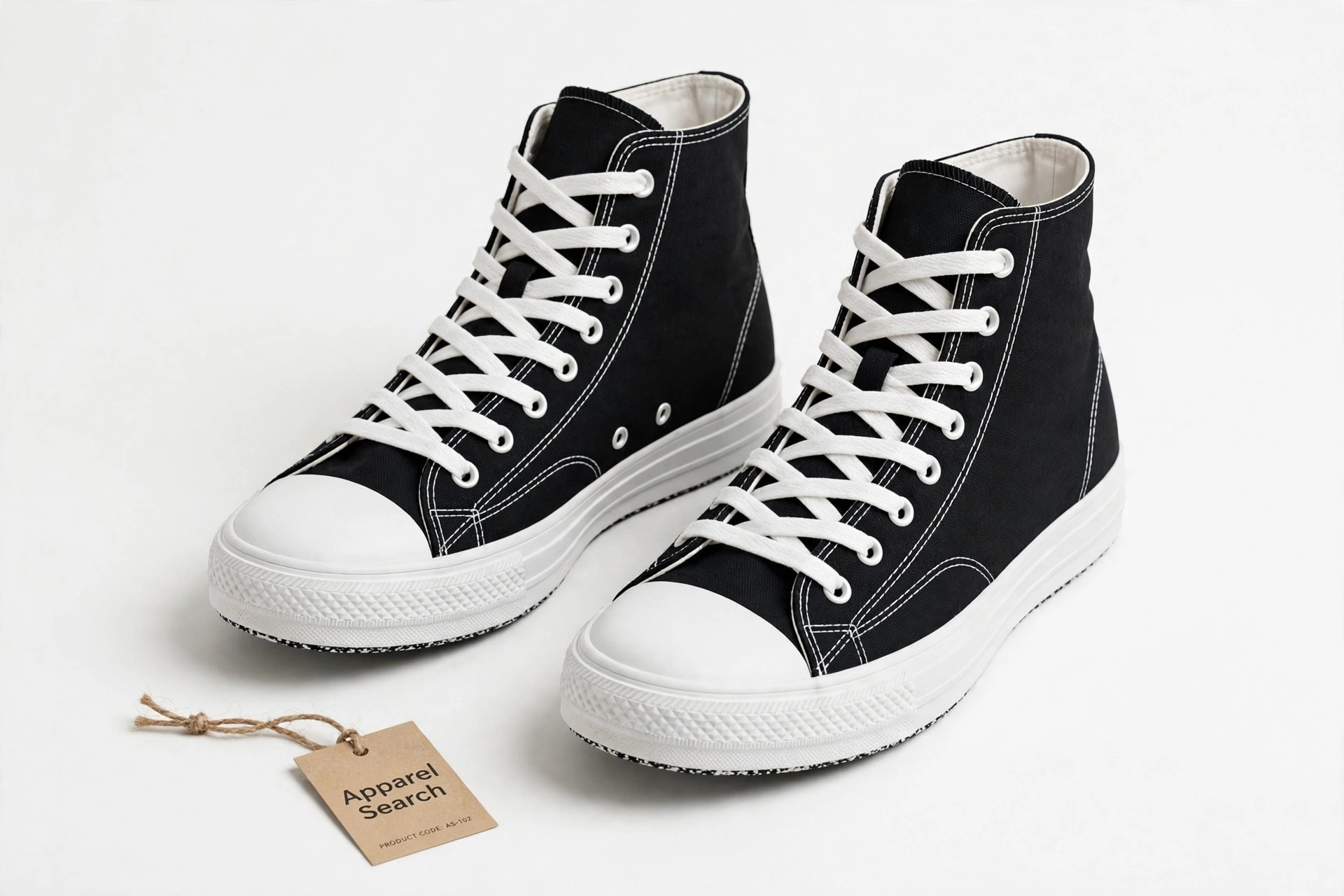
This page is a design history of one shoe: the company record sits on the separate Converse profile in this letter, while this page follows the sneaker itself. The shoe is defined plainly - Chuck Taylor All-Stars, or Converse All Stars, is the brand name for a pair of athletic shoes produced by Nike, Inc. through its Converse division, Nike having owned the rights to the brand since acquiring its former competitor out of bankruptcy in 2003. The design, the profile stresses, has remained largely unchanged since its introduction: a stitched upper, a toe cap usually made of white rubber, and a sole usually made of brown rubber.
1917 to 1949: Taylor, the Patch and the White Trim
The chronology runs as follows. The Converse Rubber Shoe Company was created by Marquis Mills Converse in 1908 in Malden, Massachusetts. In 1917 the company designed the All Star, composed of a rubber sole and canvas upper, as an elite shoe for the professional basketball league. In 1921 a basketball player named Charles 'Chuck' Taylor joined a team sponsored by the company, the Converse All Stars; Taylor held basketball clinics in high schools all over the country and, while teaching the fundamentals of the game, sold the All Star shoes. As a salesman and athlete he also made improvements to the shoe he loved - ideas designed to provide enhanced flexibility and support, incorporating a patch to protect the ankle.
The naming followed the improvements. In 1923, after Taylor's changes, Converse incorporated his name onto the ankle patches that displayed the Converse All Star logo; in the 1930s Taylor's signature was put into the design, which is how the shoe became known as the 'Chuck Taylor' All Star. The historical record also records the early colour discipline: when first created, the All Star had three main styles - a monochromatic shoe with a black canvas upper and black rubber soles, an all-white shoe with blue and red trim, and an all-black leather and rubber shoe. It was not until 1949 that Converse made the toe guard, laces and outer wraps white, giving the appearance of the iconic black and white Chuck Taylor All Stars of today.
Olympics, Subcultures and the Chuck Taylor II
All Stars were soon worn by a variety of professional basketball players, then by athletes in the Olympics, and during World War II American soldiers began to wear them in training. By the 1960s, the historical record states, Converse Chuck Taylor All Stars were being worn by ninety percent of professional and college basketball players. As the years went on, the shoe made the shift the profile is most interested in: from athletic sportswear to casual footwear, becoming a favourite of numerous groups and subcultures, particularly artists and musicians - in a quoted summary, a mainstream trend 'seemingly endorsed by everyone except podiatrists'. Tree Rollins was the last player to wear Converse All Stars in the NBA, in the 1979-1980 season, in modified Chuck Taylors with the Circle Star patch removed and star chevrons sewed to the sides.
The design details close the record. In 1957 Converse came out with the low-cut 'Oxford' version and soon after began producing the shoes in multiple colours and prints; today the line is made in a variety of colours, styles, prints and fabrics. High-tops carry the iconic ankle patch; the heel of both cuts carries a glued-on logo reading ALL STAR, low-cuts carry the same logo on a tongue tag instead of the patch, and in 2013 the heel and tongue logo was slightly altered to add the word 'CONVERSE' while the high-top ankle patches stayed unchanged. The final dated entry is the Chuck Taylor All Star II, announced in July 2015: incorporating Nike technology, it retains the outward appearance of the original while employing a modern lightweight insole for increased comfort and reduced fatigue - and the Apparel Search blog(?:'|')s Chuck Taylor All Star II article is linked from this page.
Photos

More to Explore on Apparel Search
References & Further Reading
Looking for More Fashion Companies?
This profile is one filing in the Apparel Search company names directory. Browse the full A-to-Z listing on the Fashion Company Names directory, or shop by category in the Apparel Search shopping directory.