Levi's Arcuate Stitching - Fashion Company Profile
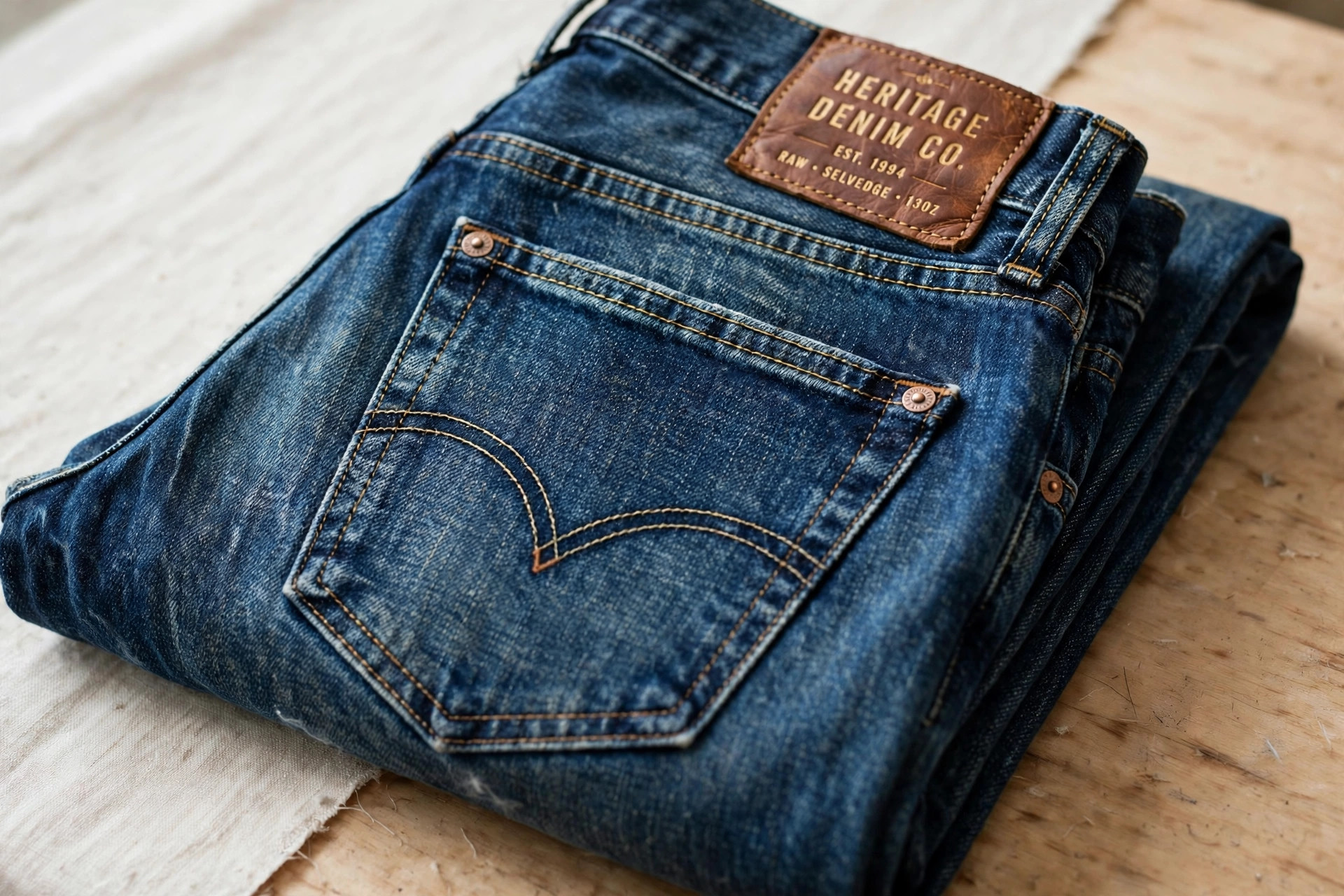
The Arcuate is the double-arch stitch on Levi's back pockets - in use since 1873, trademarked in 1943, and one of the oldest clothing trademarks still sewn onto garments today.
Company Snapshot
- Subject
- The Arcuate - the double-arch stitching sewn on the back pockets of Levi's jeans
- Owner
- Levi Strauss & Co. (NYSE: LEVI)
- In use since
- 1873, on the first riveted waist overalls
- Trademark note
- Registered as a trademark in 1943; painted on, rather than sewn, during Second World War material conservation
Shop Levi's Arcuate Stitching Now
Shop Levi's Arcuate Stitching on Amazon Shop Levi's Arcuate Stitching on eBayThe Amazon and eBay links on this page are affiliate links. If you make a purchase through them, Apparel Search may earn a commission.
Company Profile
The stitch is pure identification: it carries no structural load, but it makes a pair of Levi's recognisable from across a street, and it has been defended as a trademark for more than eighty years. The wartime painted version, the diamond point where the arches meet, and the arrival of the Batwing logo are set out in the historical record on the history page.
The origin question is answered with an honesty rare in brand histories: unfortunately, history has lost the actual reason for the origin of the Arcuate stitching design. Stories about it representing the wingspread of a bird are myths. The loss of company records in 1906, due to the San Francisco earthquake and fires, makes it impossible to know why the stitching was first used. This page preserves that position exactly. A design famous enough to be trademarked has an unknowable beginning, because the archive that might have explained it burned - and any account that claims certainty about the bird, the wings or any other symbolism is, by the company's own filed statement, repeating a myth.
Levi's Arcuate Stitching History
The earlier record for this company - its history, past brand line-ups, figures and photographs from the periods described - is kept on a separate page for historical reference.
Levi's Arcuate Stitching History & Historical Profile →Common Questions
What does arcuate mean, and where is the design found?
Arcuate means shaped like a bow, curved; the Arcuate Design is the arc-formation stitching on the back pockets of Levi's jeans, used on the earliest waist overalls, in the historical record.
Why was the Arcuate painted on during World War II?
The War Production Board barred decorative thread as a non-functional use of an essential item, so LS&CO. operators painted the design on each pair of 501 and 701 jeans for the duration; the effect of Order No. L181 is illustrated on the historical record page.
When was the Arcuate registered as a trademark, and what changed after the war?
It was registered as a trademark in 1943; from about 1947 a double-needle machine stitched it, creating the diamond shape where the two lines meet and a uniform look replacing each operator's individual single-needle arc, as recorded.
More Apparel Companies L
Start from the L letter hub, or compare this filing with its closest neighbours in the letter:
More to Explore on Apparel Search
References & Further Reading
Looking for More Fashion Companies?
This profile is one filing in the Apparel Search company names directory. Browse the full A-to-Z listing on the Fashion Company Names directory, or shop by category in the Apparel Search shopping directory.