Ralph Lauren History
Earlier company descriptions, brand line-ups, store counts and photographs from the history of Ralph Lauren, kept for historical reference.
← Back to the current Ralph Lauren profile
The Company Description of Its Time
Ralph Lauren Corporation is a global fashion and lifestyle company built on one designer's conviction that style outlasts fashion. Ralph Lauren established the Polo label in 1967 with an instantly successful line of ties - wide, handmade, in unexpected, flamboyant, opulent materials, in direct opposition to the narrow ties and conventional styles of the time. The ties quickly became a menswear status item. 'A tie was the way a man expressed himself,' Lauren said. 'I believed that men were ready for something new and different. They didn't want to look as if they worked for IBM.' He named the line Polo, after a sport that embodies a world of discreet elegance and classic style, and the name set the template for everything that followed: a product sold as part of a whole way of living.
The Polo Shirt, Gatsby and the Western Stampede: 1972-1981
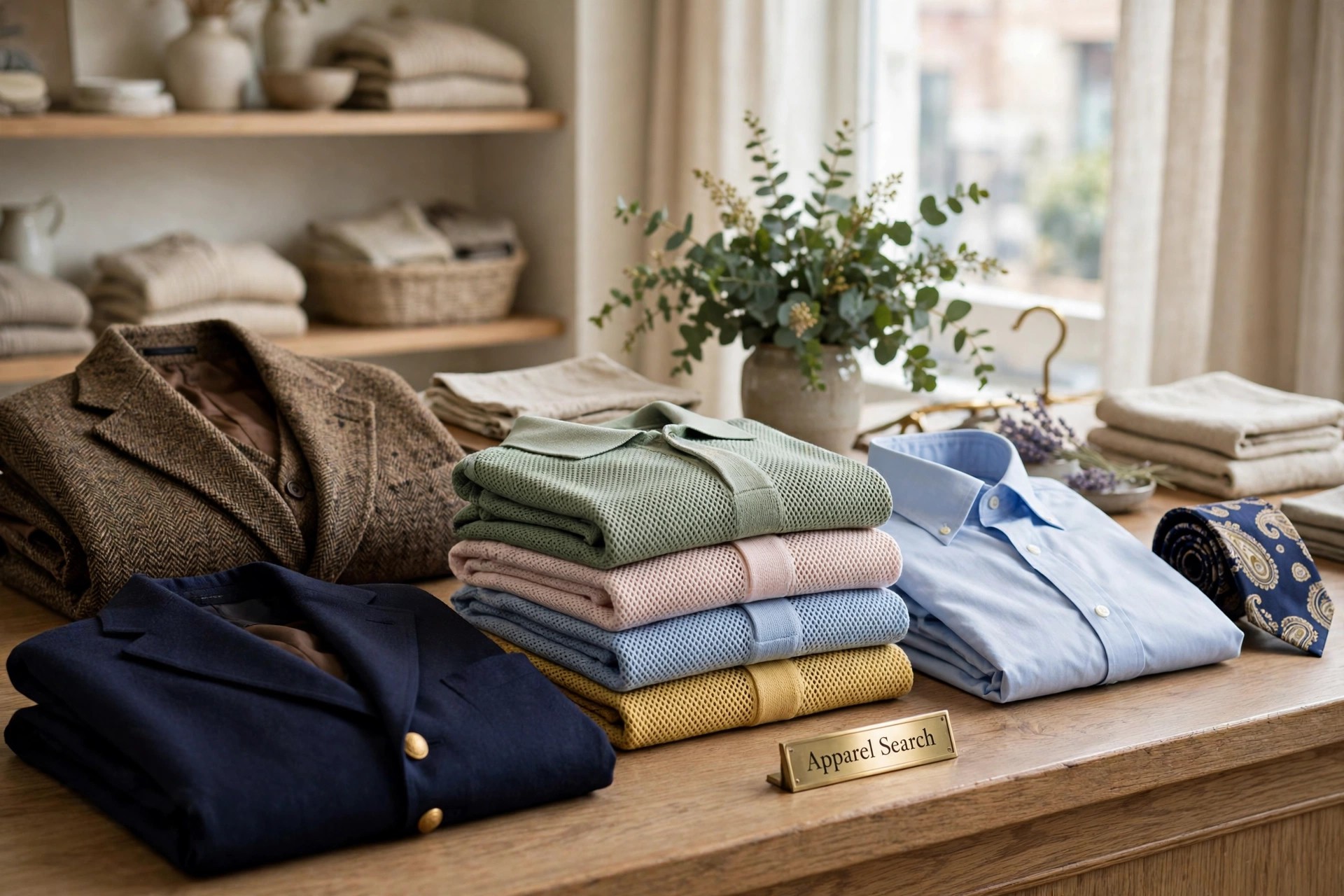
In 1972 Polo's original mesh shirt with the polo player logo was introduced in 24 colors; no other sport shirt offered the same combination of quality and variety, and the shirt instantly became an American classic. Around it, the oxford button-down shirts, chinos, tweed jackets, denim and chambray shirts developed iconic status as the embodiment of the Polo lifestyle. In 1974 Paramount Studios asked Lauren to design the men's costumes for The Great Gatsby, starring Robert Redford and Mia Farrow; he clothed the entire male cast in his current line, and the legendary pink suit he designed for Gatsby epitomized 1920s style and led to a major revival of his designs inspired by that period. He won the American Fashion Award in 1975, entered the Coty Hall of Fame for Menswear in 1976 while also winning his second Coty Award, for Womenswear - the first time a designer had won awards for both in the same year - and entered the Hall of Fame for Womenswear in 1977.
The Westernwear collections of 1978 drew on American heritage and Lauren's own personal style - rugged shearling vests, rancher's jackets, prairie skirts and fringed buckskin - and he was heralded as 'the maverick who recaptured America for America,' starting a Western style stampede throughout the world; he promoted the collection by appearing in its advertising himself. From 1979 Polo pioneered multipage, cinematic advertising with little or no text, using non-models in real settings, and in 1980 the New York Times architecture critic Paul Goldberger wrote that Lauren had become 'a kind of one-man Bauhaus, a producer of everything from fabrics to furniture to buildings.' The Santa Fe collection of 1981, drawing on the patterns and colors of the Navajo and the American Southwest - concho belts, petticoat skirts, blanket jackets - extended the same method to another American romance.
Home, the Rhinelander Mansion and the Global Business: 1983-2006
In 1983 the Ralph Lauren home collection debuted - the first time a fashion designer had launched an entire home collection - spanning bedding, towels, area rugs, wall coverings and tabletop, and growing later into furniture, lighting, carpeting and, in 1995, paint. In 1986 the flagship opened in the Rhinelander mansion on Madison Avenue at 72nd Street: less than five percent of the 1890s mansion's original interior remained, and its reconstruction into a store 'raised the bar of the retail experience,' turning the cinematic feel of the clothing and advertising into a physical environment. Audrey Hepburn presented Lauren with the CFDA Lifetime Achievement Award in 1992, and he remains the only designer to receive the CFDA's four highest honors - Lifetime Achievement, Womenswear and Menswear Designer of the Year, and Retailer of the Year. The Polo Sport line followed in 1993, meeting the decade's fitness attitude, and Polo Sport became official outfitter of the America team for the America's Cup, who went on to win it.
The profile's later entries trace a brand becoming a global business. Lauren founded Fashion Targets Breast Cancer with the CFDA in 1994; in 1998 the company announced a $13 million gift to the Save America's Treasures campaign to preserve the Star-Spangled Banner at the Smithsonian; the RL restaurant opened in Chicago in 1999; Polo.com launched in 2000 as Ralph Lauren Media opened; and after September 11, 2001, the Polo Ralph Lauren Foundation established the American Heroes Fund, matching employee contributions dollar for dollar. In 2002, having started with 26 boxes of ties in 1967, Lauren celebrated the 35th anniversary of a $10 billion global business spanning designer menswear, womenswear, childrenswear, home collections and fragrances. The Rugby line for customers aged 16 to 25 launched in October 2004, a four-year US Open apparel partnership with the USTA was signed in March 2005, and a 24,000-square-foot Tokyo flagship opened in Omotesando in March 2006 - the record this profile keeps, in the company's own year-by-year telling.
Photos

More to Explore on Apparel Search
- Fashion Company Names
- Popular Fashion Brands
- Fashion Designers
- Fashion Designer Definitions
- Ralph Lauren News
- Ralph Lauren Definition
- Polo Definition
- Ralph Lauren Stock Market Info
- Ralph Lauren Designer
- Ralph Lauren Women's Brand
- Ralph Lauren Men's Fashion Brand
- Ralph Lauren Children's Brand
- Ralph Lauren Accessories
- Ralph Lauren childrenswear
- Ralph Lauren Collections
- Ralph Lauren Dresses
- Ralph Lauren Eveningwear
- Ralph Lauren Fall Fashions
- Ralph Lauren Fashion Week
- Ralph Lauren Formalwear
- Ralph Lauren Handbags
- Ralph Lauren Jackets
- Ralph Lauren Jeans
- Ralph Lauren Menswear
- Ralph Lauren News
- Ralph Lauren Outerwear
- Ralph Lauren Pants
- Ralph Lauren Petites
- Ralph Lauren Polos
- Ralph Lauren Profiles
- Ralph Lauren Runway
- Ralph Lauren Shirts
- Ralph Lauren Shoes
- Ralph Lauren Skirts
- Ralph Lauren Sleepwear
- Ralph Lauren Sportwear
- Ralph Lauren Spring Fashions
- Ralph Lauren Sweaters
- Ralph Lauren Swimwear
- Ralph Lauren Womenswear
References & Further Reading
Looking for More Fashion Companies?
This profile is one filing in the Apparel Search company names directory. Browse the full A-to-Z listing on the Fashion Company Names directory, or shop by category in the Apparel Search shopping directory.