Cat Shoes
Paw covers, medical footwear and grip socks for cats — real uses, real drawbacks, and a veterinarian's advice before any of them.
Cats aren't commonly seen wearing shoes like dogs, and there is a good reason for that: a cat's paws are sensitive instruments for balance, grip, and reading the ground, and covering them is an intervention, not an outfit. Certain types of cat footwear do exist, designed for specific purposes, and this page is about when those purposes are real — and when the shoes should stay off.
The Cat Clothing Guide lists cat shoes and boots among its categories, but the honest summary is caution first: understand the types, weigh the benefits against the drawbacks plainly, and let a veterinarian and the individual cat make the final call.
Start Here
Shop Cat Clothing
Shop Cat Clothing on AmazonShop Cat Clothing on eBayThese links open the Apparel Search shopping guides for Amazon and eBay, where the product links are kept in one place.
Types of Cat Footwear
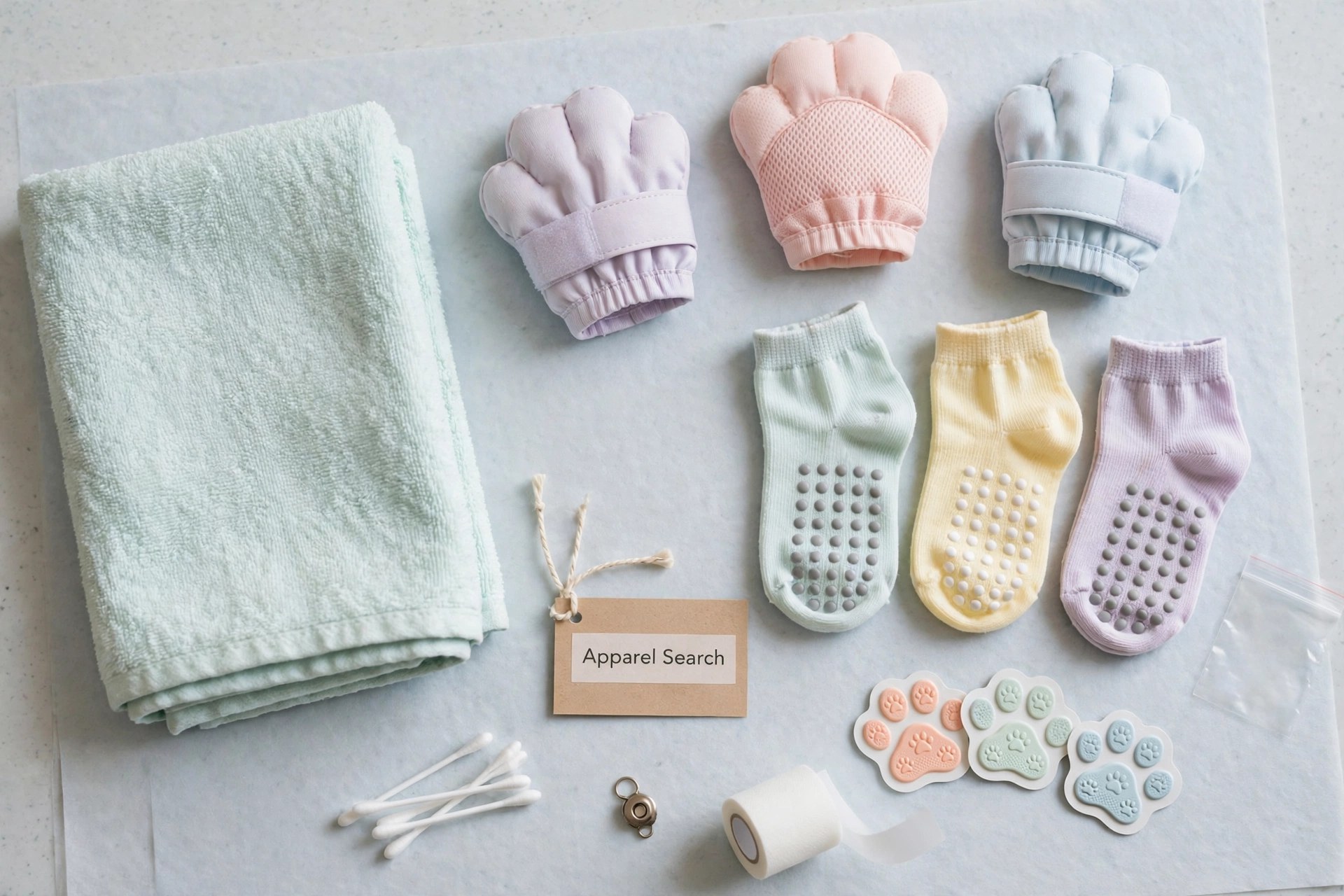
Protective paw covers are usually made of soft, flexible materials and protect a cat's paws from extreme temperatures, rough terrain, or harmful substances. They are most useful for cats during outdoor adventures, where the ground itself is the hazard — hot, frozen, sharp, or chemically treated.
Medical and therapeutic shoes serve a different master: a cat may need specialized footwear after surgery or to protect an injured paw, where the shoe provides support and helps the healing process by keeping the site covered and cushioned.
Grip Socks and Paw Pads
The third family stays indoors. Grip socks and paw pads carry grips on the bottom that help a cat gain better traction on slippery surfaces, preventing sliding and slipping on hard floors. For an older cat, or one with mobility issues, that added grip can be the difference between crossing a room confidently and avoiding it altogether.
Even here, the fit rule applies: a grip sock that twists, bunches, or slides off mid-step creates the very instability it was bought to prevent, so size carefully and watch the first sessions closely.
The Benefits, Stated Plainly
Protection: shoes can shield paws from harsh weather, hot pavements, sharp objects, and chemicals that may harm them. Medical aid: in the right situation, footwear aids healing or prevents further injury to a paw that is already compromised. Traction: grip socks and pads help cats with mobility issues, or any cat struggling on a slippery surface, move with better footing.
Each benefit answers a specific problem. Where there is no problem — no harsh surface, no injury, no slippery floor — there is no benefit to weigh, and the footwear has no case to make.
The Drawbacks, Stated Just as Plainly
Discomfort and stress: cats are not naturally inclined to wearing shoes, and putting them on can cause distress and anxiety. Restricted movement: cats rely heavily on their sensitive paw pads for balance and movement, and shoes can hinder the natural movement and dexterity those pads provide.
Health risks: poorly fitting shoes can cause skin irritation, blisters, or sores on the paws, and shoes that are too tight may obstruct blood circulation. A shoe bought to protect a paw can injure it instead if the fit is wrong, which is why fit and supervision are not optional extras.
The Veterinarian Comes First
Consult a veterinarian before putting any footwear on a cat. If the cat requires footwear for medical reasons, follow the veterinarian's guidance on type, fit, and usage — that guidance outranks any product description, including the ones behind the shopping guides linked on this page.
Always monitor the cat's reaction, and remove the shoes immediately if the cat appears distressed or uncomfortable. The priority, as with every item of cat clothing, is the cat's comfort and well-being — the potential benefit of the footwear is only real while that priority holds.
Common Questions
Do cats normally wear shoes?
No — cats are not commonly seen wearing shoes the way dogs are. Cat footwear exists for specific purposes: protecting paws from extreme temperatures, rough terrain, or harmful substances; supporting a paw after surgery or injury; or adding grip on slippery indoor surfaces. It is equipment for a situation, not everyday dress.
What are the drawbacks of putting shoes on a cat?
Discomfort and stress are the main ones — cats are not naturally inclined to wear shoes, and forcing them can cause anxiety. Shoes can also restrict the movement and dexterity that depend on sensitive paw pads, and a poorly fitting shoe can irritate skin, cause blisters or sores, or, if too tight, obstruct circulation.
Should I ask a veterinarian before using cat footwear?
Yes. Consult a veterinarian before putting any footwear on a cat, and if the footwear is for a medical reason, follow the veterinarian's guidance on type, fit, and usage. Monitor the cat's reaction in all cases, and remove the shoes immediately if the cat appears distressed or uncomfortable.