What Is the Difference Between a Visor and a Baseball Hat?
Same job — shading your eyes. The visor leaves your crown open to the air; the baseball hat covers it.
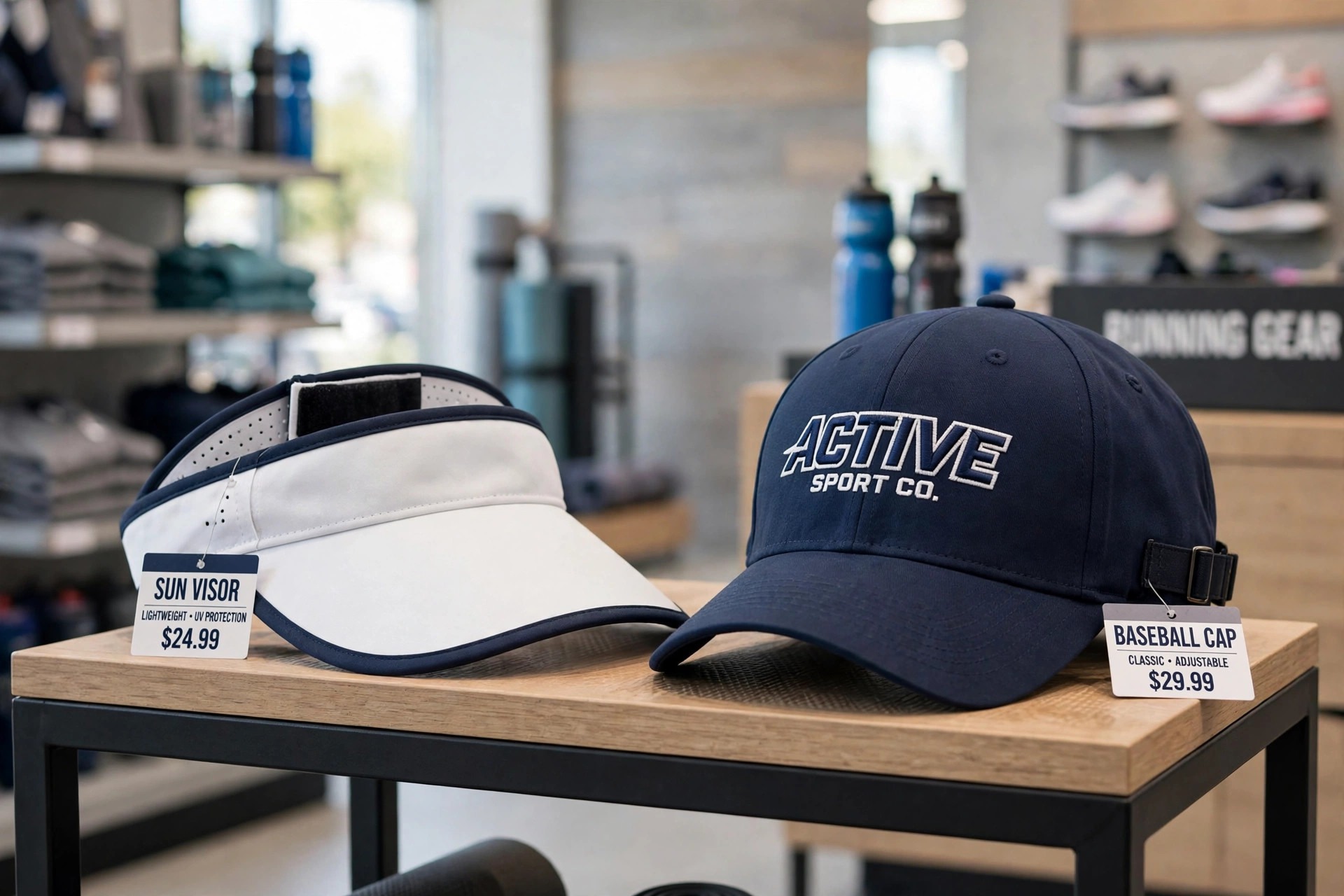
The short answer is the top of the head. A visor is headwear with a stiff brim to help shield the eyes from the sun, held on by a strap that fits around the head, leaving the top of the head uncovered. A baseball hat — a cap — covers the head with a crown as well as a brim. Both are worn to offer the face some well-needed shade; only one of them covers your crown.
That single structural difference drives every practical difference between the two: how much sun protection they give the scalp, how much heat they trap or release, and how they sit with different hairstyles. Choosing between them is less about fashion categories than about whether you want your head covered or ventilated while your eyes stay shaded.
Headwear Guides & Related Questions
The Visor: Brim and Strap, Nothing on Top
A visor is headwear with a stiff brim to help shield the eyes from the sun. The visor has a strap that fits around the head, leaving the top of the head uncovered. That is the entire construction: a shade-producing brim in front, a band or strap to hold it in place, and open air where a crown would be. It is one of the simplest forms of headwear made.
The open top is a feature, not a missing piece. A visor can shade your face from the sun and help hold your hair in place, and it will also allow the free flow of air on your head. Wearers with high ponytails or buns often prefer visors for the practical reason that there is no crown for the hairstyle to fight with, and athletes in hot conditions value the ventilation.
The Baseball Hat: Crown Plus Brim
The baseball cap is traditionally part of a baseball uniform worn by team players. However, this type of headwear is also very often worn for non-athletic reasons, far beyond the ballpark — for casual dress, sun protection, team and brand display, and simply as an everyday habit. Although it can be worn backwards or to the side, most commonly the brim of the hat is worn pointing forward to shield the eyes from the sun.
The defining point for this comparison is simple: the baseball hat covers the head. Its crown sits over the top and sides of the head, with the brim projecting at the front. That coverage shades the scalp as well as the face, protects hair from sun and light weather, and gives the cap its familiar structured silhouette — none of which an open-topped visor can offer.
Warm or Cool: The Heat Difference
In summary, the visor does not cover the top of the wearer's head and the baseball cap does cover the top of the head, and both are worn for the purpose of offering the face some well-needed shade. The consequence worth planning around is temperature. Hats help keep in body heat by blocking the escape of body heat through the head, and a baseball hat will help keep the heat in, while wearing a visor will allow some heat to escape.
Therefore, the decision between the two headwear products depends on whether you wish to stay warm or cool. On a hot, sunny day during exertion, the visor's airflow is a genuine advantage — as long as the scalp itself does not need sun protection. In cooler or changeable weather, or during long exposure where the scalp would burn, the covered crown of the baseball hat is the more protective choice.
Choosing Between Visor and Cap
Start with conditions. Choose a visor for hot weather, active sports, and hairstyles that need the open top, when shading the eyes and face is the goal and ventilation matters. Choose a baseball hat when you want the scalp covered too — for sun protection on the head, for warmth retention in cooler air, or for the cap's more complete, uniform-ready look.
Both styles are easy to find, inexpensive to own in multiples, and simple to try side by side. Many people keep one of each and let the morning's weather decide. And if the wider vocabulary interests you — how visors and caps both fit inside the headwear family while only some pieces count strictly as hats — the related question on the difference between a hat and headwear, linked above, explains the category in full.
Photos

Common Questions
Does a visor protect your head from the sun?
Only partly. A visor's stiff brim shields the eyes and shades the face, but the strap leaves the top of the head uncovered, so the scalp gets no sun protection from a visor. A baseball hat covers the head with its crown as well as shading the face, making it the better choice when scalp coverage matters.
Why wear a visor instead of a baseball cap?
For cooling and convenience. A visor shades your face, helps hold your hair in place, and allows the free flow of air across the top of your head, so heat can escape instead of being held in as it is under a cap. Visors also accommodate ponytails and buns easily, since there is no crown in the way.
Is a baseball hat worn only for sports?
No. The baseball cap is traditionally part of a baseball uniform worn by players, but the style is very often worn for non-athletic reasons — casual outfits, sun protection, and everyday wear. It is usually worn with the brim pointing forward to shield the eyes, though it can also be worn backwards or to the side.
If You Have More Questions About Fashion
You may want to try these sections here on Apparel Search: