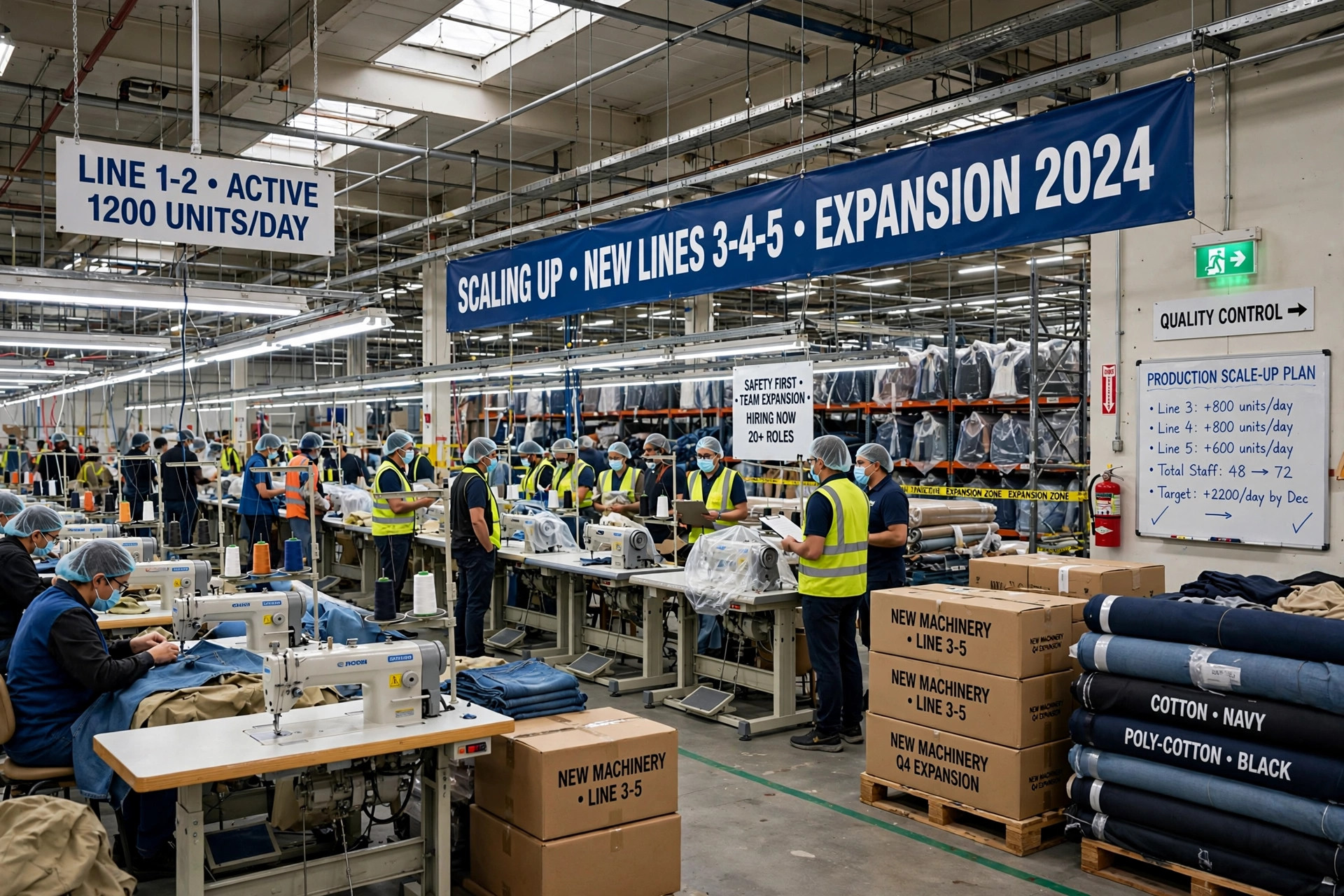
Scalable manufacturing means your production setup can grow with your brand — from 200-unit test runs to 200,000-unit programs — without quality collapsing or costs exploding. Scaling is a strategy you design in advance, not just bigger purchase orders.
The Scaling Stages
Most brands move through three stages: startup (domestic shops or CMT, 50–500 units, high cost, fast learning), growth (offshore full-package, thousands of units, real margins), and scale (multi-factory programs, tens of thousands+). Each transition changes your factory type, your team, and your cash needs — plan the jump before growth forces it.
What Breaks When You Scale
Quality drift is the classic failure: what one artisan shop made perfectly, a 1,000-worker factory interprets differently. Communication stretches thin, cash flow tightens (bigger orders mean bigger deposits and longer waits for revenue), and lead times lengthen just when retailers demand speed.
Building for Scale Early
Future-proof from day one: complete tech packs with graded specs, an approved material and trim library, documented quality standards with acceptable defect limits, and relationships with two factories instead of one. Brands that systematize early scale smoothly; brands that wing it rebuild everything mid-growth.
FAQs
- When should a brand move production offshore?
- When domestic unit costs block your retail pricing or volumes exceed what local shops can handle — often around 1,000–5,000 units per style. Move for economics, not fashion.
- How do I keep quality consistent at scale?
- Lock specs before scaling: sealed approval samples, written quality manuals, and third-party inspections (inline and final). Inspect early production heavily, then taper as the factory proves itself.
- What is the biggest cash risk in scaling?
- Inventory and deposits. A 10× order can mean 10× the 30–50% deposit months before you see revenue. Line up financing before you commit, not after.
- Should I use one factory or several at scale?
- Several. One factory is a single point of failure; two or three qualified partners give you backup, negotiating balance, and the ability to match products to each plant's strengths.
Apparel Search: explore more production & sourcing resources for the fashion industry.