Calculating Verified Gross Mass (VGM) for Apparel Shipments
Container weight verification under SOLAS — the formula, the two weighing methods and the exporter's job
Every packed container an apparel exporter sends to a ship carries one number the carrier must have before loading: its verified gross mass, or VGM. The International Maritime Organization has amended the Safety of Life at Sea Convention (SOLAS) to require that shippers submit the verified weight of a packed container before the container can be loaded onto a ship for export. The VGM of a container must be weighed, verified and correctly declared prior to vessel loading.
This guide sets out the requirement in the form a clothing shipper uses it: the formula that defines VGM, the date the rule took effect, the two acceptable methods for weighing a container, and who is responsible for implementing and enforcing it. It sits alongside the companion calculations an apparel freight shipment needs, including volumetric weight and carton volume.
Freight Calculators & Guides
The SOLAS Container Weight Verification Requirement
The requirement comes from the Safety of Life at Sea Convention — SOLAS — as amended by the International Maritime Organization (IMO). Its purpose is straightforward: a ship's crew and its terminal need to know what a packed container actually weighs before it is loaded, rather than relying on an estimate or a declared figure nobody has checked. A container whose mass has not been verified does not get loaded for export.
These container weight verification requirements became effective on July 1, 2016, and they apply globally. They are not a single country's port rule or one carrier's house policy: wherever an apparel exporter loads a container for export, the shipper is expected to supply a verified gross mass for it. Each country is responsible for stating how it will implement and enforce the rule, so the practical paperwork route — how and where the VGM is submitted in that country — follows the local implementation.
The VGM Formula
In a nutshell, VGM = cargo weight + packing material weight + container tare weight. Each term has a definite meaning. The cargo weight is the clothing or other goods themselves. The packing material weight covers everything used to pack and secure them inside the container — cartons, pallets, dunnage and securing materials. The container tare weight is the weight of the empty container itself.
The formula is why a shipment's paperwork weight and its VGM are rarely the same number. An invoice weight for a load of garments usually counts the goods and their cartons; it does not normally include the pallets the cartons stand on, the material used to secure the load, or several tonnes of steel container. Leaving any of the three terms out understates the mass the ship is being asked to carry, which is exactly what the rule exists to prevent. Build the VGM from all three components, every time.
The Two Acceptable Weighing Methods
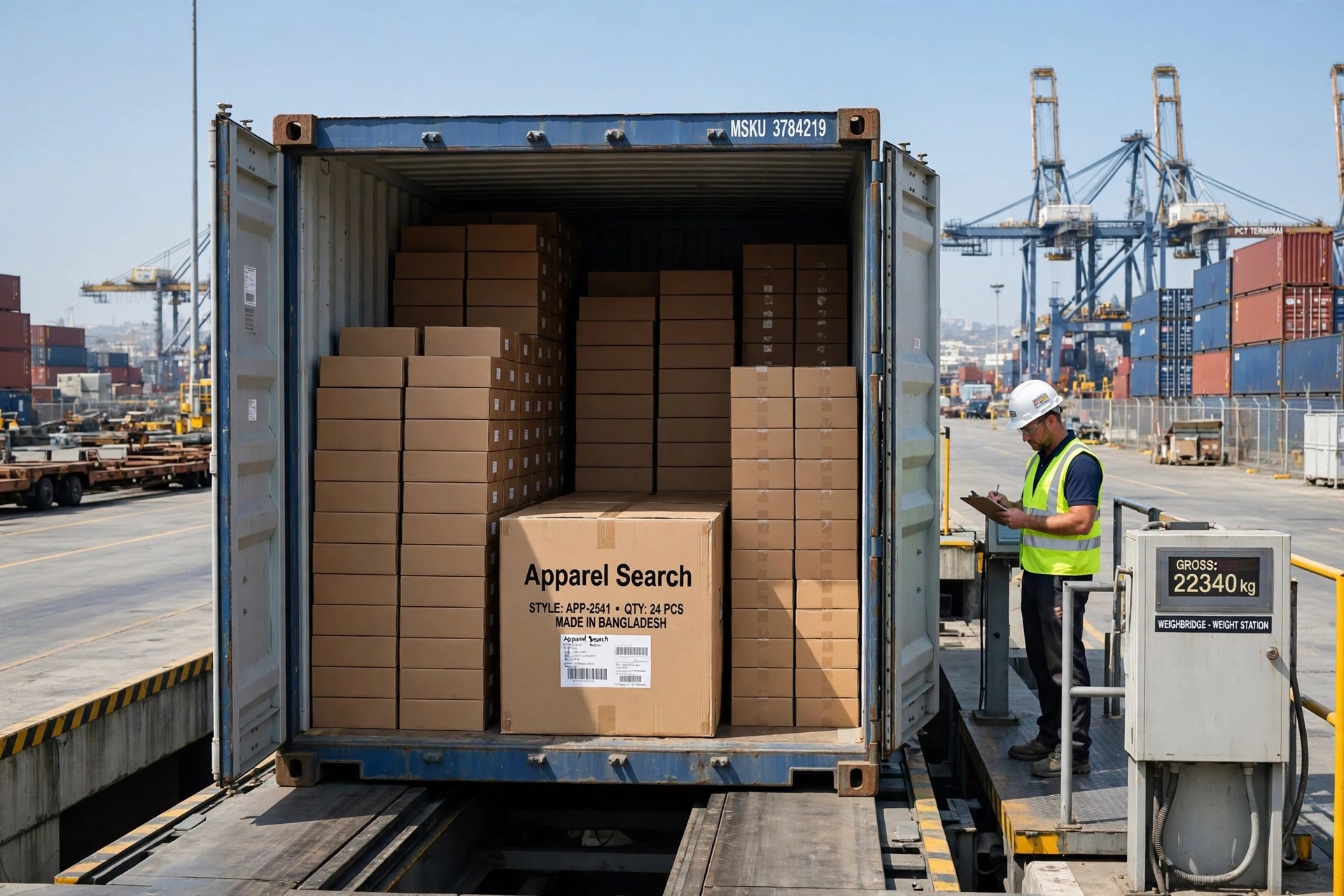
There are two acceptable methods for weighing the container. The first is to weigh the container after it has been packed: the sealed, loaded container is weighed as a single unit, and that weighing gives the gross mass directly. This method suits shippers who load a container where suitable weighing equipment is available, because the whole job is one weighing of the finished load.
The second method is to weigh all cargo and contents of the container and then add the container's tare weight. The goods, their packing and the securing material are weighed as they are loaded — or their weights are taken from the packing process — and the empty container's tare weight, the figure the container itself carries, is added to reach the same total. This method suits apparel shippers who consolidate cartons from several suppliers, because each part of the load can be weighed as it is packed rather than moving a sealed container to a weighbridge. Whichever method is used, the result must be verified and correctly declared before vessel loading.
What Apparel Exporters Should Do
For a clothing exporter, VGM is a packing-stage task, not a port-stage errand. Decide which of the two methods your operation will use before the container is loaded: weighing the packed container needs access to equipment that can take it, while the contents-plus-tare method needs disciplined weighing of cartons, pallets and packing as the load is built. Either way, the weighing has to happen early enough that the verified figure can be submitted before the vessel loading cut-off for your sailing.
Keep the three formula components visible in your shipping records — cargo weight, packing material weight and tare weight — so the declared VGM can be shown to be the sum of real weighings rather than a guess. Precise garment and carton weights also feed the other freight calculations on this site: how to calculate volumetric weight for a shipment, and calculating volume in cubic feet and cubic meters, both of which use the same carton-level discipline. The two sources named in the references below - the World Shipping Council's summary of the SOLAS container weight verification requirement and the International Maritime Organization's guidance on verification of the gross mass of a packed container - are the starting points for the full rule text.
More Shipping & Freight Guides
Common Questions
What is verified gross mass (VGM)?
The verified gross mass is the verified total weight of a packed export container. It is calculated as cargo weight plus packing material weight plus the container's tare weight, and the shipper must submit it before the container can be loaded onto a ship for export.
What are the two methods for determining VGM?
Method 1 is to weigh the container after it has been packed. Method 2 is to weigh all the cargo and contents of the container and then add the container's tare weight. Either method is acceptable, provided the resulting mass is verified and correctly declared before vessel loading.
When did the VGM requirement take effect?
The container weight verification requirements became effective on July 1, 2016, and they apply globally. The International Maritime Organization amended the Safety of Life at Sea Convention (SOLAS) to add them, and each country is responsible for stating how it will implement and enforce the rule.
References & Further Reading
- World Shipping Council - summary of the SOLAS container weight verification requirement (February 2015)
- International Maritime Organization (IMO) - Verification of the gross mass of a packed container