Shoes / How-To
Shoe Lacing Techniques
A shoelace keeps your shoes properly tightened to your feet — and how you lace and knot it changes fit, comfort and security. You are old enough to learn how to tie your shoes.
01 — The Basics
What a Shoelace Does
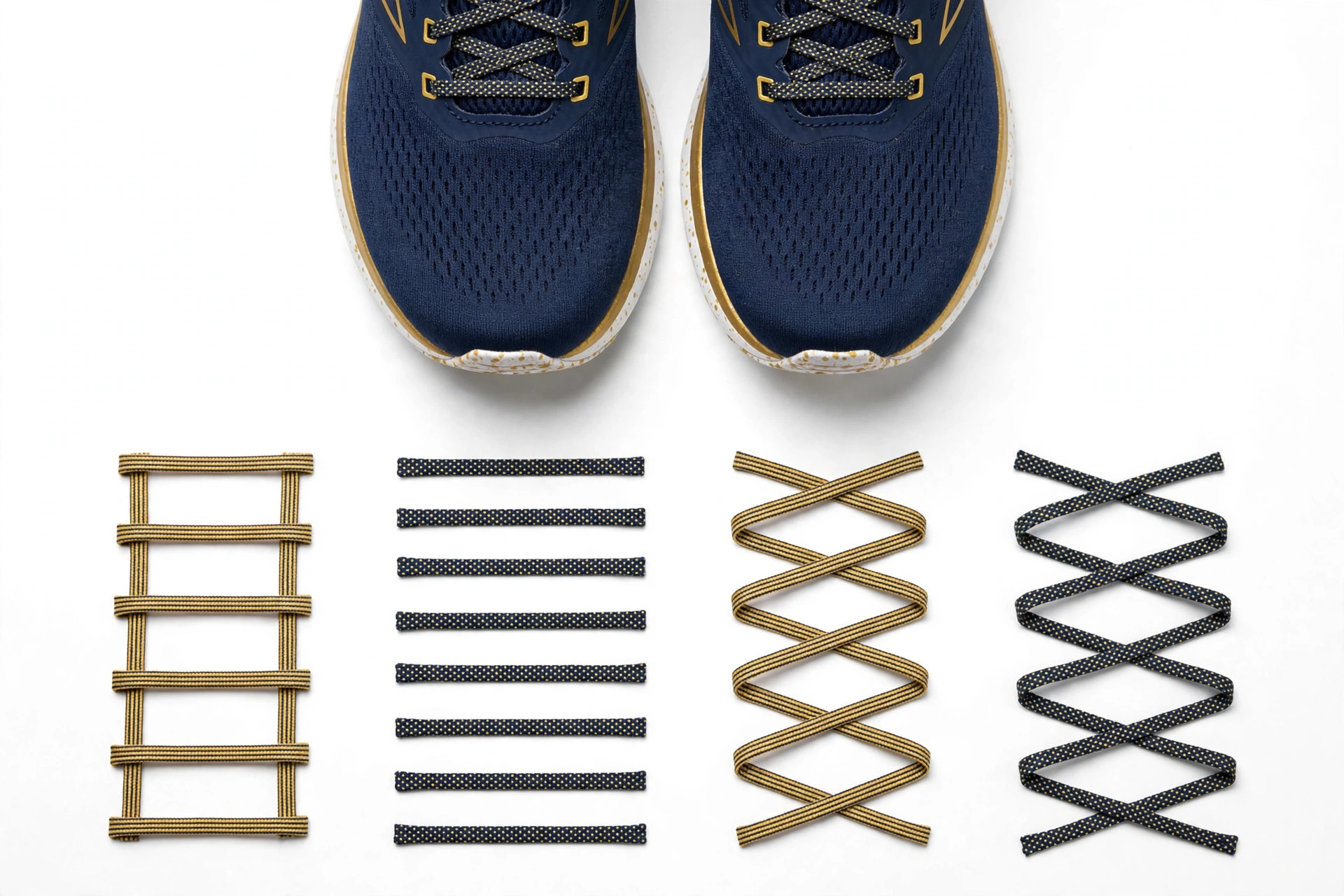
A shoelace is typically a cord, textile material, or leather strip passed through eyelets or hooks on opposite sides of a shoe. The lace is pulled tight (but not too tightly) and fastened, generally with a bow. Shoelaces typically consist of a pair of strings or cords, one for each shoe, finished at both ends with stiff sections known as aglets. Loosening the lacing allows the shoe to open wide enough for the foot to be inserted or removed; tightening the lacing and tying off the ends secures the foot within the shoe. Learn more about shoe laces.
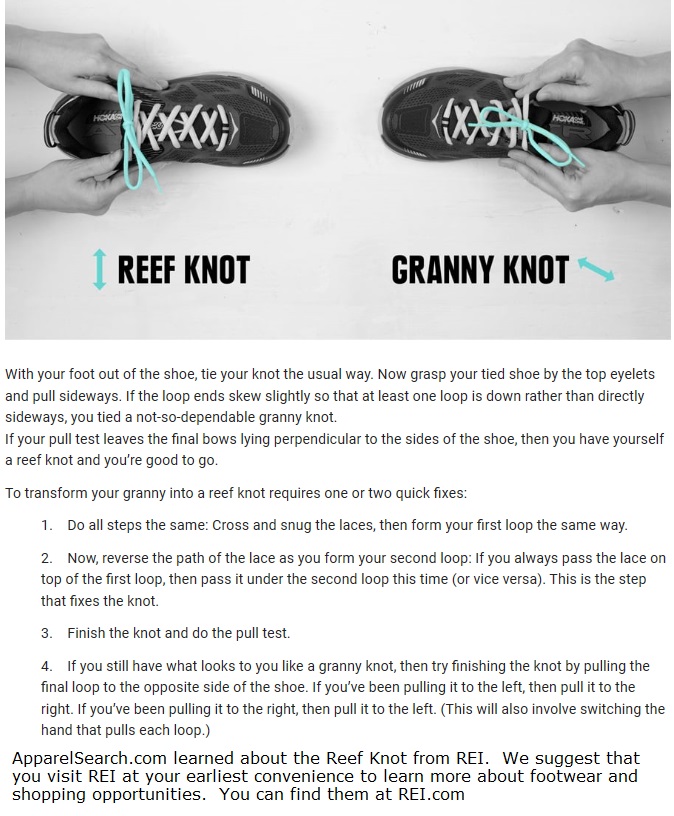
People generally learn to tie their shoes at a very young age, taught by parents, grandparents, siblings, friends or pre-school teachers. The knot most of us were taught as a kid is often a "granny" knot — but there are many more knots and lacing techniques to learn: starting knot, double starting knot, standard knot, bunny ear knot, double slip-knot, granny knot, reef knot, window lacing, runner's loop, Sherpa knot and more.
02 — Three Techniques Worth Learning
Runner's Loop, Window Lacing & the Reef Knot
Runner's loop — for heel slip
Lace normally, crisscrossing until the second eyelet below the top on each side. Instead of crossing over, pull each lace end up on the same side into the top eyelet, forming a loop. Pull each end across and through the opposite loop, pull up and out a few times to shrink the loops down, and tie as usual. It secures the heel and prevents toes from sliding forward.
Window lacing — for pressure points
Unlace down to the eyelet just below the pressure point on top of your foot. Re-lace by going straight up to the next eyelet, then cross the laces over, and finish lacing in your usual way. Skipping the crossover opens a "window" that alleviates the pressure point.
Reef knot — a more secure finish
The reef knot holds more securely than a granny knot: lace movement pulls a reef knot tighter, while it pulls a granny looser. Test yours: tie as usual, grasp the shoe by the top eyelets and pull sideways — if the bows lie perpendicular to the sides, you tied a reef knot. If a loop skews downward, reverse the path of the lace at the second loop step to convert your granny into a reef.
Every foot is unique, and the method of lacing must be determined by your feet. If you need help, visit a specialty shoe store — running shoe stores often provide fabulous guidance, because runners rely heavily on their footwear.
03 — Tips & More Methods
Lacing Tips and Further Techniques
- Gap lacing for high instep.
- Increase forefoot width for bunions.
- Lock lacing for heel rubbing or blisters on the heel.
- Diagonal toe-cap lacing for toe pain.
- Bar lacing for wide feet.
More techniques to research: criss cross, double cross, over under, gap, quick tight, sawtooth, chevron, hexagram, pentagram, double back, bow tie, supernova, straight European, straight bar, straight easy, Gippo, corset, Escher, shoe shop, display shoe, riding boot, knotted, ladder, spider web, segment, army, twistie, knotted segment, train track, double helix, hash, woven, lattice, zipper, footbag, lock, hidden knot, loop back, Roman, asterisk, starburst, zigzag, perspective and progressive lacing.
Common Questions
Common Questions
What is the runner's loop used for?
It secures the heel and prevents toes from sliding forward: you form a loop with the top eyelets on each side, cross the lace ends through the opposite loops, and pull them snug before tying.
What is the difference between a reef knot and a granny knot?
They look alike, but lace movement pulls a reef knot tighter and a granny knot looser. Pull a tied shoe sideways by its top eyelets: bows lying perpendicular to the sides mean a reef knot.
Which lacing helps a pressure point on top of the foot?
Window lacing: unlace to just below the pressure point, go straight up one eyelet without crossing, then continue — the skipped crossover relieves the pressure.
Photos
Photos


References
References & Further Reading
Search Apparel Search