Amazon Owned Fashion Brands
Amazon's own clothing labels, past and present
Two different ideas hide behind similar words. “Fashion brands on Amazon” are the hundreds of outside labels sold through the store. “Amazon fashion brands” are the private labels Amazon owns itself — designed with an advantage no outside label has: sales performance data from across the platform, with customer feedback and analysis on design, pricing, fabrics and fit feeding directly into the next collection.
Amazon is far from the only retailer with private labels, but it pursued them at unusual scale, launching dozens of clothing brands. That experiment was sharply refocused in 2023, when Amazon eliminated 27 of its 30 in-house clothing brands, as reported by the Wall Street Journal, keeping only a handful of core labels. This page explains the survivors, the best-known names from the larger era, and how to tell an owned brand when you meet one in the store.
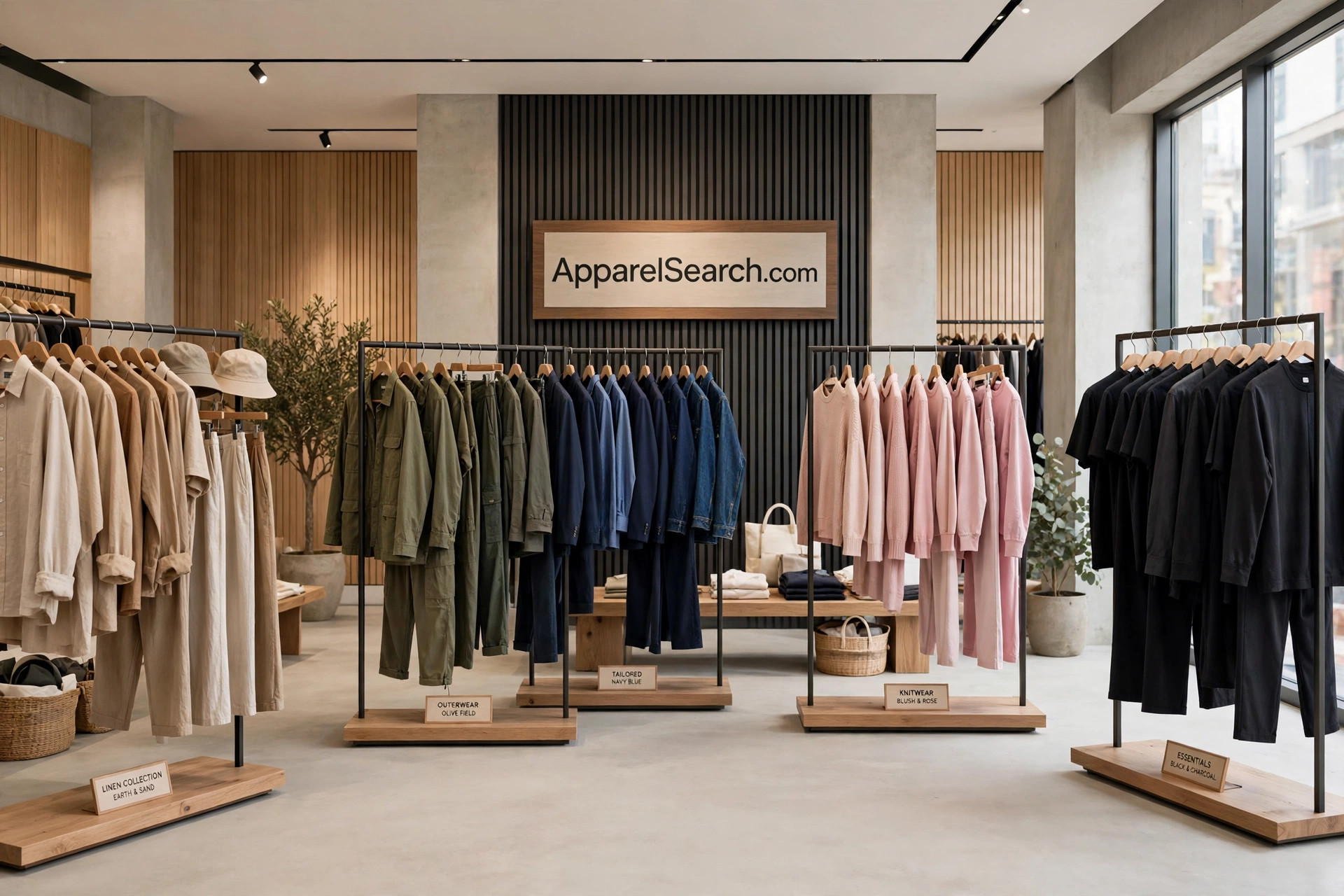
Illustrative image created for this guide — an artistic impression, not the brand's own products.
Search Apparel Search
To see how the owned labels sit inside the whole store, the Apparel Search Amazon clothing guide maps every Amazon clothing department in one place.
The Surviving Core Labels
The labels that came through the 2023 cull are the workhorses. Amazon Essentials anchors the group with everyday clothing for men, women and children — the basics business where repeat purchase and consistent sizing matter most. Core 10 carries women's athletic apparel: leggings, sports bras, hoodies and tees built for training and yoga. Daily Ritual built its following on soft, simple women's classics — tees, tanks, dresses and leggings designed to be styled, layered and lived in.
Mae, the women's intimates label, covers panties, bralettes, sleepwear, shapewear and swim. Together these labels share a philosophy: quiet design, data-informed fit, and prices set to make stocking up painless. The individual brand pages in this section profile each one in depth.
The Larger Era, and What Happened to It
At its peak the owned-brand stable reached into nearly every department: dress labels, denim, menswear lines, children's labels and trend-driven women's brands, many launched to fill a gap the platform's data had spotted. The strategy produced useful clothing, but also a crowded store in which shoppers struggled to tell the labels apart — one reason the 2023 consolidation kept the names with the clearest jobs.
Discontinued labels did not vanish from closets, and their product pages lingered while stock lasted. For shoppers, the practical lesson is to buy owned-brand pieces for what they are — well-priced, data-tuned clothing — rather than as collectibles of a permanent house. The surviving labels have the track records; the retired ones are a chapter in retail history.
Owned Brands vs. Brands on Amazon
Ownership matters for expectations. An owned label is designed by the retailer, manufactured for it, and priced by it; an outside brand on Amazon keeps its own design team, identity and quality standards, using Amazon as a channel. Department-store private labels work the same way — a point the fashion retailer private label resources here explain in full.
Neither model is automatically better. Owned labels usually win on price and basics; outside brands win on identity, specialization and design point of view. A smart Amazon wardrobe uses both, which is exactly how the store is laid out.
Common Questions
How many clothing brands did Amazon eliminate in 2023?
Amazon eliminated 27 of its 30 in-house clothing brands in 2023, as reported by the Wall Street Journal, keeping a small group of core labels such as Amazon Essentials.
What is the difference between Amazon brands and brands on Amazon?
Amazon brands are private labels the company owns and designs itself. Brands on Amazon are outside companies — from athletic names to designer houses — selling through the store.
Which Amazon-owned fashion brands are profiled here?
This section profiles Amazon Essentials, Core 10, Daily Ritual and Mae individually, with the Amazon Basics fashion page covering the everyday-essentials side of the store.
Photos
