Women's Accessories on Amazon
The accessory categories explained: carry, wear, fasten and finish
An accessory can make or break an outfit, and this guide covers the women's accessories categories on Amazon as categories — what each group contains, what to look for in it, and how the groups work together. The range is wide: belts, backpacks, handbags, wallets and checkbook covers, gloves, jewelry, hair accessories, key chains, scarves, travel accessories, umbrellas, and wedding accessories, each a small department of its own.
That category view is this page's angle. Where a store page focuses on buying one item well, a categories guide helps plan the whole finishing layer of a wardrobe: which accessories a closet actually needs, which are seasonal, and which make the reliable gifts. Work through the groups below and the accessory drawer stops being an afterthought and becomes the part of the wardrobe that does the most work per dollar.
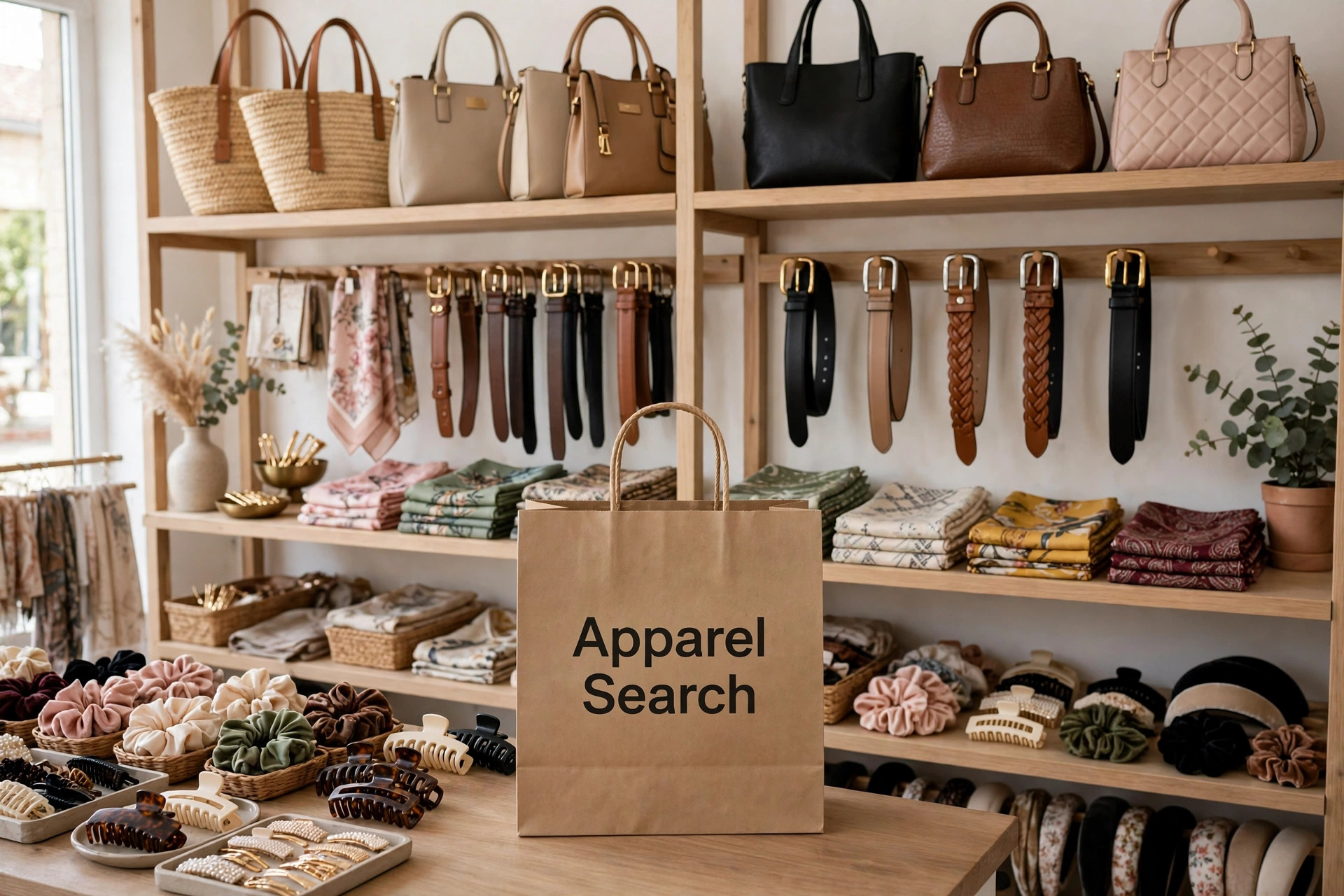
Accessories are where a wardrobe gets personal, and the Apparel Search Amazon clothing guide opens the full category map from belts to wedding pieces.
Carry: Handbags, Backpacks, Wallets and Travel Accessories
Handbags are the largest carry category, spanning totes, satchels, cross-body bags, clutches and evening pieces, and they are bought by load and occasion. Backpacks have moved from school and trail into everyday fashion in leather and structured fabrics, distributing weight evenly for commuting. Wallets and checkbook covers organize the inside of both — zip-around, bifold and card-case forms, plus coin purses, pouches and money clips in the wider accessories store.
Travel accessories are the practical wing: money belts and neck pouches for security, packing organizers, jewelry rolls, and the key chains and bag charms that identify luggage at a glance. Diaper bags appear in the category too, styled as handbags. Buying carry items as a family — matching the wallet to the bags actually used — prevents the common waste of a beautiful wallet that fits none of them.
Wear: Belts, Gloves, Scarves and Hair Accessories
Belts divide by job: waist-defining wide and sash belts for dresses, classic leather belts for trousers and jeans, and decorative chain, embroidered and beaded styles worn as jewelry at the waist. Gloves span winter leather and knit warmth, driving gloves, and formal evening lengths. Scarves work in every season — wool and pashmina wraps for cold, silk squares and light fashion scarves as pure accent — and handkerchiefs survive as a small, traditional category beside them.
Hair accessories are the smallest-price, highest-frequency category: clips, pins, headbands, scrunchies and decorative combs that change a hairstyle without a salon. Hats and caps, earmuffs and cold-weather accessories complete the wear group in winter. Because these items are inexpensive and sized simply or not at all, they are where experimenting with a new color or trend costs the least.
Finish: Jewelry, Umbrellas and Wedding Accessories
Jewelry is the finishing category with the widest price span, from fashion and costume pieces — necklaces, earrings, bracelets, brooches — to fine jewelry and watches in the jewelry store proper. Sunglasses and eyewear accessories sit near it, sharing the face as their territory. For everyday buying, fashion jewelry in a consistent metal tone multiplies across outfits, while one or two better pieces anchor formal wear.
Umbrellas are the category nobody plans and everybody needs: compact folding umbrellas for the bag, full-length styles for real weather, and fashion prints that treat rain gear as an accessory rather than an apology. Wedding accessories gather the occasion-specific pieces — veils and headpieces, gloves, wraps and pashminas, ring pillows, garters and bridal jewelry — most bought once, chosen carefully, and best ordered early with the dress fittings.
Common Questions
Which accessories does a basic wardrobe actually need?
A leather belt, a structured everyday handbag with a wallet that fits it, one warm scarf and one light scarf, gloves for winter, a compact umbrella, and a small set of jewelry in one metal tone. That kit finishes most outfits.
What is the difference between this guide and the accessories store page?
This page explains the accessory categories and how they work together, as a planning guide. The store-focused page leads directly into buying within the Amazon accessories department. Use the guide to plan, the store to purchase.
Why do wedding accessories need ordering early?
They must match the dress in color, metal tone and formality, and some — veils, headpieces and gloves — are tried at fittings. Early ordering leaves time for exchanges if the shade clashes with the gown under real light.