Women's Shoes on Amazon
Heels, sneakers and every boot from hiking to cowboy — plus boat shoes, clogs and slippers
Women's shoes on Amazon fill a department of their own, organized by the job each style does. At the dressed end sit high heels and pumps, slingbacks, platforms and wedding footwear; at the everyday end, sneakers, loafers, oxfords and espadrilles; and between them the largest family of all — boots, in hiking, rain, snow, knee-high, mid-calf, lace-up, heeled, suede and pull-on cowboy forms — plus boat shoes, moccasins, golf shoes, slippers and clogs.
Fit is the whole game in footwear bought online, because a shoe that is half a size wrong is unwearable in a way a sweater never is. This guide explains the styles and what each is built for, how boot descriptions like shaft height and calf circumference work, and the measuring habits — foot length in centimeters against the brand chart — that make online shoe orders succeed the first time.
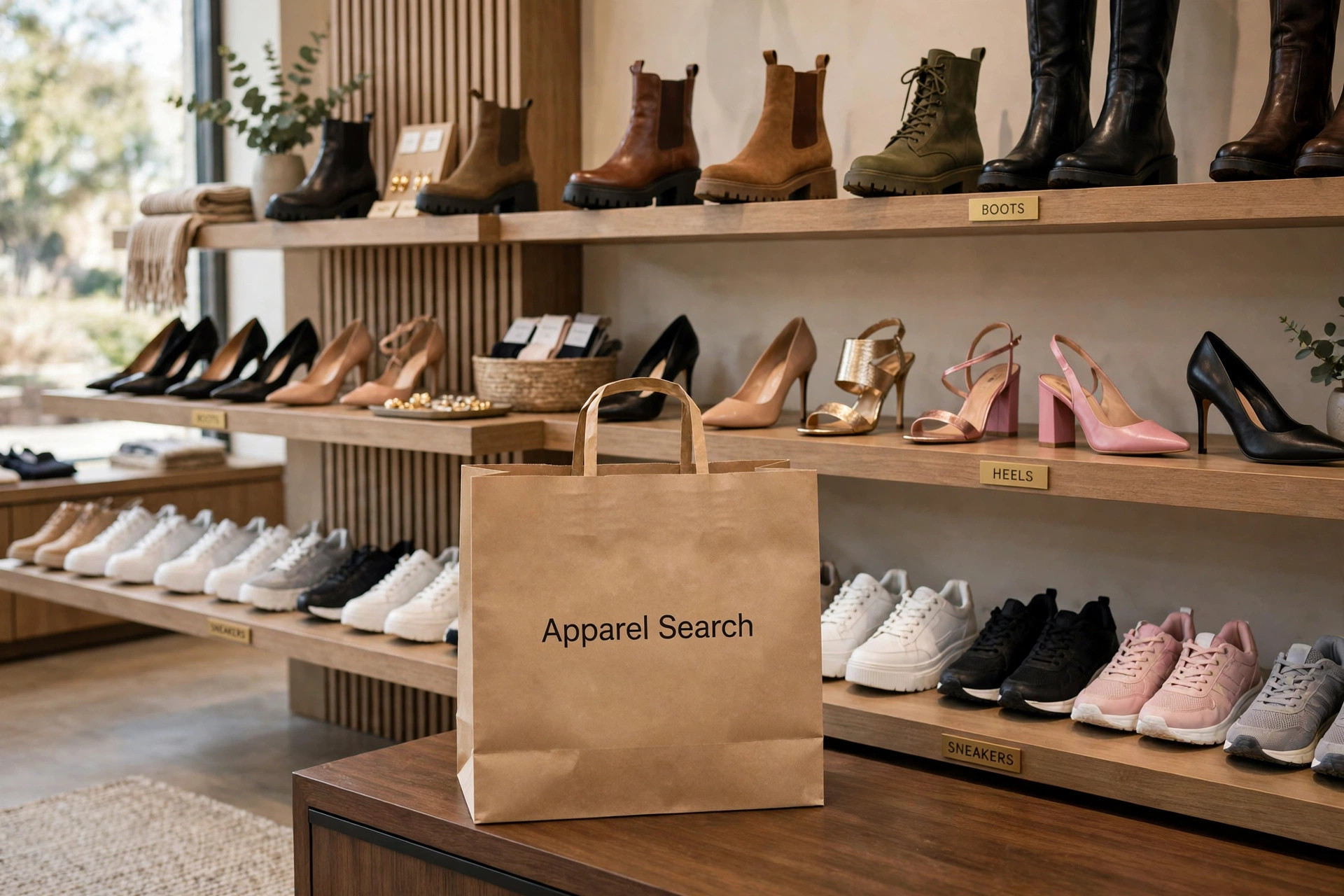
Shoes are bought by the job they do, and the Apparel Search Amazon clothing guide leads from this style-by-style guide into the wider women's footwear and clothing departments.
Heels, Pumps and Dress Shoes
High heels divide by construction: pumps are closed-toe slip-on heels, slingbacks add a strap behind the heel, platforms raise the whole foot so a tall heel feels lower, and mules slide on with an open back. Heel height is measured in inches on the product page, and the pitch — the difference between heel and platform height — is what your foot actually feels. Wedding footwear and dye-to-match shoes serve the occasion market, where comfort through a long day matters as much as the match.
Everyday dress and casual shoes fill the middle of the department: loafers and oxfords for work, lace-ups generally, espadrilles with their rope soles for summer, and dance shoes as the specialist category. For any heeled or structured shoe, read reviews for width as carefully as for length — narrow and wide fittings exist in many styles, and the width letter is easy to miss in a product title when ordering quickly.
Boots: Hiking, Rain, Snow and Dress Styles
Boots are described by height and purpose. Knee-high and mid-calf boots are dress and everyday styles whose key measurements are shaft height and calf circumference — both listed on good product pages and both essential for a pull-on fit. Lace-up boots adjust across the instep, heeled boots dress up, and suede boots offer soft texture that needs weather protection and suits dry days best. Pull-on and cowboy boots have their own fit rule: a new pair should slip slightly at the heel and feel snug across the instep, easing with wear.
The outdoor bench is purpose-built. Hiking boots trade weight for ankle support, tread and water resistance on trails. Rain boots are waterproof rubber or similar shafts made for wet ground, usually worn with thick socks that should be counted into the size. Snow boots add insulation ratings and sealed construction for cold and slush. Athletic shoes and sneakers, the department's volume leaders, split into running, training and fashion styles — buy the construction that matches the activity, not just the look.
Boat Shoes, Moccasins, Golf Shoes, Clogs and Slippers
Boat shoes use siped rubber soles that grip wet decks and leather that tolerates splashes, and they double as a summer casual staple far from any boat. Moccasins are soft, stitched leather construction — the most flexible and least structured shoes in the department, suited to driving, home and light outdoor wear in their soled versions. Golf shoes are sport-specific, with spiked or spikeless traction soles and waterproof uppers in many models, sized like athletic shoes with room for a golf sock.
Clogs close the working end: rubber sole clogs serve gardeners, cooks and anyone standing on wet floors, while wood clogs are the traditional rigid-soled form with a distinctive rocker step. Slippers are the home category, from fleece-lined boots to simple slides, and they size generously by design. Across all of these, the method holds: measure your foot in the evening when it is at its largest, convert to the brand's chart, and keep half a thumb's width of space ahead of your longest toe in closed shoes.
Common Questions
What boot measurements should I check besides shoe size?
Shaft height, which decides where the boot top lands on your leg, and calf circumference, which decides whether a knee-high or mid-calf boot will close or pull on comfortably. Both appear on well-described product pages.
How should new cowboy or pull-on boots fit?
Snug across the instep with a slight slip at the heel when new. The heel slip reduces as the sole flexes with wear, while a boot that starts loose overall will only get looser.
Should I order shoes by my usual size or by measurement?
By measurement. Convert your foot length in centimeters using the specific brand's chart on the product page, since sizing differs between brands and between athletic and dress shoe lines.